What Trump said in five words — and why it mattered
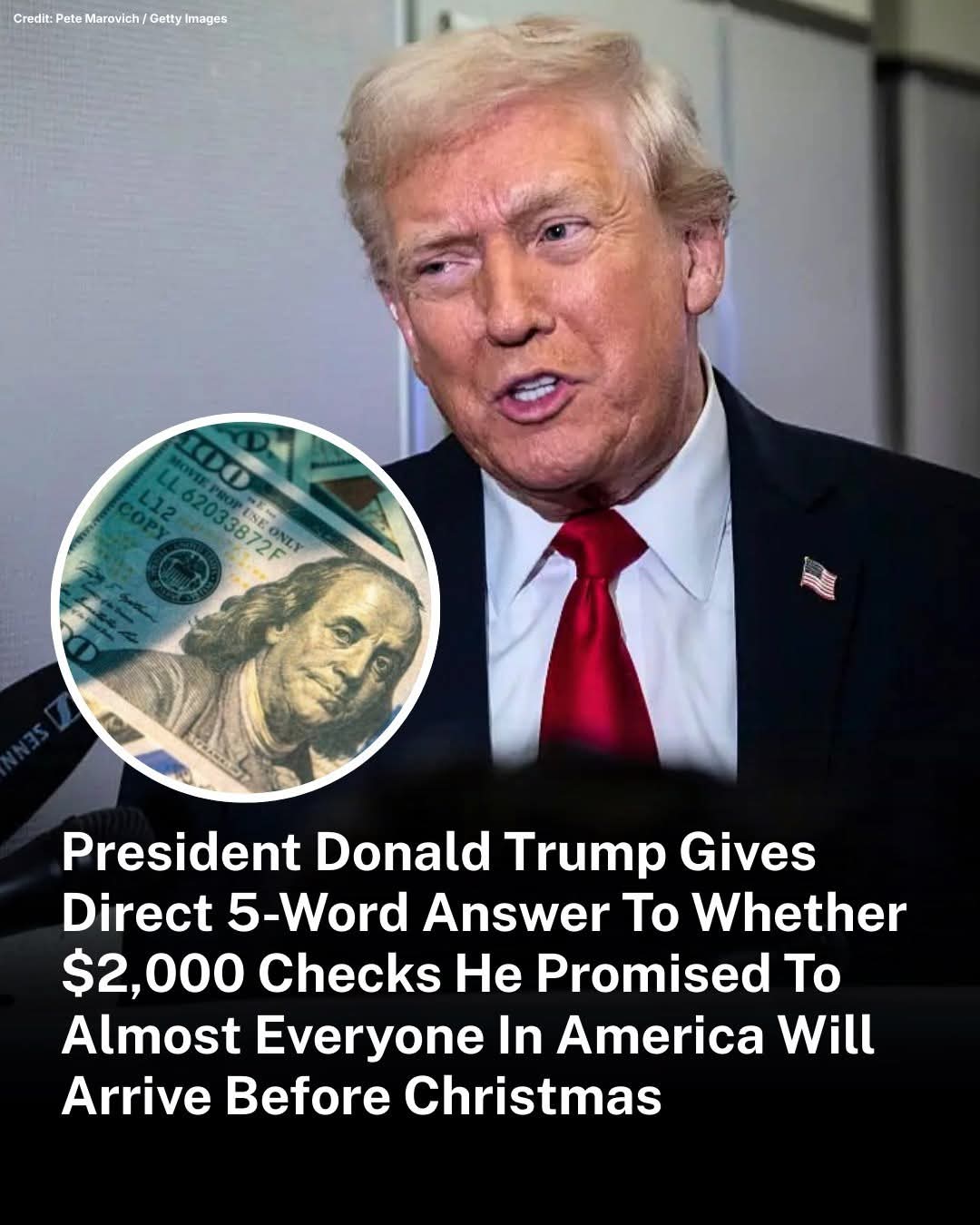
Late in 2025, Trump proposed using tariff revenues to provide a “dividend” of at least $2,000 per person to many Americans, excluding high-income earners.
When pressed on timing by reporters, his succinct public response boiled down to just five words: “Not for this year — 2026.” Though the phrasing echoed across media, it reflected a broader attempt to frame his plan as forthcoming but not immediate — in other words, a promise for next year, not this holiday season. The remark has become widely quoted in coverage of the proposal.
That pithy answer captured friction in his proposal: hopeful for supporters, but ambiguous enough to raise doubts about when — or if — the checks would arrive.
—
📄 What the plan actually is (and isn’t) — as of December 2025
The proposal is not a traditional “stimulus check.” Rather than being linked to tax credits or emergency relief, the payout would come from revenue raised by tariffs on imports under Trump’s trade policies.
Eligibility hasn’t been clearly defined. Trump referred broadly to “middle-income” or “lower- to moderate-income” Americans, excluding “high income people.”
The plan requires new legislation and approval from Congress — it is not an executive order or an already-built program.
As of now, there is no schedule from the Internal Revenue Service (IRS), and no official mechanism has been set up to deliver direct deposits or checks.
In short: this is a proposal — not a promise — and nothing is guaranteed.
—
⚠️ What experts and critics say: Why there’s skepticism
Analysts and independent fiscal experts have been blunt about the difficulties:
The amount of tariff revenue the government collects — even under elevated tariffs — appears far too small to sustain a $2,000 payout to “everyone” or even a large subset of Americans. Even generous estimates suggest a significant funding gap.
If implemented, such a dividend might worsen inflation, especially given existing price pressures driven by supply-chain bottlenecks and other macroeconomic factors.
Some lawmakers in Trump’s own party are skeptical. For instance, one senator criticized the idea as unrealistic in light of growing national debt and long-term deficit concerns.
Even supporters concede that without a clear legislative blueprint — defining who qualifies, how funds will be distributed, and where the money comes from — the idea remains speculative.
—
🗓️ Timeline: When was this proposed — and when might it happen?
The $2,000 tariff-dividend idea first surfaced publicly on Truth Social on November 9, 2025.
A few days later, Trump reiterated the plan in official remarks, stating that the dividend would target lower- and middle-income Americans.
On December 2, during a cabinet meeting, the president pushed back on the idea of December 2025 checks — instead, he claimed the first payments could come in “2026.”
No law has been passed yet; no IRS payment schedule exists; and as of December 2025, the plan remains a proposal under debate.
—
🎯 What this means — and what to watch going forward
For Americans hoping for a holiday windfall, the takeaways are mixed:
The five-word answer underscored the uncertainty: there’s no guarantee that checks become real — and even if they do, not this holiday season.
The proposal highlights the political balancing act: using tariffs (which have contributed to higher prices) to justify a rebate might appeal to some voters frustrated by inflation — but could also deepen fiscal tensions or fuel further price instability.
The coming months will be crucial. For this plan to materialize, Congress will need to draft and pass legislation; the administration must define eligibility criteria and logistics; and economists will continue to weigh the macroeconomic risks.
Whether or not the checks happen, the debate signals growing anxiety over cost of living, economic inequality, and the pressure on lawmakers to deliver tangible relief — not just promises.