One of the many beauties of The Beatles is that they became the biggest band in the history of man simply by studying the humble folks around them. From ‘Penny Lane’ to ‘Eleanor Rigby’, their hits were derived from looking out of a window.
Even at their most complex and musically avant-garde, their songs still feel entirely relatable – extreme and otherworldly, perhaps, but firmly rooted in the ‘everyday’, like an alien filling out a V10 vehicle tax form to render their UFO space-worthy.
“I’ve said it before and I’ll say it again: the secret to successful songwriting is the ability to paint a picture,” Paul McCartney says in his recent book, The Lyrics: 1956 To The Present. “It’s sheer observation, like painting en plein air,” he said. But how do you apply that resonant principle to the fabled ‘protest song’, a songwriting style that proved to be another vital facet to The Beatles’ arsenal?
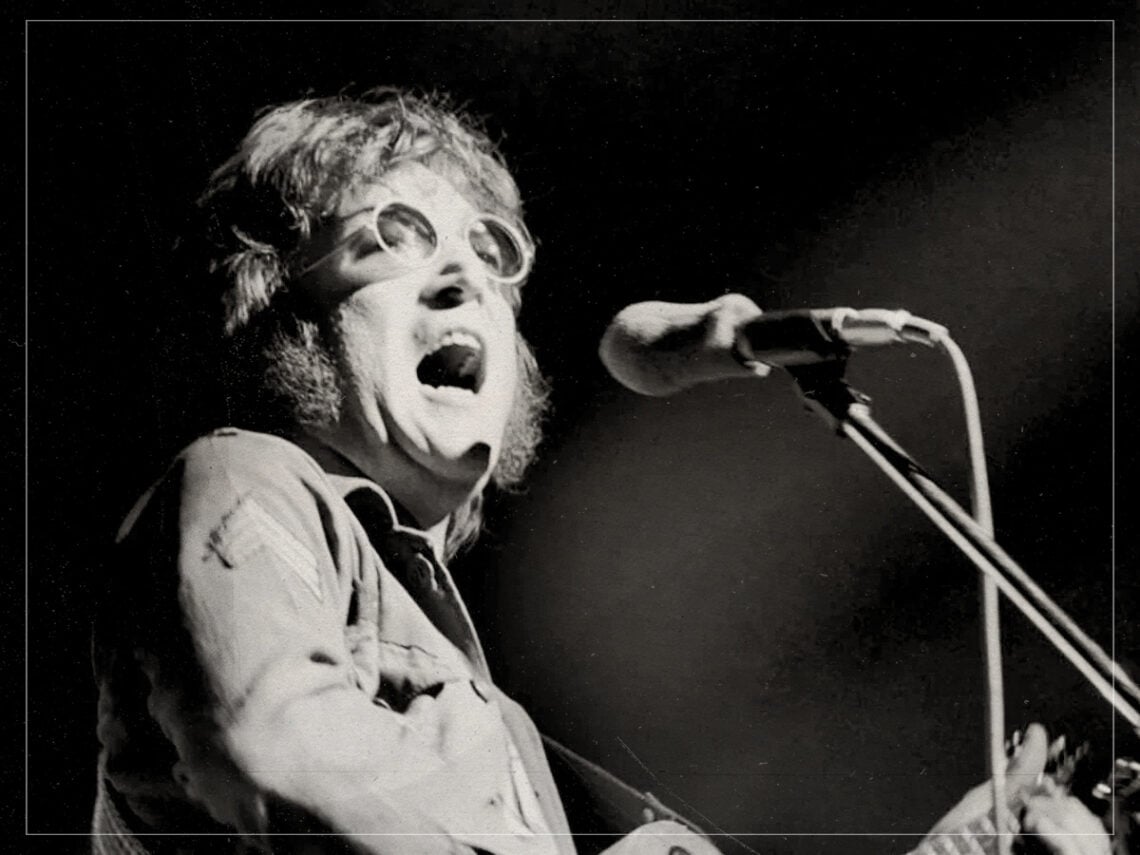
Well, it was these same mechanical, everyday grinds of modern capitalism that John Lennon mulled over in his barbed critique, ‘I’m Only Sleeping’. It’s the story of a fellow who wakes up and decides to stay in bed, almost preempting his bed-in for peace protest with Yoko Ono.
However, there is a sense that the bed in question is on an estate in Liverpool rather than a luxury suite. Ironically, you could argue that the far quieter protest of some unknown member of the proletariat in ‘I’m Only Sleeping’ is one that governments would pay more mind to than Lennon and Yoko’s often joked about jaunt.
Hidden in the otherworldly welter of psychedelic sounds, a totally novel sonic bed at the time, is the revolutionary anti-capitalist message: “Everybody seems to think I’m lazy / I don’t mind, I think they’re crazy / Runnin’ everywhere at such a speed / ‘Til they find there’s no need”. Facing up to another stressed-out day of breaking our backs towards an early grave, haven’t we all thought about this? I certainly did in my manual labour days… that’s why I became a music journalist.
Life is tough for the working classes, and there is no means of escape. You have to work for your lot, but the work will be hard, and your lot will not be a lot. Until Lennon says, ‘You don’t’. He argues in this odd little song that you can actually just stay in bed. Maybe pop out for a walk around lunchtime. You can opt out of the rat race.
This is a chilling thought for any venture capitalist to consider. If we all did this, the world would change. It would become the 99.9% vs the 0.1% who capriciously rule us. And there is only one winner there. The simplicity of this irrevocable reality is confoudning.
Oddly enough, this also seems so infeasible that the song is nearly always interpreted as autobiographical rather than conventional protest fodder. Given Lennon’s laidback nature, he is seen as the hippie home dweller in question. It is construed as Lennon wanting to stay in and smoke pot rather than go to the studio, stripped of its wider political meaning.
In actual fact, he was already on his way to being bigger than Jesus Christ at this stage. He was hardly the type of fellow who had to justify his long lie in or opt out of the rat race. He had, in effect, joined the 0.1%. And from this powerful position, instead of luxuriating like many ‘bling’ peddling modern stars, he argues from the perspective of the proletariat that he sees when gazing out of his window, now stationed 20 stories above them.
His call for a psychedelic revolution of actualising the means of turning on, tuning in, and dropping out rather than just wearing a bandana to symbolise it arguably makes ‘I’m Only Sleeping’ the Beatles’ most political anthem. In fact, “Stay in bed, float up stream, do as you please” is potentially the only revolt possible in a capitalist system. He was onto something with his bed-in; it’s more actionable and, ironically, direct than any damn election.
Though reams of philosophical thought might have touted, more highfalutin ideas, at the core of all the world’s problems is the simple hostility of capitalism’s mechanics. The slave is disgruntled because he sees a pittance of the bounty that his hard work affords his master. So, he is sore about it. Thusly, we don’t just need a change in government, we need a change in civilisation. In the current capitalist system, democracy only grants the illusion of freedom. Elections give the slaves a chance to pick a new master.
‘I’m Only Sleeping’ sees Lennon argue that the slaves can emancipate themselves simply by realising there is no need to run “everywhere at such a speed” in service of someone else. Lennon’s unknown protagonist from the streets of Liverpool finds his own utopia and freedom in simply ‘sleeping’.
This made him the enemy of many with the US, as revealed in declassified FBI documents, actively looking to drum up charged to deport him, and even manufacturing visa issues to prevent him from presenting his message to a masses at Woodstock. Alas, perhaps the most potent symbol of the realities of capitalist realism that people simply deciding to stay in bed proves so impossible to ‘imagine’ that the point of ‘I’m Only Sleeping’ is still largely missed over half a century later.