The Night the Gods Returned: Led Zeppelin’s Historic Reunion at London’s O2 Arena
On December 10, 2007, rock history bent in on itself.
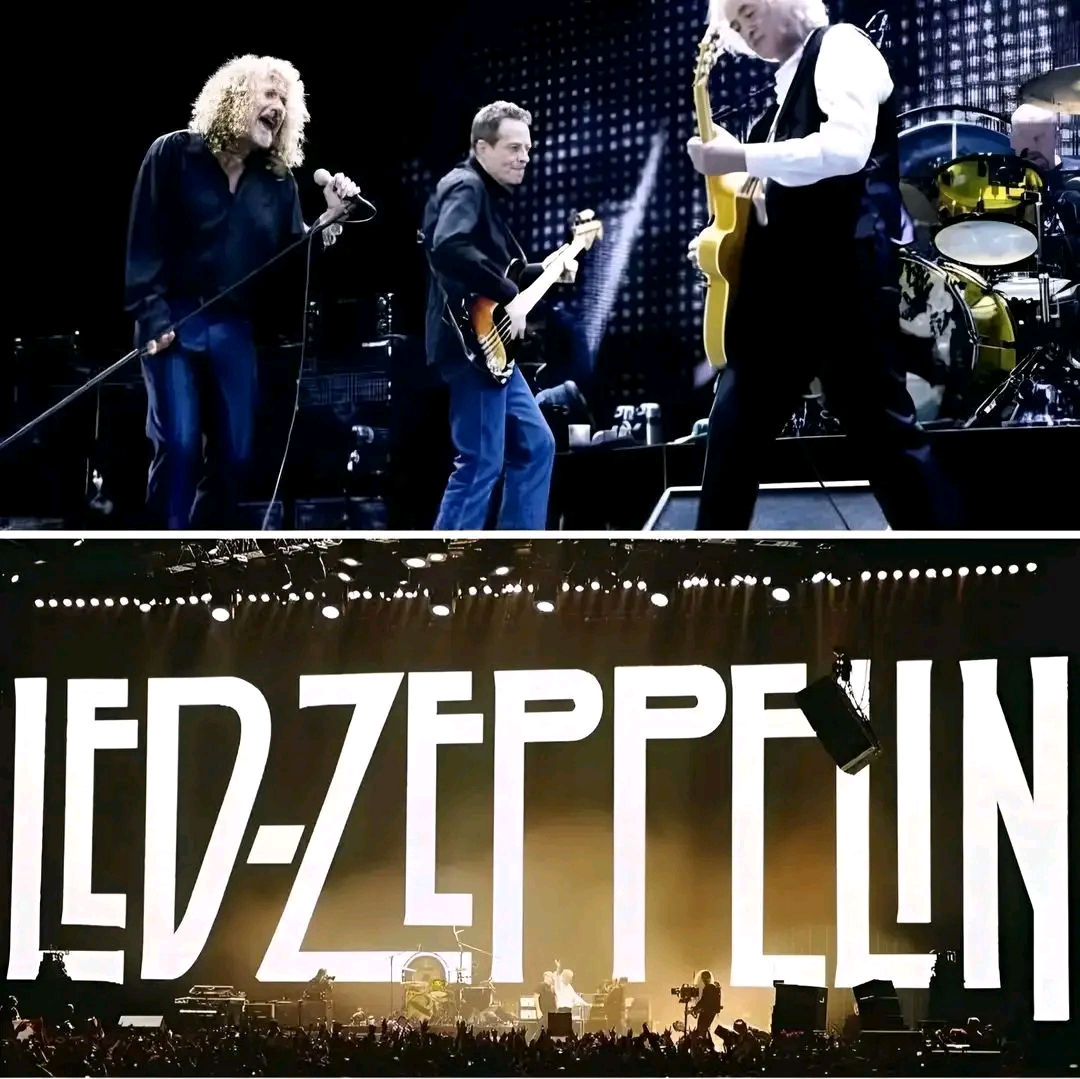
For the first—and only—time since 1980, Led Zeppelin stood together again on a single stage. Not for a tour. Not for nostalgia. But for something deeper: a tribute to Ahmet Ertegun, the visionary founder of Atlantic Records, the man who believed in Zeppelin before the world knew how loud they would become.
What followed at London’s O2 Arena was not merely a concert. It was an event so monumental that over 20 million people applied for tickets on the same day—a number so staggering it remains unmatched in music history. Entire countries tried and failed to get in. The demand alone confirmed what many already knew: Led Zeppelin had never truly left.
A Reunion That Refused to Be Safe
When the lights went down and Robert Plant, Jimmy Page, John Paul Jones, and Jason Bonham walked onstage, the air carried a weight few performances ever achieve. Jason, stepping into the place of his father John Bonham, did not imitate—he honored. His drumming was thunderous, emotional, and fiercely alive, earning the unspoken approval of both band and audience.
From the opening moments, it was clear: this would not be a softened, ceremonial reunion. Zeppelin came to play hard.
They tore into their catalog with authority—raw blues, mythic grandeur, and surgical precision colliding exactly as they once had. Page’s guitar howled and carved the air. Jones anchored everything with quiet mastery. Plant—older, wiser, but no less commanding—reshaped the vocals with grit and soul rather than chasing youth. The result was something rarer than nostalgia: truth.
Music That Refused to Age
What stunned critics and fans alike was how undiminished the music felt. This was not a band surviving on reputation. This was a band reasserting dominance.
Songs stretched and breathed. Tempos shifted naturally. Power didn’t come from volume alone, but from control. Zeppelin sounded like what they always were—a force, not a product. The blues roots remained feral. The mysticism still loomed large. And the sheer physicality of the performance reminded everyone why no band had ever truly replaced them.
This was not about reclaiming the crown.
It was about proving it had never been taken.
More Than a Tribute—A Statement
Though the night was dedicated to Ahmet Ertegun, the performance became something larger: a reminder of what rock music can be when it is fearless, unpolished, and uncompromising. Zeppelin did not modernize their sound. They did not dilute it. They trusted it.
And it worked.
By the final notes, the O2 Arena felt less like a venue and more like a witness—to history repeating itself, not as a memory, but as a living, breathing event.
Why This Night Still Matters
In an era of endless reunions and farewell tours, December 10, 2007 stands alone. Led Zeppelin reunited once—and only once—on their own terms. No repeats. No dilution. No chasing relevance.
They walked onstage, reminded the world exactly who they were, and walked away.
That restraint, paired with the sheer magnitude of the performance, is precisely why this concert endures. It wasn’t just one of the greatest reunions in rock history.
It was proof.
Proof that Led Zeppelin’s music is timeless, colossal, and unmatched.
Proof that some bands don’t fade—they echo.
And proof of why, decades later, they are still so often spoken of as the greatest rock band of all time.