They Said the Magic Was Gone—But Paul McCartney Proved It Never Left
Des Moines, Casey Center — The name on the building may be new, but what happened inside it felt timeless.
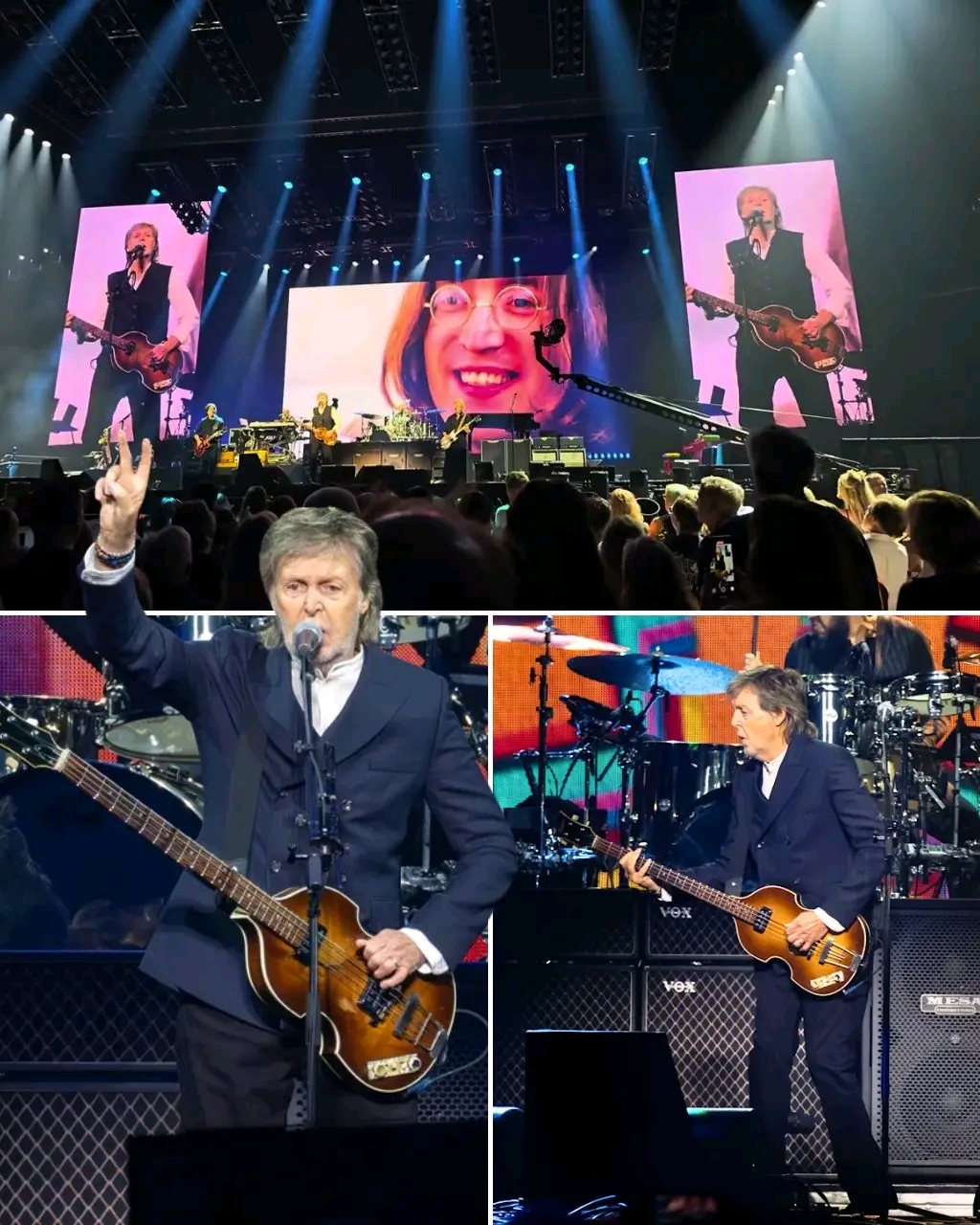
There was no opening act. No countdown. No spectacle designed to ease the crowd into the night. When Paul McCartney stepped onto the stage, the air itself seemed to crackle—as if the arena collectively realized it was about to witness something that doesn’t happen often anymore: a living chapter of music history, fully alive and unapologetically loud.
From the first explosive notes of “Help!”, it was clear this wouldn’t be a nostalgia act. This was not a legend coasting on memory. This was a master still in command of his craft, smiling wide, guitar slung low, eyes dancing as if he were still playing the Cavern Club. The transition into “Coming Up” only fueled the momentum, the crowd instantly on its feet, voices rising as one.
Inside the Casey Center, generations collided in the best possible way. Grandparents who once dropped needles onto vinyl records stood beside children hearing these songs live for the very first time. The years between them dissolved with every chorus. This wasn’t just a concert—it was a shared inheritance being passed hand to hand.
McCartney tore through a setlist that felt both reverent and fearless. “Drive My Car” swaggered through the arena with undiminished bite. “Got to Get You Into My Life” soared, its brass-infused soul still urgent and joyful. “Letting Go” hit with raw, unfiltered rock energy, a reminder that Paul has always thrived when things get loud.
Then came the moment that silenced any lingering doubts.
Introducing a song from Egypt Station, McCartney shrugged with a grin: “You might’ve heard it, you might’ve not—we don’t care.” And just like that, the myth that legends should only live in the past was shattered. The modern track landed not as an obligation, but as proof—proof that creativity doesn’t expire, that evolution is not betrayal, and that the same man who helped invent modern pop music is still chasing the next spark.
Throughout the night, McCartney played to the crowd with ease and warmth—winks, waves, knowing smiles—never above them, always with them. Every chord carried intention. Every lyric carried history. And every moment reinforced the same truth: legends don’t fade. They adapt. They endure.
As the final notes rang out and the lights washed over a crowd that didn’t want to leave, one thing was undeniable. Whatever the building is called, whatever era you grew up in, whatever doubts you carried through the door—they didn’t survive the night.
Paul McCartney didn’t just perform in Des Moines.
He reminded everyone why the music still matters.