PAIN UNDER THE STAGE LIGHTS: The Night Hamburg Almost Broke The Beatles
In the early 1960s, long before stadiums, screaming fans, and global adoration, The Beatles were fighting a quieter, harsher battle—one waged under dim red lights in the nightclubs of Hamburg, Germany. This was not the romance of rock ’n’ roll. It was endurance. Survival. And pain.
Hamburg demanded everything and gave almost nothing in return.
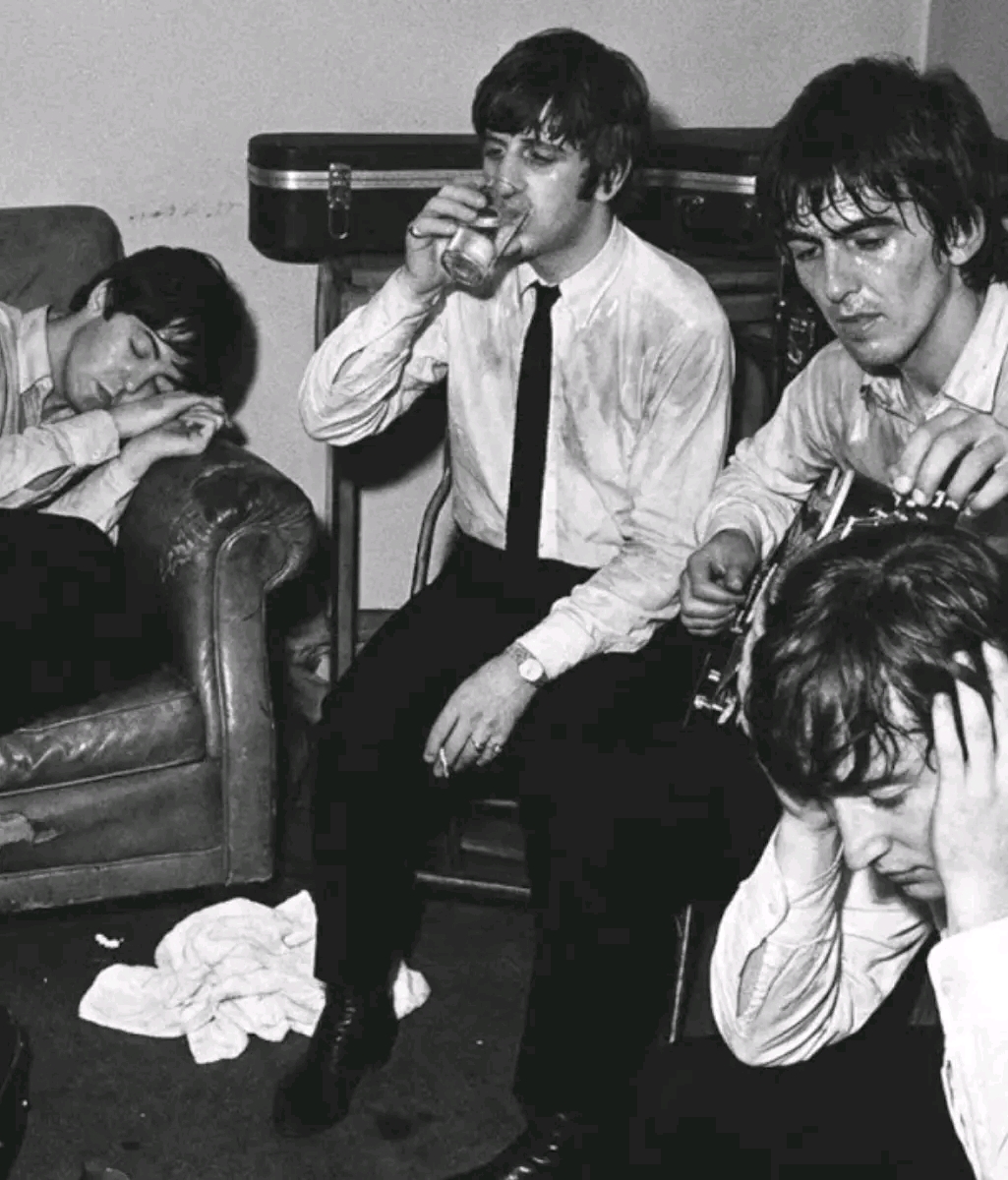
The clubs along the Reeperbahn did not care about artistry or ambition. They wanted noise, energy, and endless hours of music to keep sailors drinking until sunrise. For The Beatles—still teenagers, far from home—this meant performing six, sometimes eight hours a night, seven days a week. Breaks were short. Food was scarce. Sleep was optional.
Under those unforgiving stage lights, music blurred into muscle memory. Fingers bled. Voices cracked. Hunger gnawed constantly. The crowd often talked over them, laughed, or ignored them entirely. Applause was rare. Payment was conditional.
“Two more hours… or we don’t get paid.”
It wasn’t a threat. It was fact.
By the third or fourth set of the night, exhaustion stripped away any illusion of glamour. What remained was discipline. They learned to play through pain, boredom, and chaos. Mistakes were not forgiven—by club owners, by the audience, or by survival itself. If they wanted to eat, they played. If they wanted a place to sleep, they played.
Hamburg was brutal, but it was also transformative.
Forced to fill endless hours, the band expanded their repertoire at a terrifying pace. They learned how to read a room, how to command attention, how to turn indifference into engagement through sheer force of performance. They hardened. Not emotionally colder—but sharper. More dangerous in their precision.
By dawn, when the streets emptied and the neon lights faded, nothing felt heroic. There were no cheers echoing in their ears, no sense of destiny fulfilled. Only relief. Only necessity. And a quiet question lingering in the silence:
Was this suffering breaking them—or forging something unstoppable?
History would answer that question decisively.
When The Beatles later appeared on television, in suits and synchronized smiles, audiences saw polish. What they didn’t see were the Hamburg nights behind it—the hunger, the exhaustion, the relentless grind that taught them how to endure anything. Those stage lights had burned away weakness and left behind a band that could not be shaken.
Hamburg didn’t make The Beatles famous.
It made them unbreakable.
And under those harsh lights, in those merciless hours, modern music was quietly being reshaped—not by comfort or confidence, but by pain, discipline, and the will to survive one more song until morning.