“For the First Time, I’m Afraid They Could Be Forgotten” — Sean Ono Lennon on Time, Memory, and the Fragile Future of The Beatles’ Legacy
For more than half a century, The Beatles have felt untouchable—etched into culture as permanently as the music itself. Their songs play in supermarkets and stadiums, their faces stare out from posters and documentaries, and their influence echoes through nearly every corner of modern music. Forgetting The Beatles has always seemed impossible. Yet when Sean Ono Lennon recently admitted, “For the first time, I’m afraid they could be forgotten,” it landed with unexpected weight. Not because it was dramatic—but because it was quiet, thoughtful, and deeply human.
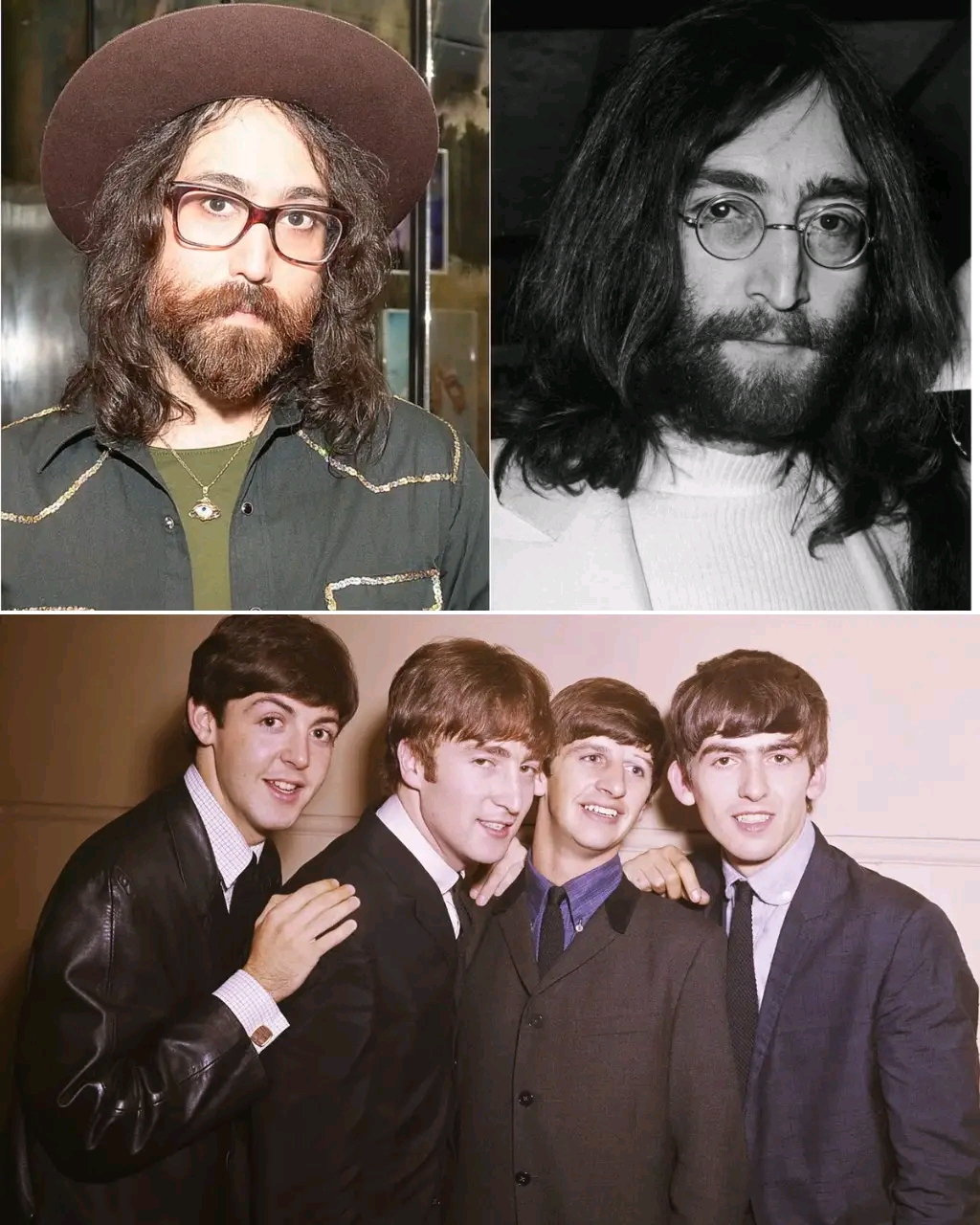
Sean is not a casual observer of history. He is John Lennon’s son, raised in the long shadow of a legacy that shaped the world. For most of his life, the concern was never whether The Beatles would endure, but how to live beside something so enormous. So what changed now, after all these decades? Why would the fear arrive at a moment when Beatles music is more accessible than ever?
The answer, by Sean’s own reflection, isn’t about charts, streams, or sales. It’s about time, and the way it changes how memory works.
For generations, The Beatles were kept alive not just by recordings, but by people who remembered them as a living force. Parents told stories of screaming crowds and first loves soundtracked by vinyl records. Musicians spoke of the moment they first heard “A Day in the Life” or “Hey Jude” and felt their world split open. The music wasn’t just heard—it was remembered.
That living memory is now fading.
Sean has spoken about realizing that we are entering an era where no one alive experienced The Beatles as a current band. To younger listeners, they are no longer a shared event or a cultural earthquake—they are content in an endless digital library, competing equally with everything else. When all music from all eras sits side by side on a screen, history flattens. Context disappears. Greatness risks becoming just another option in an algorithm.
This is what frightens him.
It’s not that young people dislike The Beatles. It’s that many have never been taught why they mattered. Innovation, rebellion, risk—these are not always obvious when heard without the story. Without understanding how radically The Beatles changed songwriting, recording, fashion, and even the idea of what a band could be, the music can be misheard as merely “old” instead of foundational.
There’s also a more personal reason behind Sean’s worry—one that makes his admission quietly heartbreaking.
The guardians of the legacy are aging. Paul McCartney and Ringo Starr are living legends, but they are no longer young men. Yoko Ono, who fiercely protected John Lennon’s work for decades, is now in her later years. The people who knew the Beatles—who could correct the record, challenge myths, and speak from lived truth—are slowly stepping back. When they are gone, what remains is interpretation.
And interpretation, Sean understands, is fragile.
History doesn’t disappear all at once. It erodes. Stories are simplified. Edges are softened. Complex truths are replaced with slogans and nostalgia. The Beatles risk becoming symbols rather than artists—T-shirts instead of challengers, background music instead of a disruptive force that once terrified parents and inspired revolutions in sound.
Sean’s fear is not that the songs will vanish, but that their meaning will.
That realization has changed how he sees his own role. He no longer views legacy as something that sustains itself automatically. It must be actively carried—explained, contextualized, and reintroduced with honesty. Not polished into myth, but preserved in all its human contradiction: the genius, the tension, the love, the breakups, and the cost.
Ironically, this fear arrives at a moment when technology gives us unprecedented access to the past. Unreleased footage, restored recordings, AI-assisted remixes—all of it promises preservation. But Sean’s insight cuts deeper: access is not the same as understanding. When everything is available, nothing feels urgent. When discovery is effortless, reverence can disappear.
What he is really mourning is the loss of shared listening. The idea that music could stop time, gather people in one place, and change how they saw themselves. In a fragmented world, where attention is divided into seconds, even masterpieces struggle to demand patience.
And yet, hidden inside Sean Ono Lennon’s fear is a quiet call to action.
If The Beatles can be forgotten, then nothing is guaranteed. Not greatness. Not influence. Not even cultural immortality. Memory survives only when people choose to pass it on—not as relics, but as living conversations.
Perhaps that is why his admission feels so powerful. It strips away the illusion that history protects itself. It reminds us that legacy is not a monument—it’s a responsibility.
The future of The Beatles, Sean suggests, won’t be decided by streaming numbers or anniversary releases. It will be decided by whether new generations are invited to listen deeply, to understand why four young men from Liverpool once changed the world—and why that change still matters.
Time may be working against their legacy.
But awareness, care, and truth might still work in its favor.