The Day Britain Truly Noticed Them
In early 1963, The Beatles were already causing ripples—sold-out shows in the North, chart movement that hinted at something bigger—but Britain as a whole hadn’t yet felt them. That changed one quiet evening on television. Not with screaming fans or historic headlines, but with a broadcast so unassuming that it was later erased, wiped clean as routine studio housekeeping. History nearly lost the moment when Beatlemania first entered British living rooms.
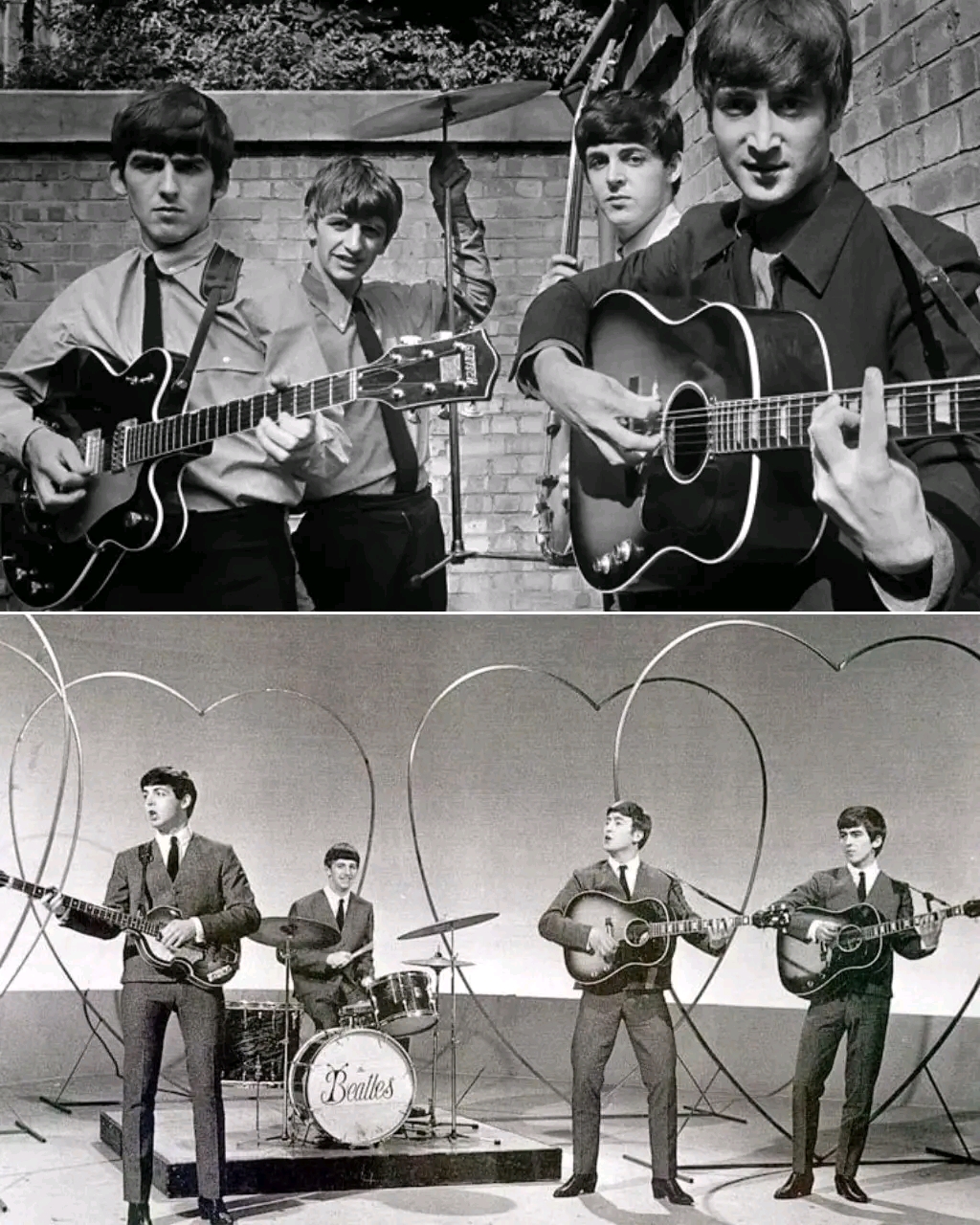
The program itself no longer exists. Like much early television, it was never archived, only reused. What remains are two surviving screen photographs and a brief mimed performance of “Please Please Me.” On paper, that sounds insignificant. In reality, those fragments capture the exact instant The Beatles crossed an invisible line—from promising pop group to a national phenomenon in waiting.
At the time, nothing about the broadcast seemed monumental. There were no shrieking crowds drowning out the music. No host declaring the arrival of a new era. The four young men appeared almost ordinary: neat suits, practiced smiles, restrained charm. They looked like dozens of other acts that had passed through British television studios. That ordinariness is precisely what makes the moment so revealing.
Because when Britain first noticed The Beatles, it didn’t notice noise—it noticed confidence.
Look closely at the surviving images. John Lennon’s sideways glance at the camera, half amused, half defiant. Paul McCartney’s effortless ease, already understanding the lens as well as the melody. George Harrison standing quietly assured, Ringo Starr locked in with a drummer’s calm authority. They weren’t trying to conquer the nation. They were already behaving like a band that belonged everywhere.
And then there’s the easily missed detail historians still point to: the reaction off-screen. Studio staff reportedly paused. Camera operators lingered a second longer than necessary. The performance ran not as a novelty, but with a sense that something had shifted in the room. Television crews, notoriously indifferent, felt it first. Before the crowds, before the headlines, before the hysteria.
This mattered because British television in 1963 wasn’t just entertainment—it was validation. One appearance could carry an act from regional popularity into national consciousness overnight. Millions of viewers who had never heard of The Cavern Club or Liverpool’s music scene suddenly saw The Beatles as familiar faces, not distant names. They didn’t scream. They didn’t riot. They remembered.
Within weeks, the shift became undeniable. Crowds grew louder. Singles sold faster. Newspapers changed their tone. By the end of the year, Beatlemania was no longer creeping—it was unstoppable.
The tragedy is that the broadcast itself was almost completely lost. Wiped, forgotten, treated as disposable. But perhaps that makes its legacy even more powerful. Because Beatlemania didn’t begin with hysteria—it began quietly, in black and white, with four young men standing under studio lights, unaware that Britain was watching history happen.
What was overlooked wasn’t a scream or a headline.
It was the calm before the storm.