On February 22, 1964, just days after igniting full-scale Beatlemania in the United States, The Beatles returned home to Britain as conquering heroes.
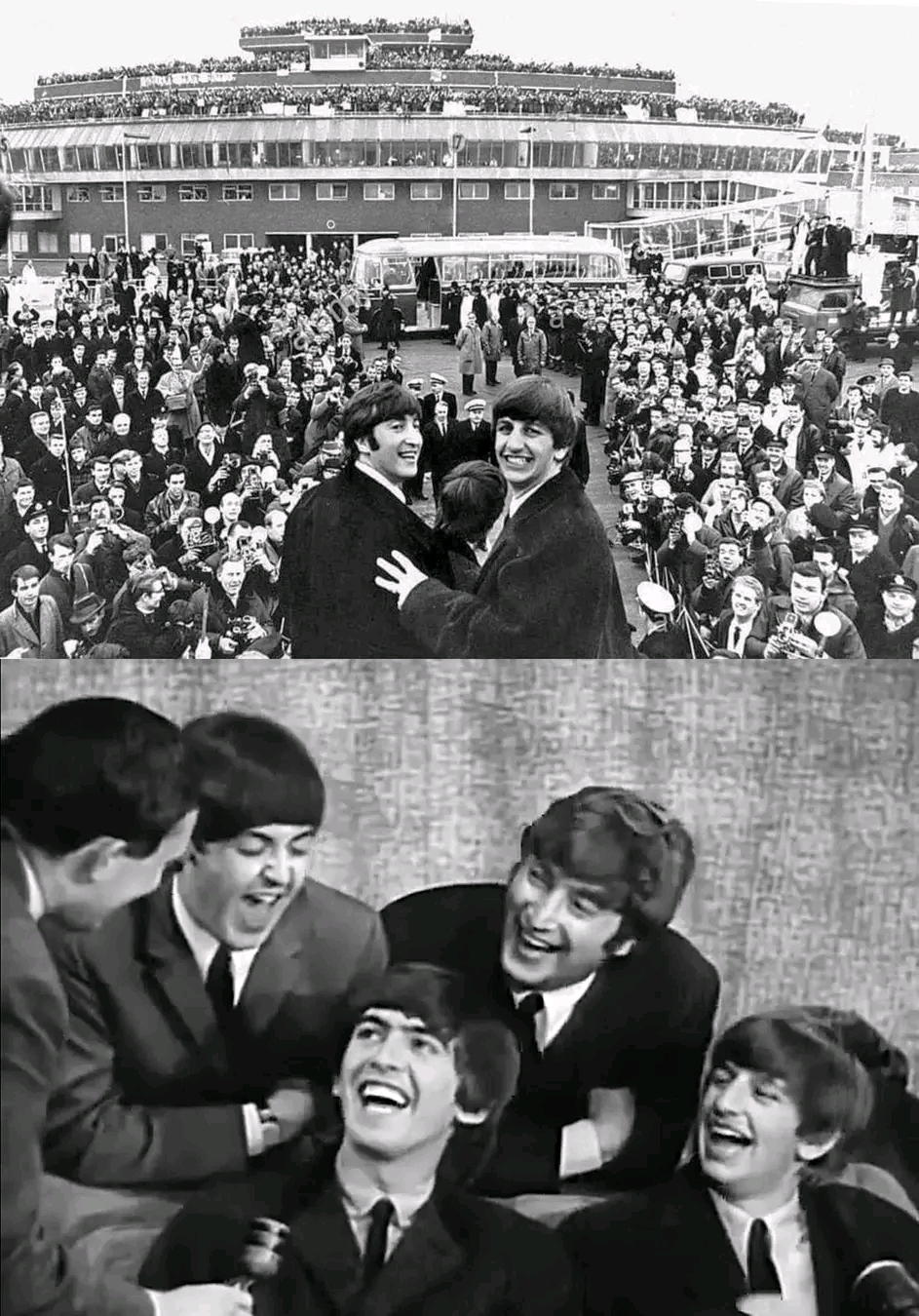
Their flight touched down at London Airport at 8:10 on a chilly Saturday morning—about thirty minutes later than scheduled—but the delay did nothing to dampen the excitement. Thousands of fans had gathered for hours, lining the airport in hopes of catching a glimpse of John Lennon, Paul McCartney, George Harrison, and Ringo Starr. The screams that had shaken New York, Washington, and Miami now echoed across West London.
Only weeks earlier, the band had embarked on what many considered a bold gamble: taking British rock ‘n’ roll to America. What followed was nothing short of cultural detonation. Their appearance on The Ed Sullivan Show drew an audience of over 70 million viewers, a record at the time. By the time they boarded the flight back to the UK, they hadn’t just “slayed America”—they had permanently altered the course of popular music.
Back at London Airport—renamed Heathrow Airport in 1966—the welcome was both triumphant and chaotic. Reporters jostled for position. Camera flashes popped relentlessly. The band, dressed smartly and smiling despite exhaustion, faced a packed press conference. They delivered the same quick wit and dry humor that had charmed American audiences, proving that their appeal was as much personality as performance.
Television and radio crews conducted interviews on the spot, broadcasting the moment across Britain. In an unusual move, the BBC’s long-running sports program Grandstand broke from its traditional coverage to report on the band’s return—an extraordinary acknowledgment that something far bigger than music was unfolding. Beatlemania had become a national event.
For Britain, their homecoming carried a deeper meaning. In the early 1960s, American artists had largely dominated the global music scene. Now, four young men from Liverpool had reversed the tide. The so-called “British Invasion” was no longer a prediction—it was reality. The Beatles’ success overseas instilled a new confidence in British pop culture and opened doors for countless bands that would follow.
As they waved to fans from the airport balcony, it was clear this was more than a routine return from tour. It was a symbolic moment: Britain welcoming back its ambassadors of a new cultural era. Within months, their fame would grow even more intense, their music more ambitious, and their influence more profound.
But on that cold February morning in 1964, it was simple. The boys were home. And Britain had never seemed prouder.