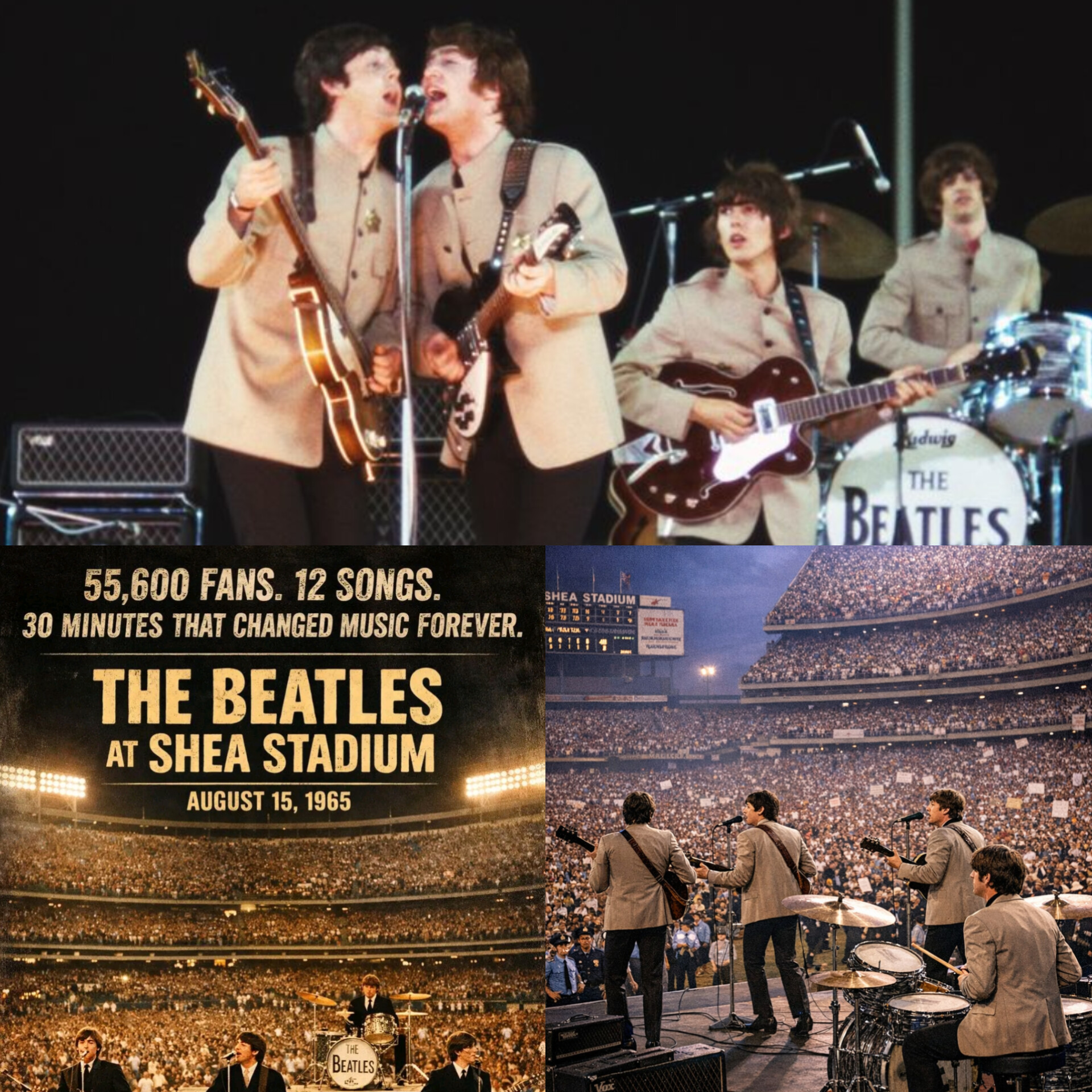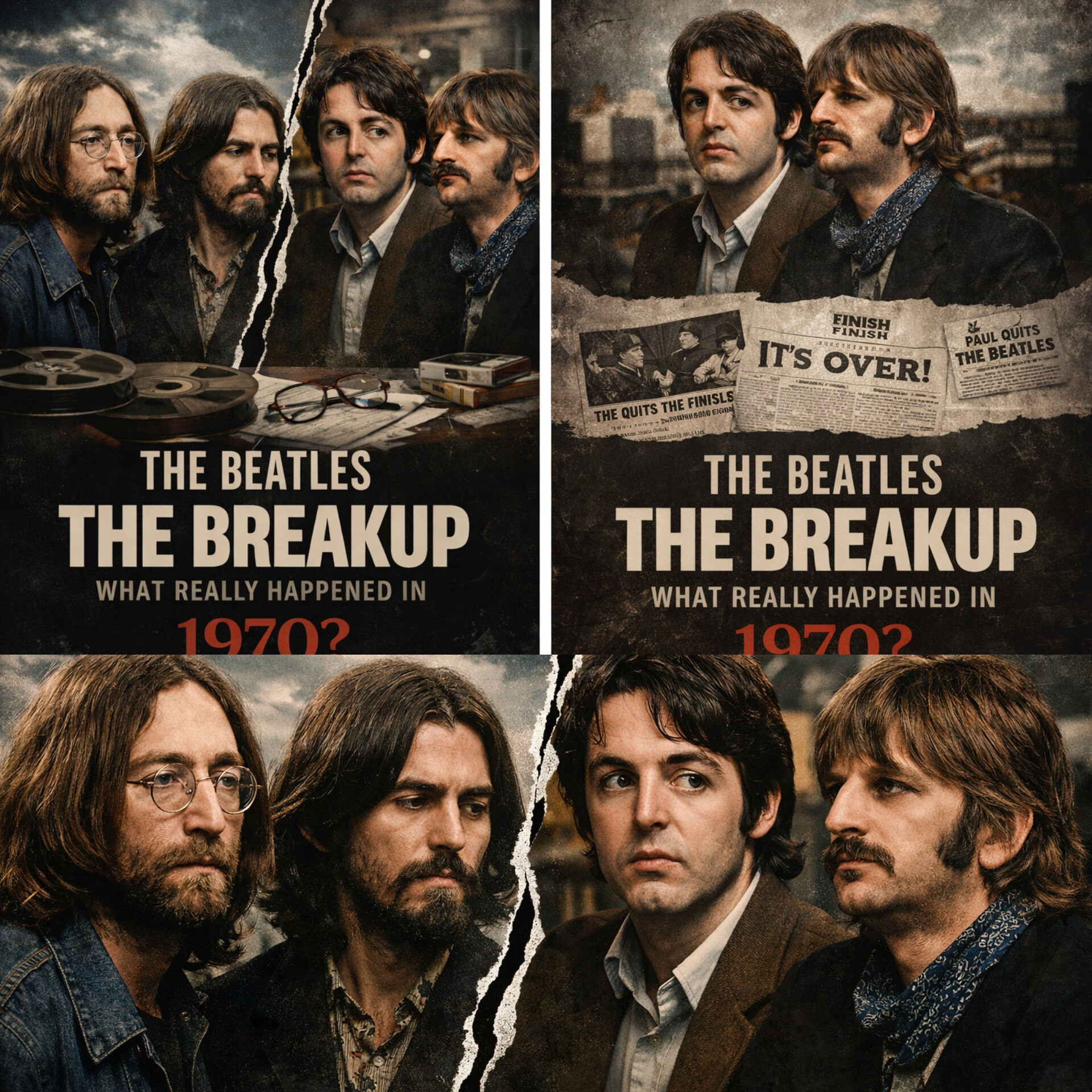
The Breakup: What Really Happened in 1970?
When The Beatles officially came to an end in 1970, the world reacted as if something permanent and irreplaceable had vanished. For millions, it wasn’t just the breakup of a band — it felt like the end of an era. But what really happened behind the scenes?
The truth is more complex than a single argument, a single person, or a single moment.
—
Creative Growth — and Creative Distance
By the late 1960s, each Beatle had grown into a powerful creative force.
John Lennon was increasingly drawn to raw, personal songwriting and experimental projects.
Paul McCartney was pushing for structure, perfection, and ambitious studio work.
George Harrison had blossomed into a world-class songwriter, bringing deeply spiritual and introspective material.
Ringo Starr, steady and reliable, found himself navigating rising tensions between his bandmates.
What once felt like a unified vision gradually became four strong individual visions sharing the same studio.
—
The Loss of Brian Epstein
In 1967, the sudden passing of their manager, Brian Epstein, left a leadership vacuum. Epstein had been more than a business figure — he was a stabilizing force. Without him, decision-making became more difficult, and internal disagreements intensified.
The band began managing themselves, and business pressures increased alongside creative ones.
—
Business Conflicts
One of the most significant fractures came from disagreements over management.
John Lennon, George Harrison, and Ringo Starr wanted to work with Allen Klein. Paul McCartney preferred his future father-in-law, Lee Eastman.
This disagreement wasn’t minor — it created legal and emotional divisions that deepened existing tensions. Lawsuits followed, and by 1970, the partnership that once felt unbreakable was entangled in legal battles.
—
The “White Album” and Rising Tensions
During the recording of The Beatles (White Album), the cracks became visible. Sessions were fragmented. Members sometimes recorded separately. At one point, Ringo temporarily left the band, overwhelmed by the atmosphere.
The collaborative magic was still there — but it required more effort.
—
The Get Back Sessions and Let It Be
The 1969 “Get Back” project (later released as Let It Be) was meant to return the band to simpler, live recording roots. Instead, it exposed how strained relationships had become. Disagreements over direction, leadership, and production grew more visible.
Though the rooftop concert in January 1969 remains iconic, it would be their final public performance.
—
John’s Private Decision
In September 1969, John Lennon privately told the band he wanted a “divorce.” However, the decision was kept quiet for business reasons.
It wasn’t until April 1970 — just before releasing his debut solo album — that Paul McCartney publicly announced he was no longer working with the group. The headlines framed it as Paul quitting, but the reality was more layered: the band had already emotionally separated months earlier.
—
Not One Cause — But Many
The breakup wasn’t caused by one person. It wasn’t caused by one partner, one argument, or one album.
It was the result of:
Intense fame at a young age
Exhaustion after a decade of nonstop work
Evolving artistic identities
Business disputes
Personal growth pulling them in different directions
They had started as teenagers. By 1970, they were adults with families, ambitions, and independent voices.
—
The Legacy After the Split
Ironically, the breakup allowed each member to flourish creatively. Lennon released deeply personal solo work. McCartney built a new band and continued evolving. Harrison achieved massive success with All Things Must Pass. Ringo found his own voice as a solo artist.
The end of The Beatles wasn’t the destruction of talent — it was its expansion.
—
Why the Story Still Fascinates Us
More than 50 years later, people still debate what “really” happened. Perhaps the reason is simple: The Beatles represented unity, possibility, and a cultural shift. Seeing them part ways felt like losing something permanent.
But maybe their breakup was inevitable — not because they failed, but because they succeeded beyond imagination.
Four young men changed music forever.
And sometimes, even legends grow in different directions.
—
If you’d like, I can now:
Turn this into a YouTube storytelling script
Add a dramatic hook intro
Or create a short viral version for social media 🎸