John Lennon: The Memorial Without a Grave
On the night of December 8, 1980, the world lost one of its most influential voices when John Lennon was shot and killed outside The Dakota in New York City. The tragedy stunned millions. Fans gathered in cities across the world, lighting candles and playing his music through the night. For many, it felt as if a part of modern culture had suddenly gone silent.
Yet what followed was not the grand farewell people expected.
There was no public funeral procession. No towering monument. No marked grave where mourners could stand and pay their respects.
At the request of Yoko Ono, Lennon was cremated shortly after his death. His ashes were kept privately, and their exact resting place has never been officially revealed to the public. In a way, even in death, Lennon remained what he had often been in life—deeply personal, somewhat elusive, and resistant to traditional expectations.
But while there is no grave, there is a place where people gather.
Just across the street from The Dakota, inside Central Park, lies Strawberry Fields—a quiet memorial dedicated to his memory. The site was named after the famous Strawberry Fields Forever, one of Lennon’s most introspective songs with The Beatles.
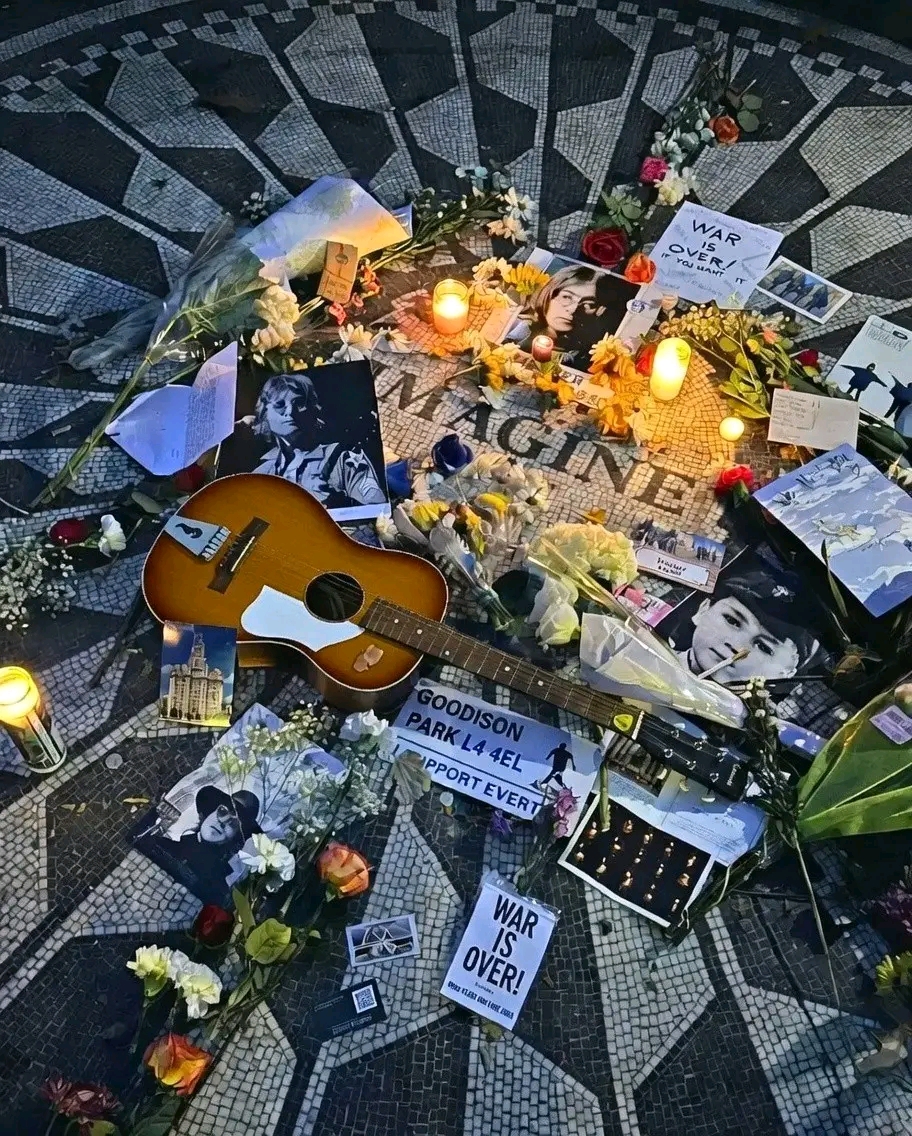
At the center of the memorial is a simple black-and-white mosaic bearing a single word: Imagine—a tribute to Lennon’s timeless anthem Imagine. The mosaic itself was a gift from the city of Naples, symbolizing the international reach of Lennon’s message. There is no statue rising above it, no elaborate design demanding attention—just that one quiet word.
And yet, it draws people from every corner of the world.
Visitors come daily to Strawberry Fields. Some place flowers gently on the mosaic. Others sit quietly on nearby benches, absorbing the calm that seems to exist there despite the surrounding rush of Manhattan. Often, street musicians play acoustic versions of songs by The Beatles, and strangers pause together, united by melodies that have crossed generations.
It doesn’t feel like a traditional memorial. It feels more like a moment of stillness—a pause in the rhythm of the city.
Perhaps that is why it works.
Lennon’s physical remains may be hidden from public view, but his symbolic resting place is open to everyone. Without a grave to define his memory, his presence seems larger, more universal. He rests not beneath a stone marker, but within a living park filled with voices, footsteps, music, and memory.
In many ways, it mirrors the message he spent his life sharing.
John Lennon once asked the world to imagine peace, unity, and a future without division. Today, people from every nation stand together at the Imagine mosaic—singing, remembering, and reflecting on that simple dream.
His body turned to ashes.
But his voice, carried through songs and ideas, continues to echo through the world.