When George Harrison Heard John Lennon Was Gone… He Did Something No One Expected
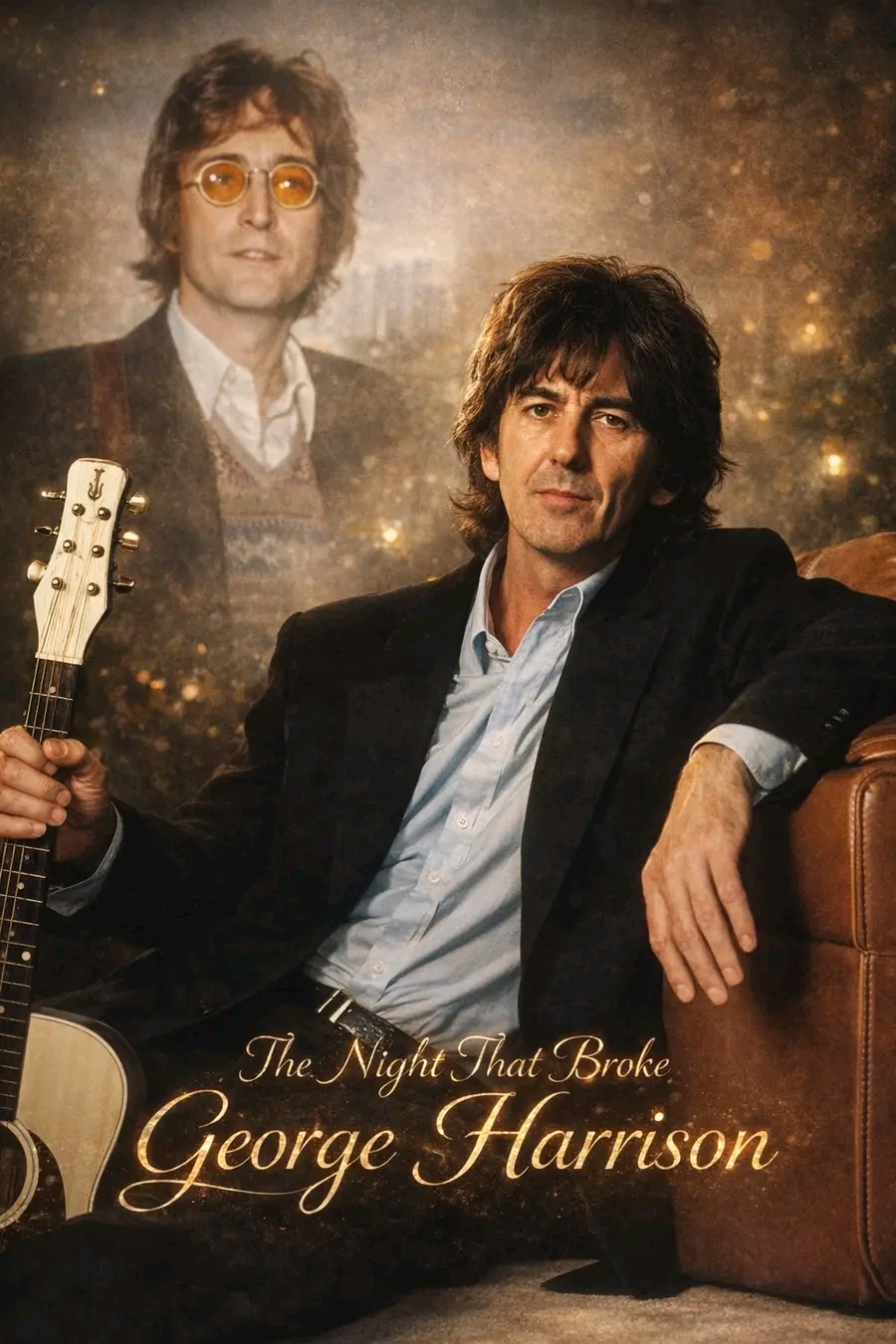
In the early hours of December 8, 1980, a phone call shattered the stillness of an English night—and quietly altered the emotional landscape of one of music’s most introspective figures. Olivia Harrison answered first. What she heard was almost impossible to comprehend. Moments later, she turned to her husband, George Harrison, and delivered the words that would echo through history: John Lennon had been shot.
At first, George didn’t react with visible grief or dramatic shock. Instead, he reached instinctively for reason—for some version of reality that might still leave room for hope. How bad is it? he asked, searching for the possibility that the situation wasn’t final, that something could still be done. But the truth came back with devastating clarity: Lennon was gone.
What happened next has puzzled fans for decades. George went back to sleep.
To many, it seemed unthinkable. But in truth, it revealed something deeply human. This wasn’t indifference—it was shock in its rawest form. When a loss is too immense to process, the mind sometimes shields itself, creating distance where none should exist. Sleep, in that moment, became a refuge—a brief escape from a reality too overwhelming to face.
When George woke, the world had not changed. The unimaginable was still real. John Lennon—his bandmate, his collaborator, his complicated friend—was no longer part of it.
Their relationship had never been simple. As members of The Beatles, George and John shared a bond forged in creativity, ambition, and global fame. But like many close relationships, it had been marked by tension as well as admiration. By the late 1960s, George had begun stepping out from the towering shadow of Lennon and Paul McCartney, asserting himself as a songwriter and spiritual voice. Still, the connection between them—rooted in their formative years—never fully disappeared.
In the years following Lennon’s death, George rarely revisited that night in public with emotional spectacle. Instead, he processed the loss through the lens that had come to define his later life: spirituality. Deeply influenced by Eastern philosophy and his connection to Ravi Shankar, George spoke often about the soul’s journey beyond the physical world. Death, in his view, was not an end, but a transition.
Yet beneath that calm perspective was something less visible—but no less real: anger.
Not the loud, explosive kind, but a quiet, enduring frustration at the violence that had taken John’s life. This wasn’t just the loss of a global icon. It was a deeply personal rupture—a life interrupted, a connection severed without warning or reason.
Eventually, that grief found its way into music.
In 1981, George released All Those Years Ago, a tribute that brought together voices from the past, including Paul McCartney and Ringo Starr. But the song was more than a memorial—it was a conversation. Through its lyrics, George didn’t simply mourn John Lennon; he spoke to him, as if the bond they shared still existed somewhere beyond reach.
It was a reflection of George himself: introspective, spiritual, and deeply human.
Because grief doesn’t follow a script. It doesn’t always arrive in tears or dramatic gestures. Sometimes, it appears in silence. In disbelief. In the quiet act of going back to sleep when reality feels too heavy to hold.
What George Harrison experienced that night wasn’t just the loss of a legend.
It was the loss of someone who had once been part of his everyday life—someone who helped shape not only his career, but his identity. A friendship that had weathered fame, conflict, and change, only to be ended in an instant.
And in the years that followed, George didn’t just carry that loss—he transformed it. Into music. Into reflection. Into a deeper understanding of life and what may lie beyond it.
Because some goodbyes are never fully spoken.
They’re simply lived with, one quiet moment at a time.