The story of Paul McCartney and John Lennon does not begin with fame.
It begins with friendship.
In the working-class neighborhoods of Liverpool, two young boys met almost by chance—drawn together by a shared love of music, curiosity, and a sense that something larger was waiting for them. Long before the world knew the name The Beatles, there was simply John and Paul: two teenagers with guitars, ideas, and an unspoken understanding.
That understanding became the foundation of one of the most influential partnerships in music history.
Together, they wrote songs that would define a generation. Their creative chemistry was instinctive—melodies, lyrics, and emotions flowing in a way that felt effortless. Success followed quickly, but at its core, their bond remained rooted in something deeply personal. For a time, it seemed unbreakable.
But time has a way of reshaping even the strongest connections.
As the years passed, differences began to surface. Their artistic visions evolved in different directions. Personalities that once complemented each other started to clash. The pressures of global fame, creative control, and changing identities added weight to a relationship that had once felt simple.
The distance between them did not come from one defining moment.
It grew gradually, through small disagreements, unspoken frustrations, and the quiet drift that can happen between people who once shared everything.
By the time The Beatles officially came to an end in 1970, the closeness between John and Paul had already transformed into something more complex—marked by tension, silence, and unresolved emotion.
And yet, their story did not end there.
In the years that followed, something changed. Away from the spotlight, the intensity of their rivalry softened. The need to compete faded. Slowly, and without fanfare, they began to reconnect—not as songwriting partners under pressure, but as two individuals reflecting on a shared past.
What remained was not conflict, but recognition.
They understood what they had been to each other.
They understood what they had created together.
Then, in 1980, everything changed again.
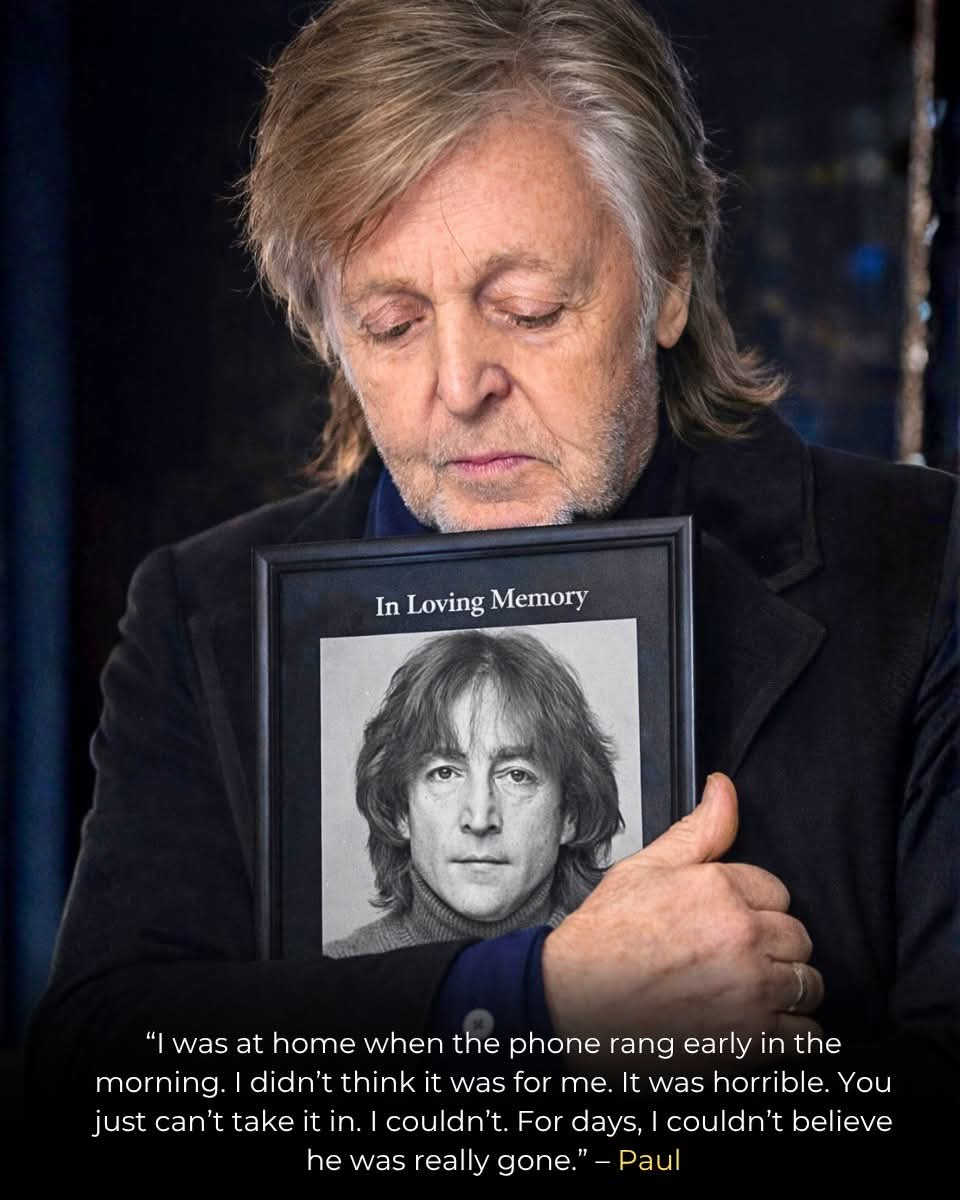
The death of John Lennon shocked the world, but for Paul McCartney, it was something far more personal. The news arrived suddenly, almost unreal—something too heavy to process in a single moment. In the days that followed, he would describe a sense of disbelief, as if reality itself had shifted.
Losing John was not just the loss of a friend.
It was the loss of a part of his own life story.
Over time, Paul’s reflections on John began to change. The sharp edges of the past softened, replaced by admiration and gratitude. He spoke openly about the music they had created, the bond they had shared, and the deep respect that had always existed beneath everything else.
In interviews, including on the program Desert Island Discs, Paul revealed how certain songs—like “Beautiful Boy”—moved him deeply. These were not just songs anymore; they were windows into who John had been beyond the public image.
What mattered most was something simple, yet profound:
They had made peace.
That quiet reconciliation gave their story a sense of closure—something many relationships never receive. It allowed Paul to look back not with regret, but with appreciation.
Even now, decades later, that connection has not entirely disappeared.
Paul has often said that when he writes music, he sometimes imagines sharing it with John—wondering what he would think, how he would respond. In that way, their creative dialogue continues, not in reality, but in memory.
The release of The Beatles: Get Back offered a rare glimpse into their earlier days—not through the lens of conflict, but through moments of joy, humor, and collaboration. It reminded the world that before everything else, they were friends.
A photograph taken by Linda McCartney captures this perfectly: John and Paul sitting together, writing, smiling—completely unaware of how fleeting that simplicity would be.
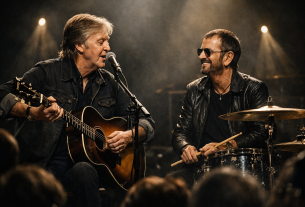
Today, only Paul McCartney and Ringo Starr remain from that era, carrying with them the memories of a time that changed music forever.
A reunion is no longer possible.
But what John and Paul shared was never limited to stages, studios, or fame.
It was something deeper.
A connection shaped by time, tested by distance, and ultimately strengthened by understanding.
And in the end, it remains—not as something unfinished, but as something enduring.
Alive in every song they wrote.
Alive in every memory they left behind.
And alive in the quiet, unspoken space where friendship never truly fades.