When Paul McCartney walked away from The Beatles, it didn’t feel like the end of a band — it felt like the end of an era. The group that had defined a generation, reshaped music, and captivated the world was suddenly gone. And at the center of that collapse was a man many assumed would simply move on to the next spotlight.
But instead, he disappeared.
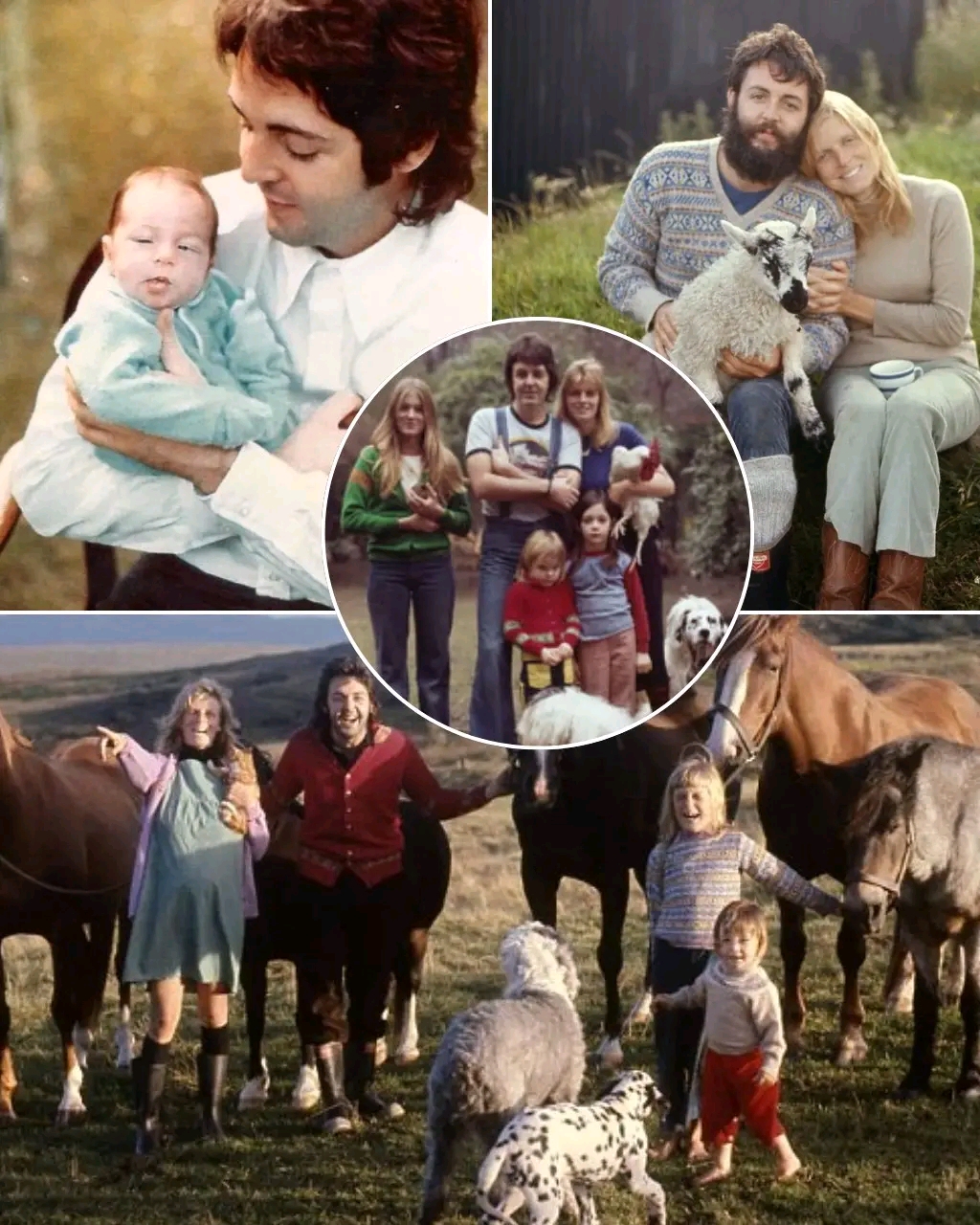
In the aftermath of the band’s breakup around the time of the Breakup of the Beatles, McCartney retreated to a quiet farm in Scotland with his wife, Linda McCartney. There were no screaming fans, no flashing cameras — just open land, unpredictable weather, and a life stripped down to its simplest form. For someone who had lived inside the noise of global fame, the silence was both jarring and necessary.
Those close to him later described this period as one of deep emotional struggle. The weight of losing not just a band, but a brotherhood — especially his bond with John Lennon — left him disoriented. Fame had not prepared him for stillness. Success had not prepared him for grief.
And so, he turned inward.
Instead of chasing relevance, McCartney chose something far more grounding: family. He spent his days doing things few would ever associate with one of the most famous musicians on Earth — feeding animals, working the land, and raising his children with a kind of hands-on presence that quietly defied celebrity norms. Changing diapers, cooking meals, and simply being there became his new rhythm.
It wasn’t glamorous. But it was real.
That choice — to step away at the height of his fame — would go on to define him just as much as any song he had ever written.
When McCartney eventually returned to music, it wasn’t as a solo icon chasing his former glory. Instead, he built something new with Wings — a band that included Linda by his side. Even more surprising to fans at the time, he brought his children along on tour. Backstage areas became makeshift family spaces. Soundchecks blended with parenting. The line between rock star and father blurred in a way few had ever seen before.
To some, it seemed unconventional — even puzzling. Why would someone who had everything choose this kind of life?
But years later, that decision is being seen in a very different light.
In an industry often marked by distance, excess, and fractured relationships, McCartney’s insistence on keeping his family close now feels quietly radical. He wasn’t just rebuilding a career — he was rebuilding himself. And he did it on his own terms.
The Scottish farm wasn’t an escape from life. It was where he learned how to live it again.
And for many fans looking back today, that may be the most powerful legacy he created — not just the music that changed the world, but the life he chose when the world went quiet.