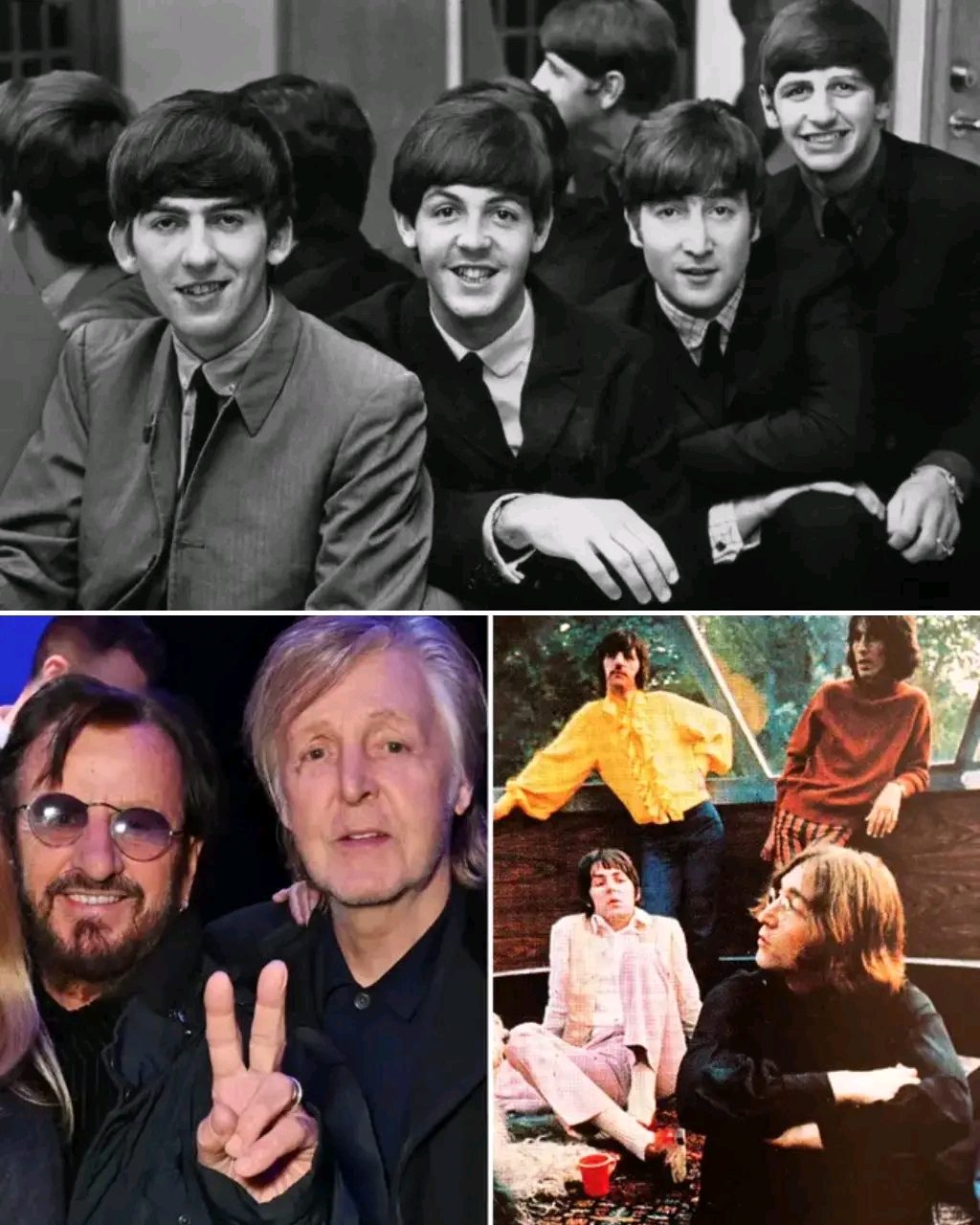
“Every Generation Still Finds Its Way Back to Us” — Why The Beatles Never Stopped Belonging to the World
When Ringo Starr says, “Every generation still finds its way back to us,” it isn’t nostalgia speaking—it’s observation. More than half a century after The Beatles stopped recording together, their music continues to arrive in the lives of new listeners as if it were freshly made. Teenagers stream the same songs their grandparents once held on vinyl, not because they’re told to, but because the music keeps quietly finding them.
This is the strange, enduring magic of The Beatles. Their songs don’t demand relevance; they simply are relevant. In an era defined by constant reinvention, The Beatles remain unchanged—and that may be the secret to their immortality.
One of the clearest examples is Abbey Road. Released in 1969, it feels almost modest by modern standards. No bombast, no overproduction, no attempt to chase trends. Just melody, harmony, and emotion carried by four musicians who trusted simplicity. Songs like Here Comes the Sun and Something aren’t tied to any specific time—they exist in a shared human space where love, hope, loss, and renewal never expire. That restraint is precisely why the album continues to resonate. The absence of excess leaves room for listeners to place their own lives inside the music.
Ringo often points out that younger fans don’t approach The Beatles as a “classic band.” They encounter them through playlists, films, social media clips, or a single song discovered late at night. There’s no ceremony. No history lesson required. The music introduces itself the way all great art does—gently, honestly, without explanation. A teenager hearing Let It Be today doesn’t hear a relic; they hear reassurance.
What makes The Beatles truly unique is how their catalog keeps re-entering the world without permission. Every decade tries to move past them, and every decade ends up rediscovering them. Their influence isn’t loud—it’s structural. You hear it in modern pop harmonies, in indie songwriting, in the way artists still chase emotional truth over perfection. Even when listeners don’t know they’re hearing The Beatles’ legacy, they are.
Ringo’s insight cuts to the heart of it: The Beatles don’t belong to one generation because they were never written for one generation. Their music speaks in feelings, not eras. That’s why it survives format changes, cultural shifts, and the passage of time itself.
Vinyl becomes streaming. Black-and-white photos become algorithmic recommendations. But the songs remain unchanged—waiting patiently for the next set of ears. And somehow, every generation finds its way back, as if the music remembered them before they ever arrived.