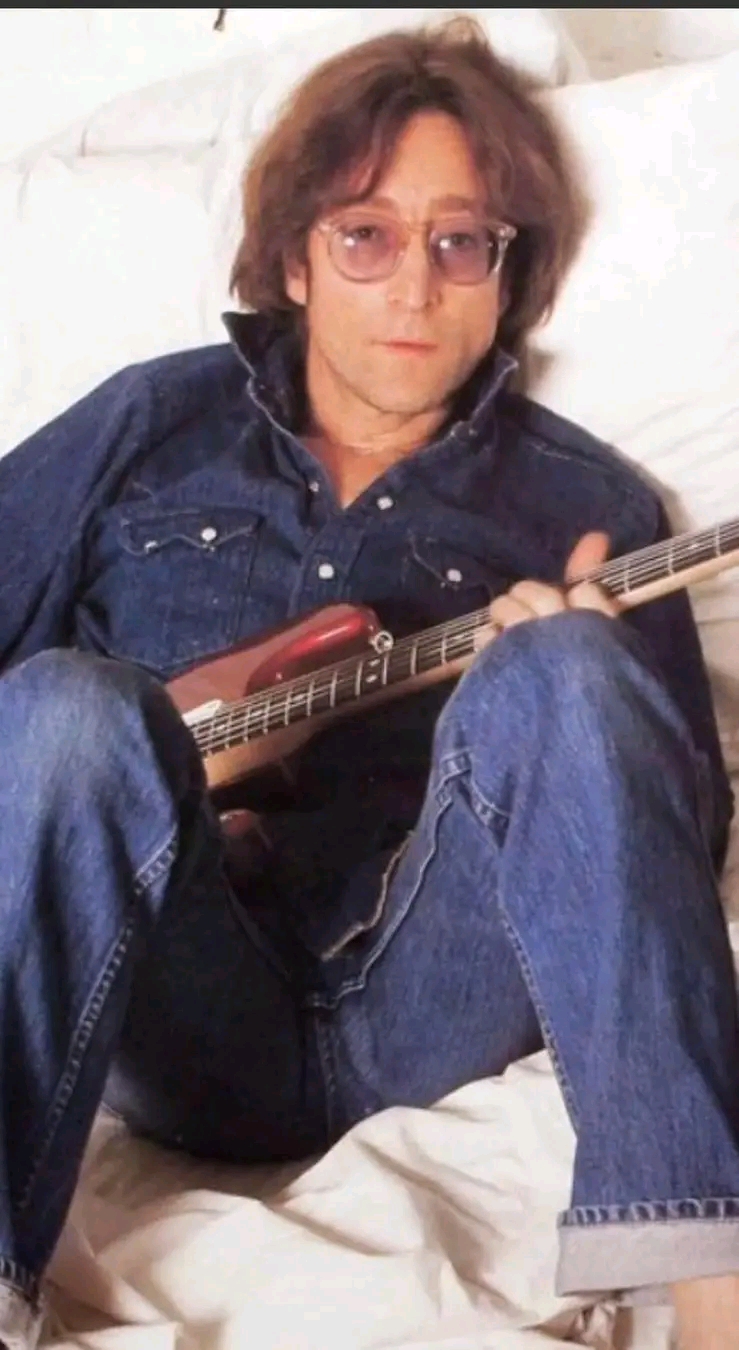
“A Work Still in Progress”: John Lennon’s Final Hours and the Future He Never Got to See
On the morning of December 8, 1980, John Lennon sat for what would unknowingly become the final interview of his life. In it, he offered a line that now feels painfully prophetic:
“I’ve always considered my work one piece and I consider that my work won’t be finished until I am dead and buried, and I hope that’s a long, long time.”
Hours later, he was gone.
More than four decades after his assassination, those words remain both haunting and heartbreaking. They reveal a man who—far from being jaded by fame or weighed down by the past—was filled with optimism, creativity, and a deep hunger to continue evolving. John Lennon was not finished. In fact, he was just getting started again.
A Man at Peace, a Life in Motion
In those final interviews, John spoke like someone who had rediscovered himself. After five years away from the spotlight, he had returned not out of obligation, but out of joy. He was energized, focused, and deeply content with his personal life.
He was proud of being a father to young Sean. He was in sync with Yoko creatively. And after years of legal and immigration battles, he was finally able to breathe freely in New York.
The man the world lost that night wasn’t a burned-out rock star — he was a rejuvenated artist ready for his next chapter.
Plans Cut Short
What makes Lennon’s death especially tragic isn’t only how senseless it was, but how much he had already been planning for the years ahead:
• A follow-up to Double Fantasy
He had already begun work on the next album. Several demos—raw, intimate, and full of promise—show just how hungry he was to keep pushing forward musically.
• His first solo world tour
After avoiding touring since 1966, John was finally ready to return to the stage. Fans would have seen a new Lennon—older, wiser, but still fearless.
• A long-awaited reunion with Liverpool
He wanted Sean to meet his family. After years of being locked out of the U.K. while fighting deportation from the U.S., he was excited to see home again.
• Making peace with George Harrison
Though tensions lingered, friends close to the two said reconciliation was inevitable. Beneath the disagreements was a deep, unshakable brotherhood formed during the most intense years of their lives.
John wanted healing. He wanted connection. He wanted the future.
The Future of Music That Never Came
It’s impossible not to wonder what Lennon would have created in the decades that followed.
He would almost certainly have been part of Live Aid in 1985—imagine a global broadcast with Lennon taking the stage, perhaps even inspiring a historic Beatles reunion.
He would have grown, changed, challenged the world, and challenged himself. John was unpredictable, bold, restless, and never afraid to tear up the script and start again. There’s no telling what his 1980s would have sounded like—but they would not have been boring.
A Life Larger Than 40 Years
For someone who lived only four decades, Lennon packed several lifetimes’ worth of art, controversy, evolution, and humanity into his years. Yet it still wasn’t enough—not for him, and certainly not for us.
He was robbed of the future he was excited to live. And we were robbed of everything he still had left to give: the songs, the activism, the wit, the wisdom, and the growth of a man who was finally ready to embrace life again.
A Final Thought
John Lennon once said his work would not be finished until he was “dead and buried.”
Sadly, that moment came far too soon.
But the truth is this:
His work still isn’t finished.
It lives on in the music, in the ideas, and in the millions of people who continue to find meaning in what he left behind.
It’s a shame — a tragedy, even — but it’s also a testament to his power.
Even in absence, John Lennon continues to shape the