Julian Lennon and the Inheritance of Absence
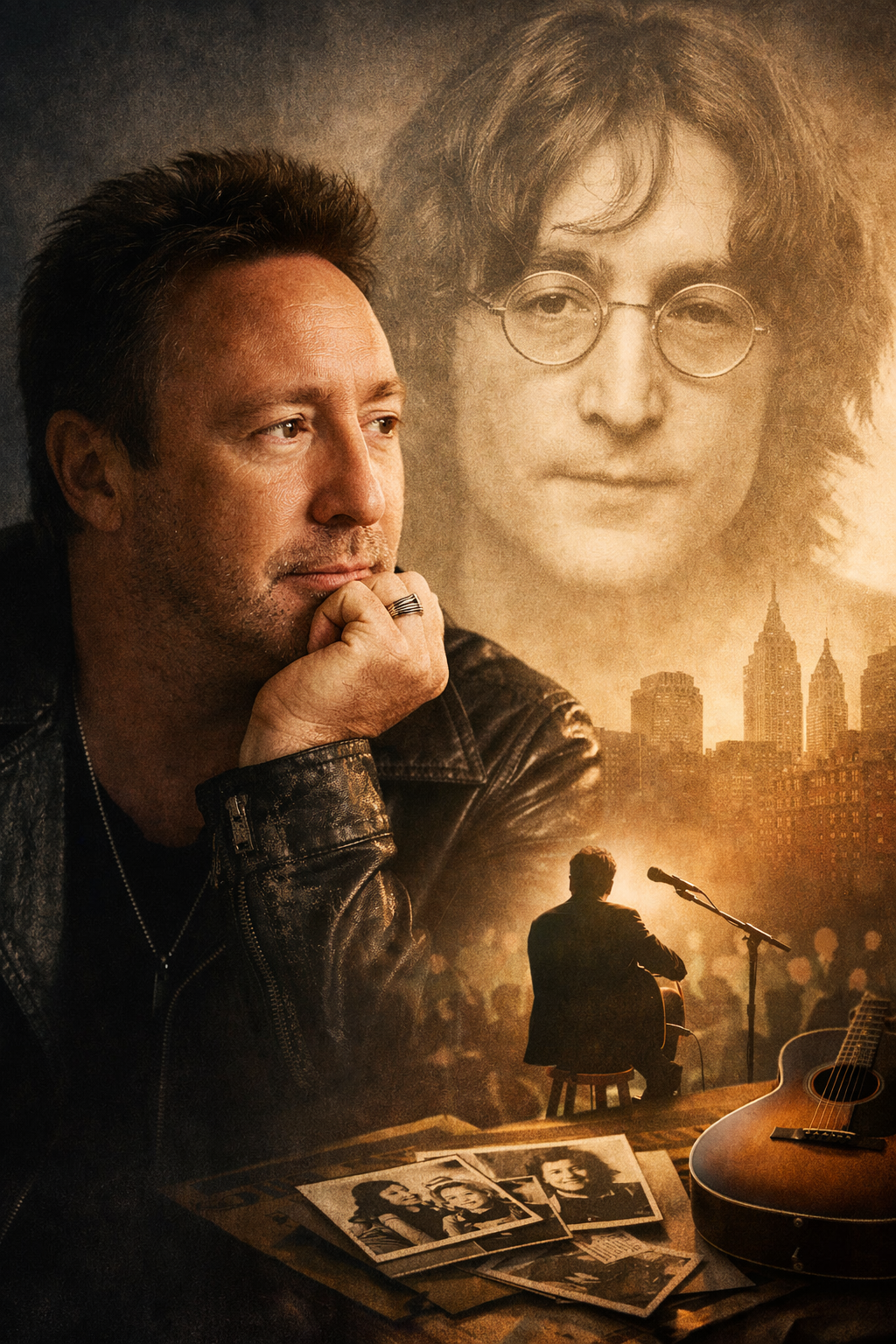
When John Lennon was murdered in December 1980, Julian Lennon was only seventeen years old. At an age when many relationships are still forming their emotional vocabulary, Julian’s relationship with his father was abruptly sealed shut. There would be no reconciliation, no redefinition, no chance to ask the questions that only adulthood teaches us to ask. From that moment forward, John Lennon existed for Julian in two irreconcilable forms: the private father he barely knew, and the public icon the world would never stop interpreting.
This duality shaped the architecture of Julian’s adult life. As he entered the music industry in the mid-1980s, the comparisons came immediately and relentlessly. His voice carried familiar inflections; his melodies hinted at a genetic echo that critics and audiences were eager to trace. What might have been seen as promise quickly became limitation. Every song was measured against an unreachable standard, every success reframed as inheritance rather than achievement. Julian was not introduced as an artist, but as an extension.
Rather than confronting the legacy head-on, Julian slowly chose distance. He stepped away from the machinery of mainstream music and redirected his creative energy into photography, documentary work, environmental activism, and philanthropy. Through initiatives focused on clean water access and humanitarian relief, he built a life rooted in quiet impact rather than spectacle. These pursuits were not escapes from music, but expansions beyond it — ways to define purpose without constantly negotiating lineage.
Perhaps the most revealing boundary Julian maintained was his long-standing refusal to perform Imagine. For decades, he declined invitations that would have guaranteed attention and acclaim. The song, one of the most universally recognized anthems of the twentieth century, was not a cultural artifact to him. It was personal. It belonged to a relationship unfinished, and Julian was unwilling to reframe that intimacy for public consumption.
Julian Lennon’s story is not about healing loss in any traditional sense. It is about learning how to live with it — intact, unresolved, and ever-present. He has neither dismantled nor mythologized his father’s image. Instead, he has constructed a life alongside it, careful not to let absence define his entire identity. In choosing restraint over rebellion, privacy over performance, Julian demonstrates a quieter form of resilience: the courage to exist meaningfully within a legacy that was never fully shared, and a relationship that ended before it could be understood.