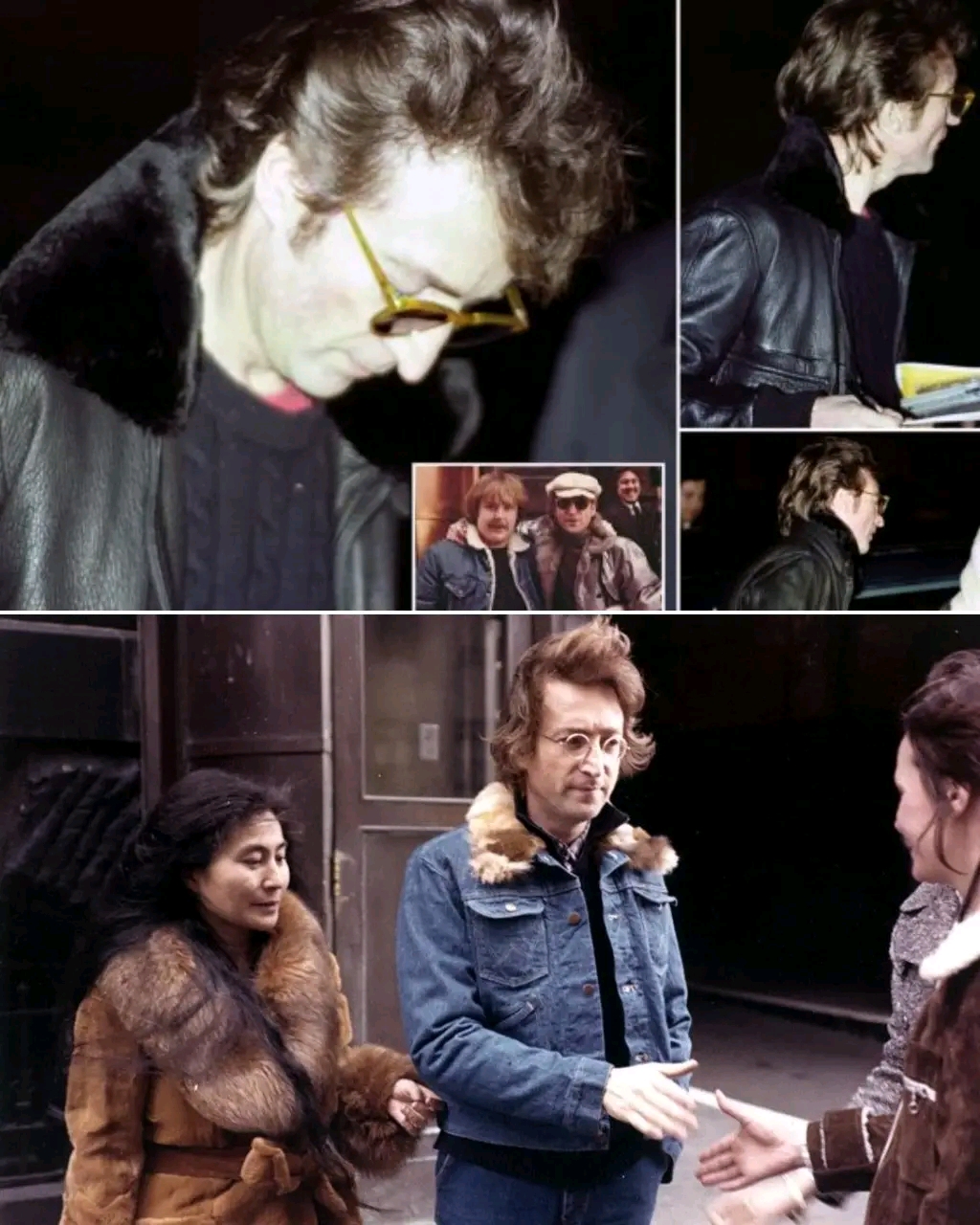
The Last Quiet Photograph: John Lennon Outside The Dakota
It has resurfaced again in New York—an image so ordinary it feels almost unreal. John Lennon standing outside The Dakota. No stage lights. No guitar slung over his shoulder. No crowd pressing forward, shouting his name. Just a man, a doorway, and a fading afternoon.
The photograph was taken by Paul Goresh, not a journalist, not a professional photographer chasing headlines—just a devoted fan. Goresh often waited outside The Dakota, hoping for a glimpse of John, sometimes a wave, sometimes a quick hello. On that December day in 1980, he lifted his camera and pressed the shutter as he had done before, never knowing that this single, casual click would later be remembered as the last photograph of John Lennon alive.
That’s what makes the image so unsettling. There is nothing dramatic about it. Lennon looks calm. Present. Almost anonymous. He could be any man stepping outside his apartment in New York City. The Dakota looms behind him, timeless and silent, unaware of what the night will bring. The afternoon light feels soft, forgiving—like the city itself is holding its breath.
There was no warning. No sense of finality. No sign that history was seconds away from breaking. Lennon had already lived a life filled with world-changing moments—Beatlemania, protest songs, peace marches, and reinvention—but this was not one of those moments that demanded attention. It didn’t announce itself. It simply existed.
And then night came.
Hours later, John Lennon was gone, and the world shifted in a way that still hasn’t fully settled. Music lost a voice that spoke for imagination, rebellion, vulnerability, and hope. New York lost one of its most human icons—a man who chose to walk its streets, raise his child, and live quietly among its noise.
Looking back now, that photograph carries a weight it never asked for. It isn’t famous because of what’s happening in the frame—but because of what comes after. It captures the fragile truth that history often passes through ordinary doorways. That the most important moments in our lives rarely arrive with music or warning signs.
A man. A doorway. A fading afternoon.
Some moments don’t announce themselves. They only reveal their meaning later.
And once you see this photograph, you can never unsee it—not because it is loud, but because it is heartbreakingly quiet.