“Rehearsed until lunchtime… then I quit The Beatles.” — The Day George Harrison Walked Away
In January 1969, inside the cold, echoing walls of Twickenham Film Studios, one of the most important bands in history began to quietly fracture. The sessions that would later become the Get Back project—eventually released as Let It Be—were meant to capture The Beatles returning to their roots. Instead, they revealed something far more human: exhaustion, creative tension, and a growing sense that the bond holding the group together was slipping.
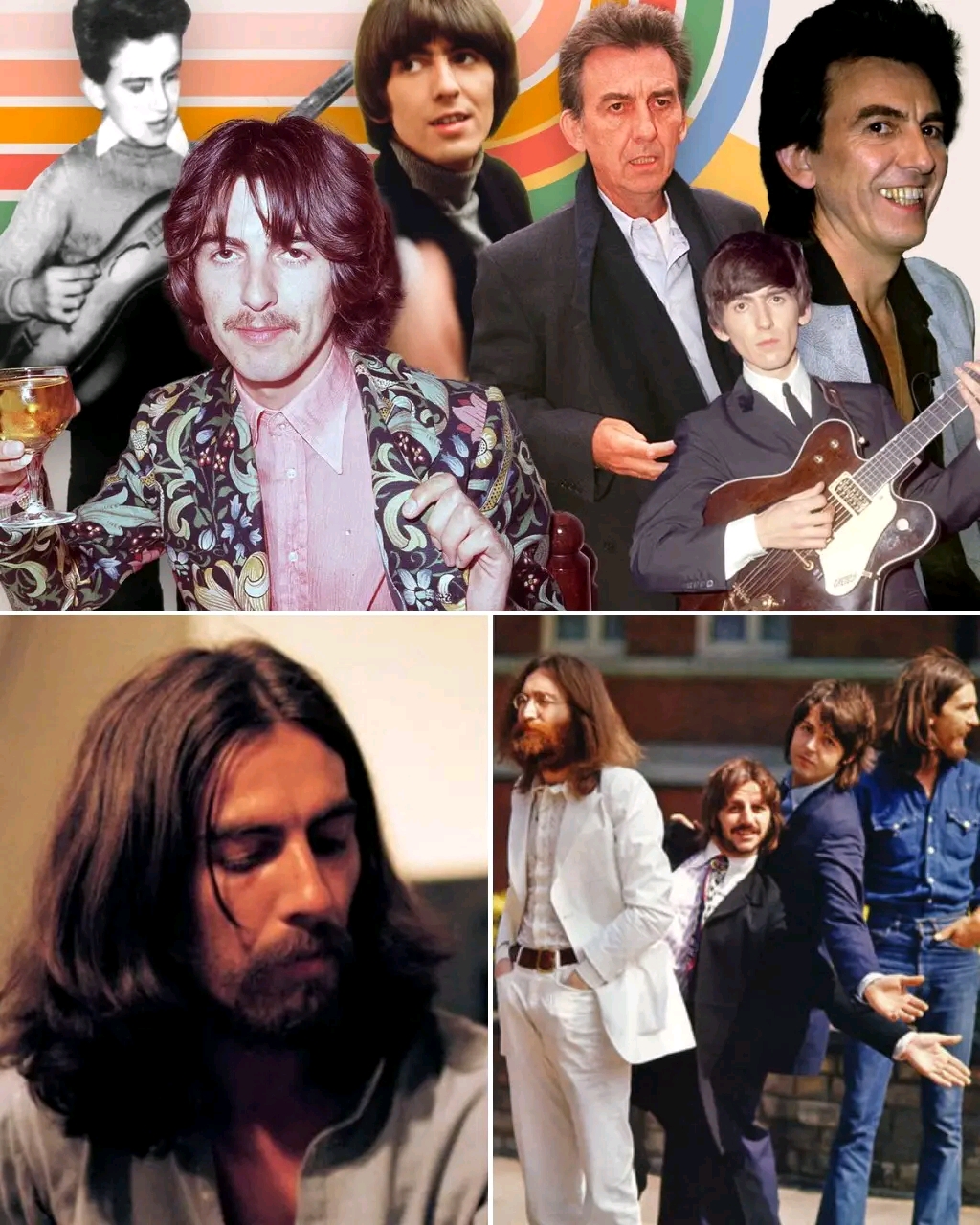
At the center of this moment stood George Harrison—often called the “quiet Beatle,” though by 1969, there was very little quiet about what he was feeling.
The Breaking Point
For days, cameras rolled as the band rehearsed under pressure. Paul McCartney pushed for direction and discipline. John Lennon seemed increasingly detached. Ringo Starr tried to hold the rhythm—musically and emotionally.
And George? He was tired of being overlooked.
Tensions had been building for years. Despite writing songs of remarkable depth like “Something” and “While My Guitar Gently Weeps,” Harrison often found his contributions sidelined in favor of Lennon-McCartney compositions. The Get Back sessions only amplified that frustration, placing him in an environment where his ideas struggled to find space.
Then came the moment.
After another strained rehearsal, George quietly put down his guitar and walked out.
No dramatic speech. No slammed doors.
Just a decision.
A Line That Said Everything
Later that day, Harrison documented the moment in his diary with a sentence so simple it feels almost surreal in hindsight:
“Rehearsed until lunchtime… then I quit The Beatles.”
No emotion. No elaboration.
Just finality.
For a band that had changed the world, the line reads like an ordinary note—yet it captures an extraordinary rupture. In that instant, it wasn’t just a bad day in the studio. It felt, at least to George, like the end.
Turning Frustration into Sound
But George Harrison didn’t disappear into silence.
Instead, he did what he had always done—he wrote.
During his brief time away, he began working on Wah Wah, a track that would later appear on his landmark solo album All Things Must Pass. The song’s title itself is telling—“wah-wah” being both a guitar effect and a metaphor for the noise, the chatter, the overwhelming pressure surrounding him.
The lyrics cut deeper than anything he had previously released:
A sharp, almost sarcastic reflection on the chaos and emotional strain he felt within the band.
Fans and critics alike have long interpreted “Wah Wah” as one of Harrison’s most pointed responses to life inside The Beatles—not with bitterness alone, but with clarity. It wasn’t just about conflict. It was about identity, creative freedom, and finally stepping out of the shadows.
The Band Reacts
George’s departure stunned the group.
For the first time, the unthinkable felt real: The Beatles might actually be over.
Rehearsals halted. The atmosphere shifted. Even for Lennon and McCartney—no strangers to conflict—this was different. Harrison wasn’t arguing. He had simply… left.
Behind the scenes, conversations began. Meetings were arranged. The urgency wasn’t just about finishing an album—it was about keeping the band from collapsing entirely.
The Return
After several days, Harrison agreed to return—but not without conditions.
The sessions moved from the tense environment of Twickenham to the more comfortable Apple Studios. The idea of a grand live concert was scaled back. The tone, while still fragile, became more cooperative.
And in one final, unexpected moment of unity, The Beatles climbed to the rooftop of Apple Corps on January 30, 1969—delivering what would become their last live performance.
A Quiet Turning Point
Looking back, Harrison’s diary note feels like more than just a passing remark. It marks a turning point—not only for him, but for the band itself.
Within a year, The Beatles would officially disband.
And George Harrison?
He would go on to release All Things Must Pass, proving to the world—and perhaps to himself—that he had far more to say than he’d ever been allowed to within the group.
The Power of That Moment
“Rehearsed until lunchtime… then I quit The Beatles.”
It’s a sentence that doesn’t try to be dramatic.
And that’s exactly why it is.
Because sometimes, the most important decisions—the ones that change everything—are written in the simplest words.