The Last Quiet Moment: George Harrison and Paul McCartney
On November 11, 2001, inside a quiet room at Staten Island University Hospital, a moment unfolded that stood in stark contrast to the noise and scale of a lifetime spent in music. There were no flashing lights, no crowds, no echoes of applause—only stillness, and two old friends sitting together.
George Harrison was nearing the end of his life. Years of illness had weakened his body, but not his spirit. When Paul McCartney entered the room, he did not arrive as a global icon or as one half of one of music’s most celebrated partnerships. He came simply as Paul—an old friend visiting George.
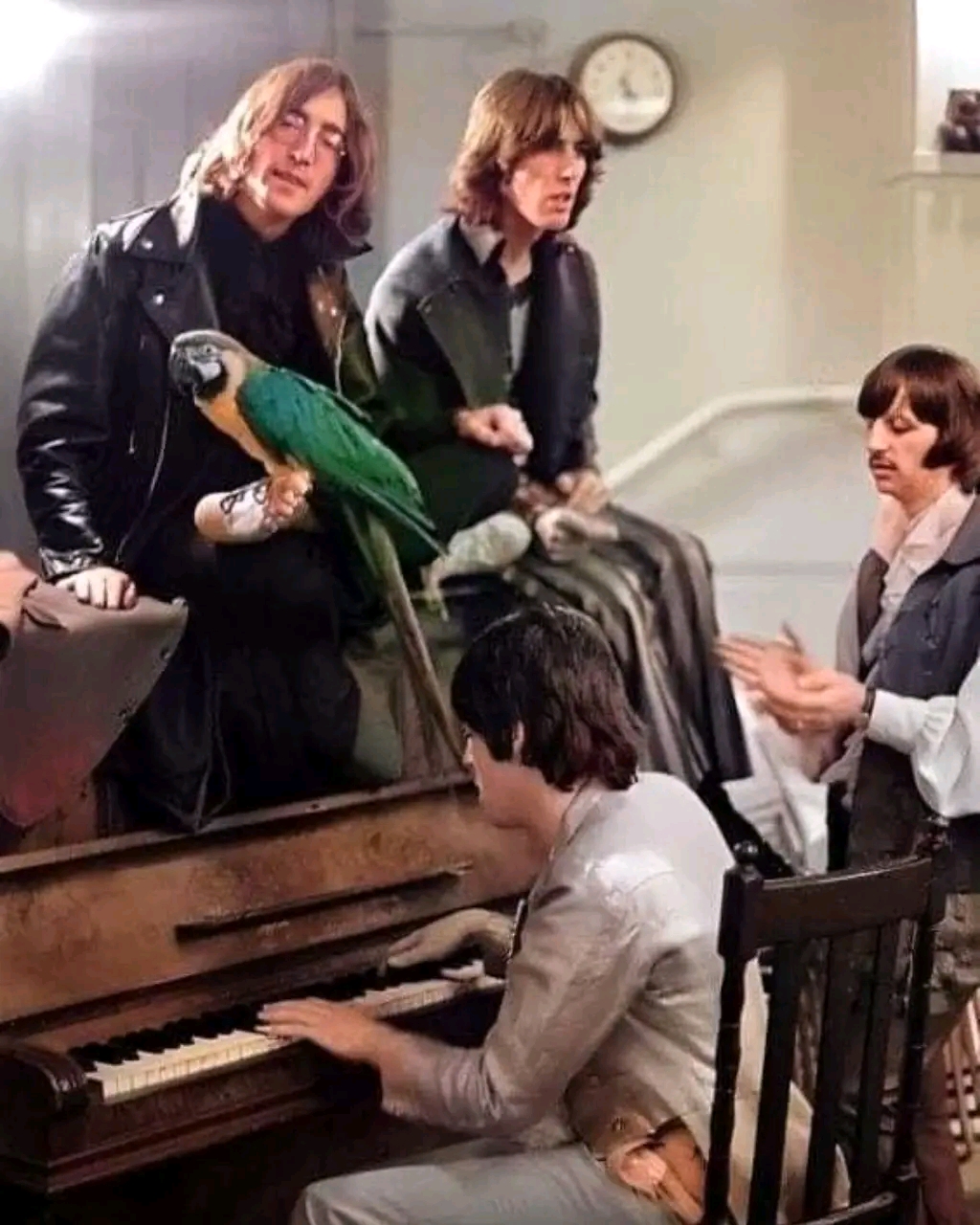
The room carried a quiet weight, but not an uncomfortable one. It was the kind of silence that exists between people who no longer need words to explain themselves. Their conversation moved gently through time—back to Liverpool, to Hamburg, to the earliest days of The Beatles, when their dreams were still forming and the future had not yet taken shape.
There was no need for explanation. Their shared past was already understood.
Even in those final days, George’s humor had not faded. With a faint smile, he recalled a memory from Hamburg—one that captured the innocence and mischief of their youth. He spoke of a night when he believed he had found a rare moment of privacy in a cramped room the band shared. But as soon as the moment ended, applause broke out in the darkness. John Lennon, Paul, and Pete Best had been awake the entire time, quietly witnessing it all.
It was a simple story. Almost trivial. Yet in that room, it carried something deeper—a reminder of who they had been before fame, before pressure, before the world had begun watching their every move.
For a moment, it lifted everything else.
Later, Paul would speak about that visit with a rare openness. He described holding George’s hand for hours—an act that, in his own words, felt unfamiliar.
“It’s not what two Liverpool lads do,” he admitted.
But in that moment, conventions didn’t matter.
George held on. At one point, he began gently moving his thumb across Paul’s hand—a small, almost imperceptible gesture. No words accompanied it, but none were needed. It carried years of friendship, of disagreements, of shared triumphs and unspoken understanding. It said what neither of them needed to articulate.
In that room, there was no music.
No audience.
No weight of legacy.
Only two people who had known each other long before the world had learned their names.
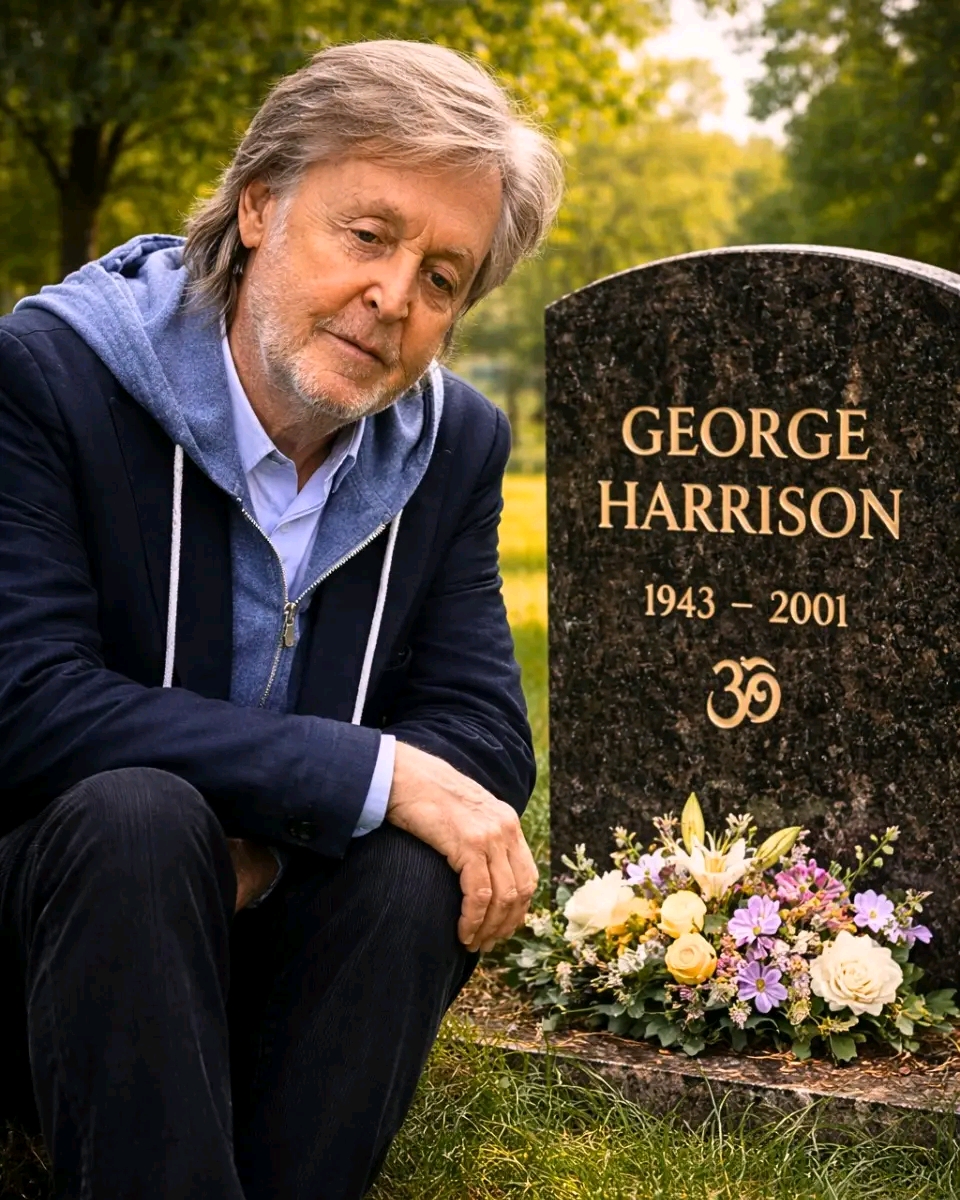
When Paul left, he did not carry the moment as something heavy with grief. Instead, it stayed with him as something whole—complete in a way that few endings ever are. It was not a goodbye defined by loss, but by quiet acceptance.
A final memory, untouched by spectacle.
A closing note, soft and lasting, in a friendship that began long before the world was listening—and one that, even in silence, never truly ended.