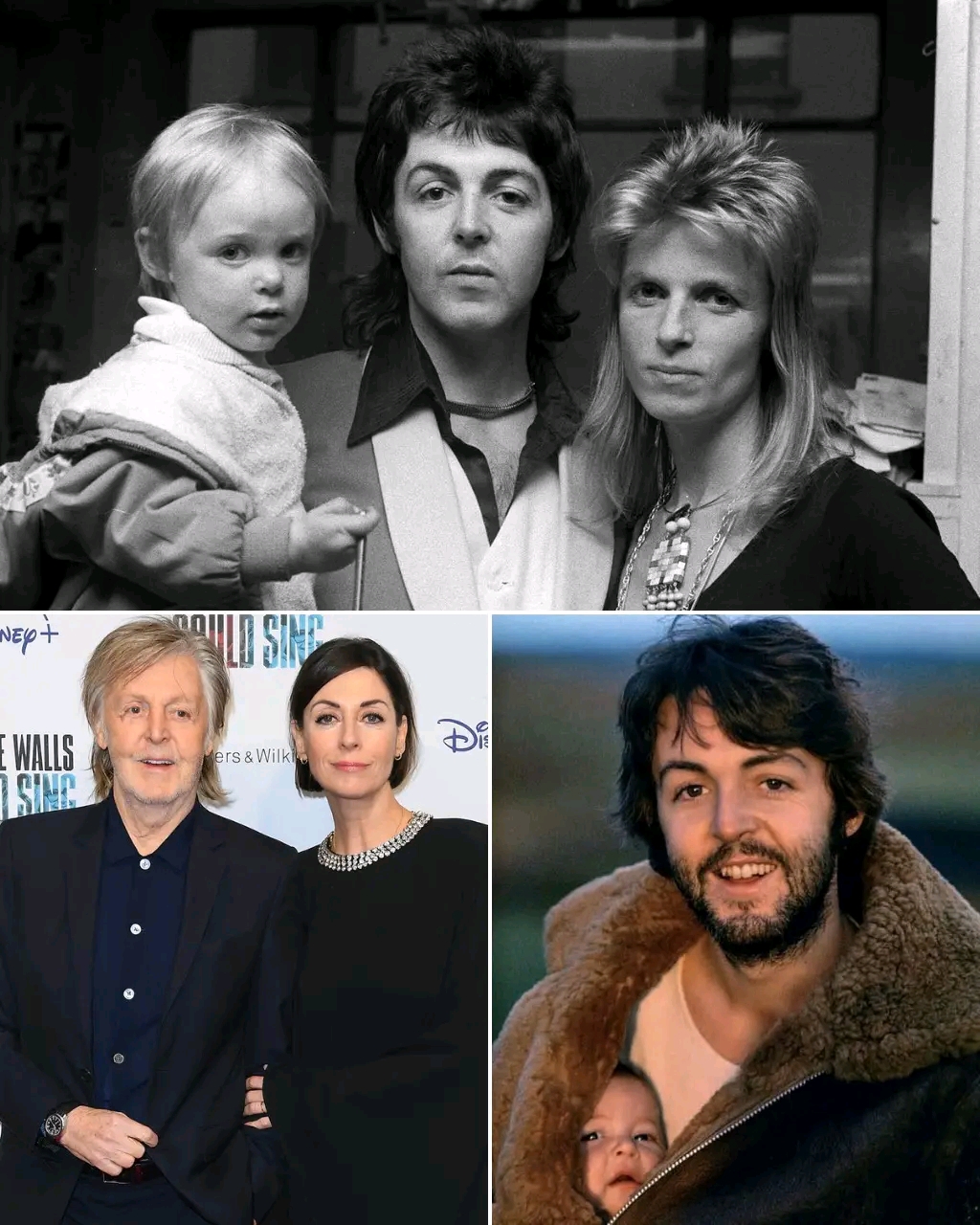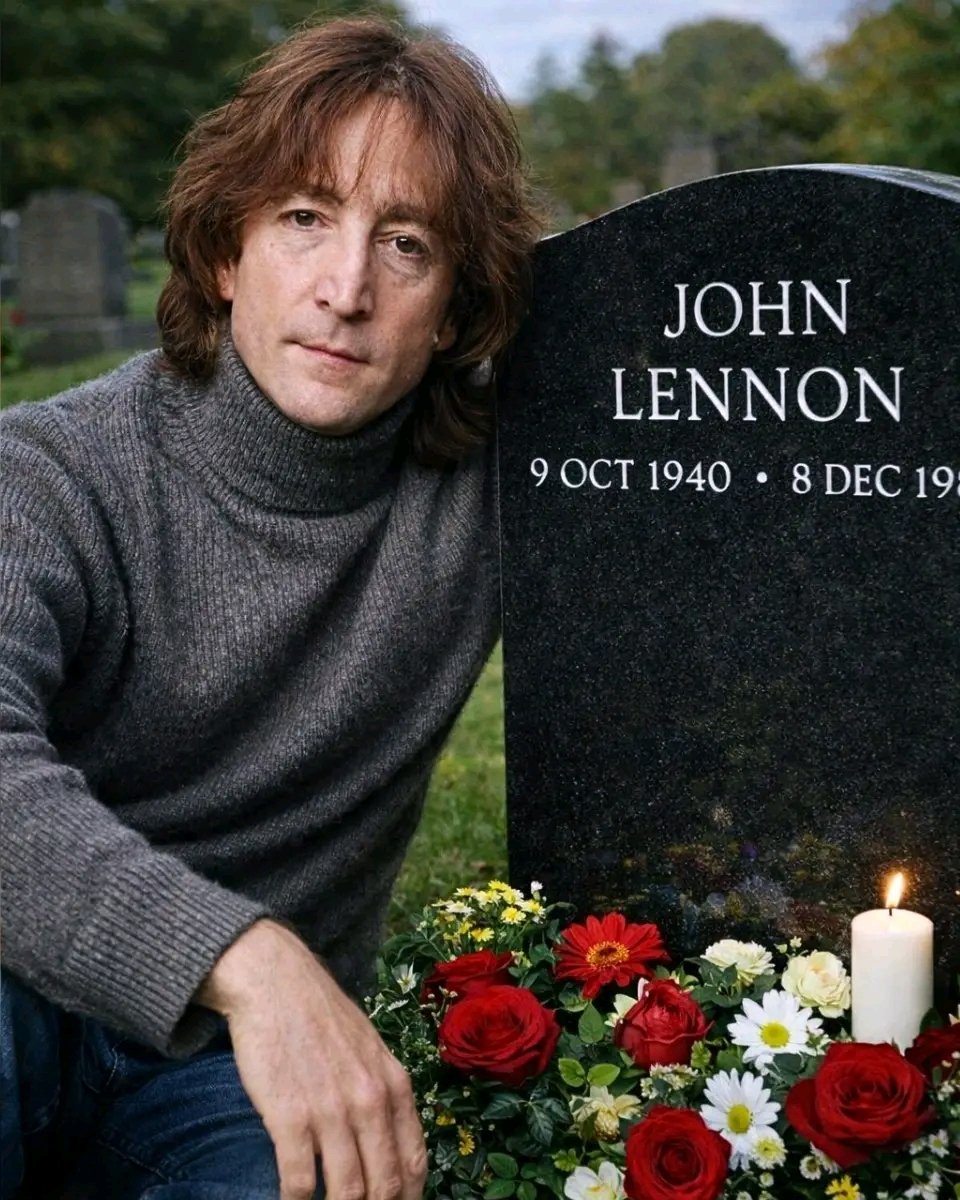
On December 9, 1980, the world woke into a silence that did not feel natural.
The news of John Lennon’s death spread quickly, but understanding did not follow at the same pace. It arrived as shock before it became grief — something sudden and irreversible, interrupting lives in a way that felt impossible to prepare for.
For millions, Lennon had always existed as a voice — in music, in interviews, in moments of honesty that refused to be softened. His presence had never been distant. And so, when it was gone, the absence felt immediate.
But for those who had known him closely, the loss was something far more personal.
Paul McCartney, his longtime collaborator and friend, struggled to put the moment into words. “I can’t take it in at the moment,” he said — a sentence that carried no performance, only the raw truth of someone facing something too large to process. There was no time to reflect, no space to shape meaning. Only the shock of losing someone who had been there from the very beginning.
Their story had started long before fame — in Liverpool, in youth, in a shared instinct for music that would eventually change the world through The Beatles. But beneath the history and the legacy, there had always been something simpler: a friendship that had defined a lifetime.
Ringo Starr reacted quietly, choosing action over words. He traveled to New York almost immediately, not as a public figure, but as a friend responding to loss. George Harrison stepped away from his work, as though continuing would require a kind of emotional distance he could not yet find.
There were no elaborate statements. There didn’t need to be.
The silence spoke clearly enough.
In Liverpool, the loss felt deeply personal. This was the place where Lennon’s story had begun — where he had grown, dreamed, and first found his voice. Now, the city carried the weight of losing one of its own.
Across the Atlantic, in New York City, people gathered outside the The Dakota, the place where Lennon had lived and where his life had ended. There was no organization, no plan — only a shared instinct to be present.
Some stood in silence.
Others wept openly.
And many sang.
Not as performance, but as memory. Songs moved through the cold air, familiar and fragile, as if holding onto them might somehow delay the reality settling in. For a moment, music became a way to remain connected to something that had suddenly been taken.
For Lennon’s family, the loss existed far from the public gaze. Yoko Ono spoke of him not as an icon, but as someone deeply known and loved. Cynthia Lennon reflected quietly, thinking of their son Julian Lennon — young, searching for answers that would never feel complete.
What followed in the days after was more than mourning.
There was a sense of interruption — as though something unfinished had been cut short. Lennon had never been a passive figure. He had challenged authority, questioned norms, and spoken with a directness that often unsettled but always mattered.
That voice was now absent.
And in that absence, its importance became clearer.
Writers and commentators tried to make sense of what had happened. Some spoke about violence and the fragility of life. Others focused on Lennon’s influence — on how his music had shaped not only sound, but thought itself. His songs had not simply entertained; they had invited people to see differently, to feel more openly, to question what seemed fixed.
Even those who had known him in earlier days, like Allan Williams, reflected on the complexity of who he had been. Lennon was not always easy, not always comfortable — but he was, in many ways, necessary.
In the end, what remained was not just silence.
It was a different way of listening.
The music of John Lennon did not disappear after his death. If anything, it became more present — not louder, but heavier. Each lyric, each melody, carried something it hadn’t before.
The weight of absence.
Lennon once sang about life happening while plans are being made. On that December night, life arrived without warning, and the world had no choice but to adjust.
Nothing about the music changed.
And yet, everything about how it was heard did.
Because from that moment on, it was no longer just music.
It was memory.