In 2026, The Beatles are no longer just a defining force of the 20th century — they are a living presence that continues to shape the sound and soul of music across generations.
What makes their legacy so enduring is not simply the songs themselves, but the way those songs continue to evolve in meaning. When listeners hear Yesterday, it can feel deeply personal — a quiet reflection on loss and memory. When Hey Jude plays, it becomes something communal, an invitation to sing along and let go. Decades may pass, but the emotions remain immediate, almost untouched by time.
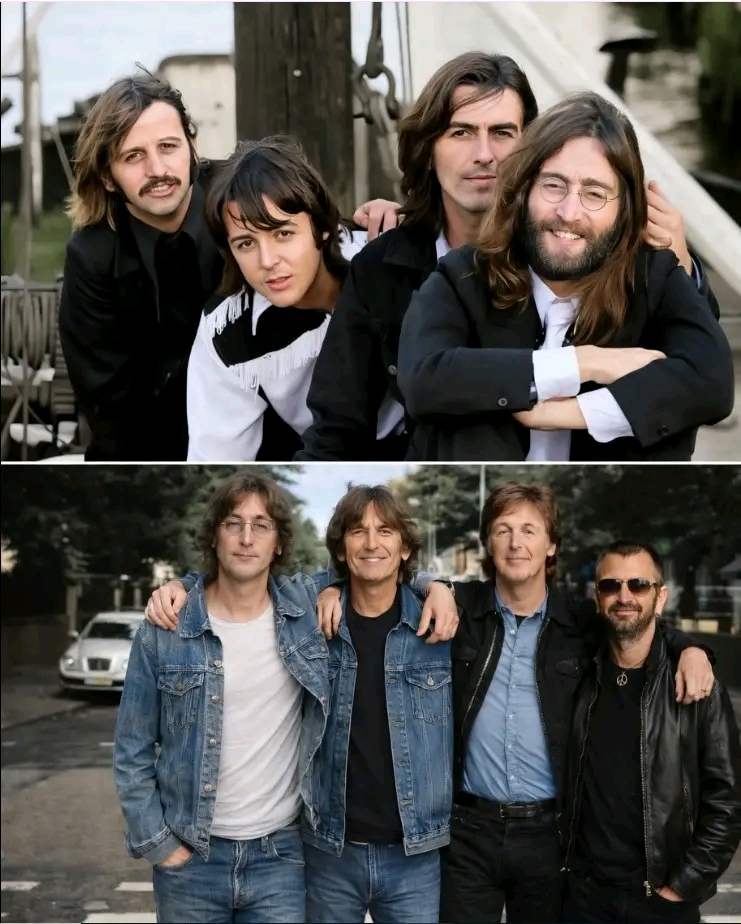
At the heart of it all were four individuals whose chemistry changed everything: John Lennon, Paul McCartney, George Harrison, and Ringo Starr. Each brought something distinct — Lennon’s introspection, McCartney’s melodic brilliance, Harrison’s spiritual depth, and Starr’s steady, understated rhythm. Together, they created a balance that felt almost impossible to replicate.
But their story is not frozen in the past. Today, their music finds new life in unexpected places. Young listeners discover them through streaming platforms, social media clips, or even through their parents’ old records. Cover versions appear in different languages, genres, and styles — proof that great songs are not confined to one era or sound. Whether it’s a stripped-down acoustic version of Let It Be or a reimagined take on Come Together, each interpretation carries a piece of the original while adding something new.
The Beatles also changed how music itself is made and understood. They pushed the boundaries of studio recording, treating it as an instrument rather than just a tool. Albums like Sgt. Pepper’s Lonely Hearts Club Band transformed the idea of what an album could be — not just a collection of songs, but a cohesive artistic statement. That influence still echoes in modern music, where artists strive to create immersive, meaningful experiences rather than just individual hits.
Beyond technique and innovation, however, their greatest contribution may be something less tangible. They showed that music could be both personal and universal at the same time. A song written in Liverpool could resonate in Kathmandu, New York, or Tokyo — not because of where it came from, but because of what it made people feel.
In 2026, the world is vastly different from the one The Beatles first stepped into. Technology has transformed how we listen, share, and create music. Trends come and go faster than ever. And yet, their songs remain — not as relics, but as companions.
They play in the background of quiet evenings, in the headphones of someone discovering them for the first time, and in the memories of those who have carried them for decades. They remind us that music is not just sound, but connection — a bridge between people, places, and moments in time.
The Beatles’ legacy is not measured only in records sold or awards won. It lives in every artist they inspired, every listener they moved, and every moment their music makes someone feel understood.
More than half a century later, they are still here — not as a memory, but as a presence. And as long as their songs continue to be heard, felt, and shared, The Beatles will never truly belong to the past.