“More Popular Than Jesus”: The Comment That Changed The Beatles Forever
In March 1966, during an interview with London journalist Maureen Cleave, John Lennon made an observation that seemed, at the time, almost philosophical. Reflecting on the changing landscape of youth culture, he remarked that Christianity was in decline and that The Beatles were “more popular than Jesus.” In Britain, the comment passed with little reaction. But when it was republished months later in the United States—stripped of context and splashed across headlines—it detonated.
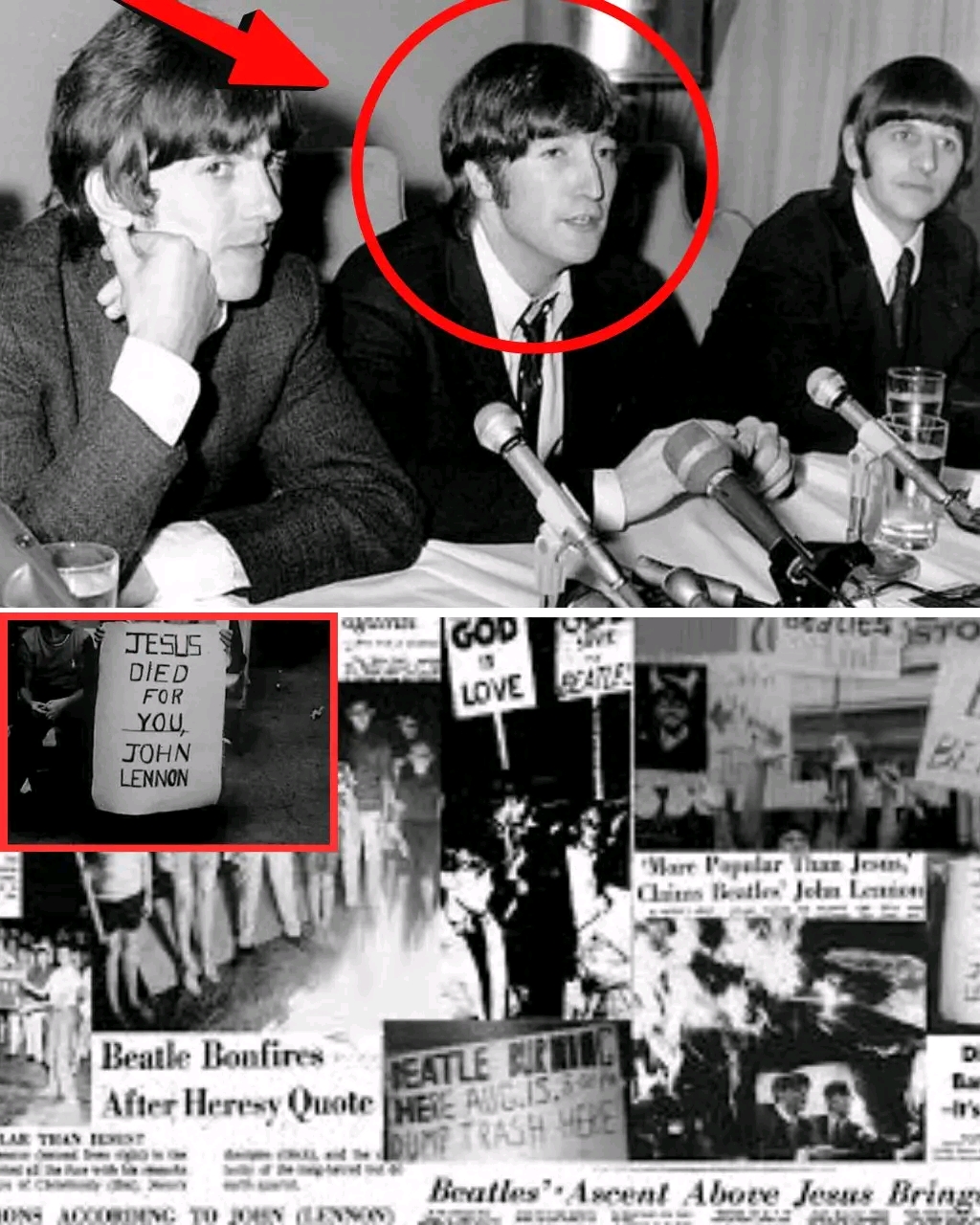
Suddenly, outrage swept across parts of America, particularly in the Bible Belt. Radio stations banned Beatles records. Public bonfires were organized where fans burned albums in protest. Demonstrators gathered outside venues holding signs condemning Lennon and the band. Threats poured in as The Beatles prepared to launch their 1966 U.S. tour. What had been an offhand cultural observation was now framed as blasphemy.
The backlash placed the band in real danger. Security was tightened at every stop. At one point, the Ku Klux Klan picketed concerts. The controversy escalated to such a degree that Lennon felt compelled to address it publicly. In August 1966, in Chicago, he offered a tense and carefully worded apology at a press conference. He clarified that he was not comparing himself to Christ, nor attacking religion, but commenting on societal trends. “I’m sorry I said it,” he admitted, explaining that his words had been misunderstood and taken out of context.
Yet the damage was done. The tour itself was already strained—crowds screamed so loudly the band could barely hear their instruments. Stadium sound systems were primitive. The chaos, combined with exhaustion and growing artistic ambition, made live performance feel increasingly pointless. Just weeks later, after their final concert at Candlestick Park in San Francisco on August 29, 1966, The Beatles made a quiet but monumental decision: they would stop touring permanently.
That choice changed music history.
Freed from the demands of the road, the band retreated into the studio. What followed was a revolution in recorded music. Albums like Revolver and, soon after, Sgt. Pepper’s Lonely Hearts Club Band transformed the studio into an instrument itself, pushing rock into experimental, conceptual territory. The end of touring marked the beginning of The Beatles’ most innovative era.
The “More popular than Jesus” controversy was more than a scandal. It exposed the volatile intersection of fame, faith, media sensationalism, and 1960s cultural upheaval. It revealed how deeply The Beatles had embedded themselves into global consciousness—and how quickly admiration could turn into fury.
In hindsight, the firestorm symbolized a larger shift. Youth culture was rising. Traditional authority was being questioned. Rock music was no longer just entertainment—it was cultural power.
Five words sparked outrage. But they also helped close one chapter of The Beatles’ story and open another—one that would redefine what popular music could be.