By the mid-1970s, George Harrison had already lived several lifetimes inside one. From global Beatlemania to creative independence, from spiritual searching to personal exhaustion, he had experienced both the heights of fame and its quiet emotional costs. When the spotlight softened, what remained was a man searching not for attention, but for peace.
His marriage to Pattie Boyd had come to an end, marking the close of a deeply formative chapter in his life. At the same time, his spiritual journey—rooted in meditation, Eastern philosophy, and inner reflection—had become even more central. Yet even with this inward focus, life outside him remained unsettled. Fame still lingered in the background, but George himself was slowly stepping away from its noise, trying to rebuild a sense of balance that felt authentic rather than imposed.
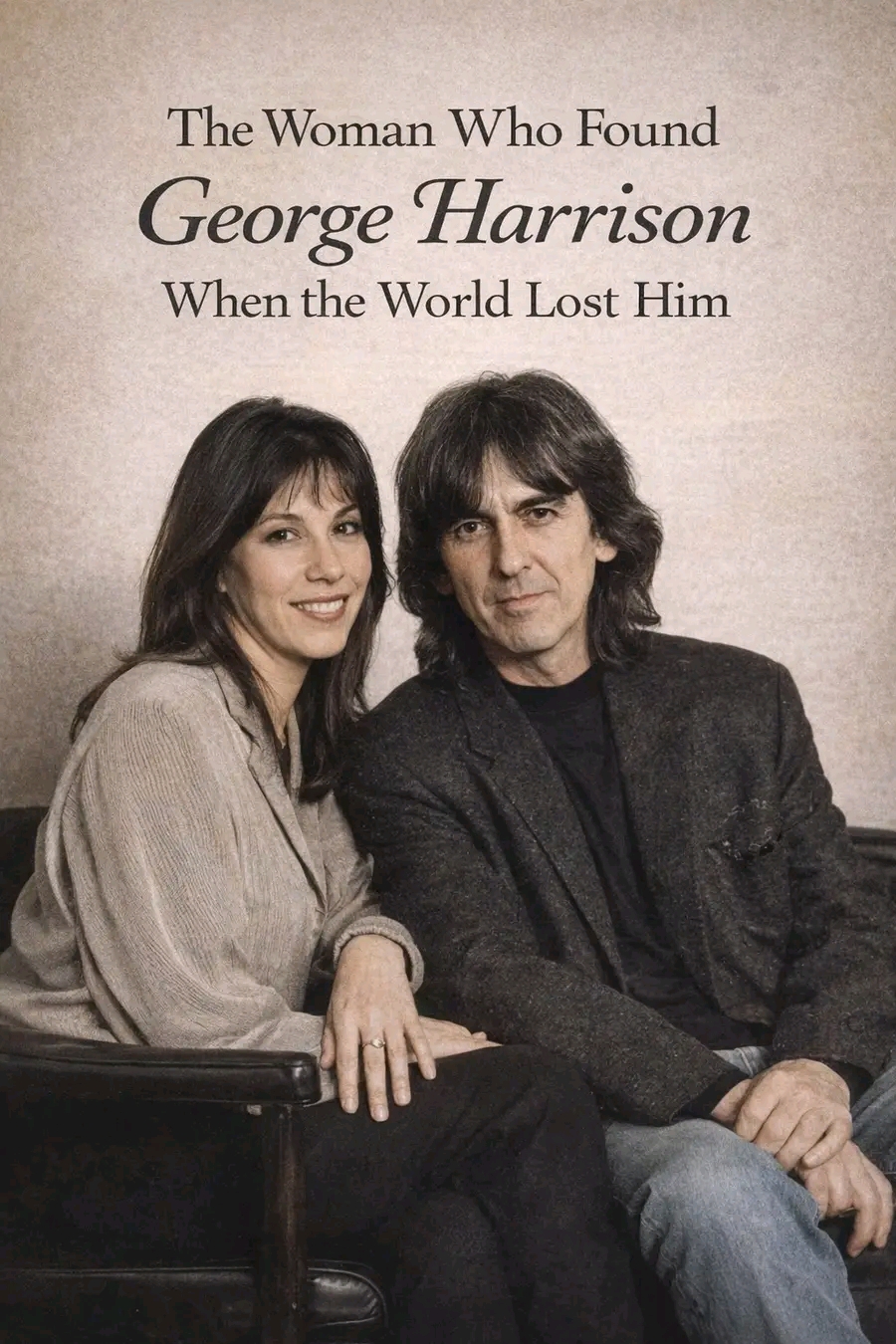
It was during this quieter period that Olivia Arias entered his world. Their meeting was not shaped by industry expectations or public image, but by simplicity. She encountered him not as an icon, but as a person—George rather than “George Harrison.” That distinction mattered. In a life often defined by roles and recognition, this was something rare.
Their connection developed gradually, away from headlines and public interpretation. There was no dramatic turning point, no carefully staged introduction to the world. Instead, it grew in everyday moments—conversations, shared understanding, and a sense of ease that neither had to manufacture. Olivia brought a grounded presence into his life, offering stability without pressure and closeness without demand.
For George, who had spent years navigating both external chaos and internal questioning, this kind of relationship carried a different weight. It was not about escape, but about acceptance. In her presence, he did not need to perform or defend himself. He could simply exist, without explanation.
By the late 1970s, their life together naturally deepened. The arrival of their son, Dhani, marked a quiet but profound shift—one that anchored their bond even further. Not long after, they married privately, without spectacle or public ceremony. There were no grand statements, no attempt to turn the moment into mythology. It was simply a commitment made in private, between two people who understood each other beyond the reach of fame.
It was not the kind of love story built for headlines or legend. Instead, it was something more personal—less about history and more about healing. For George Harrison, it became a chapter defined not by what the world expected of him, but by what he finally allowed himself to find: a life that felt steady, human, and real.