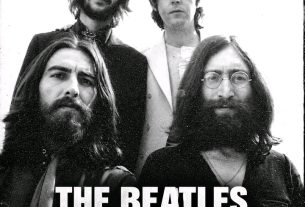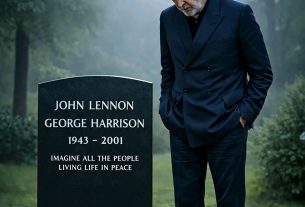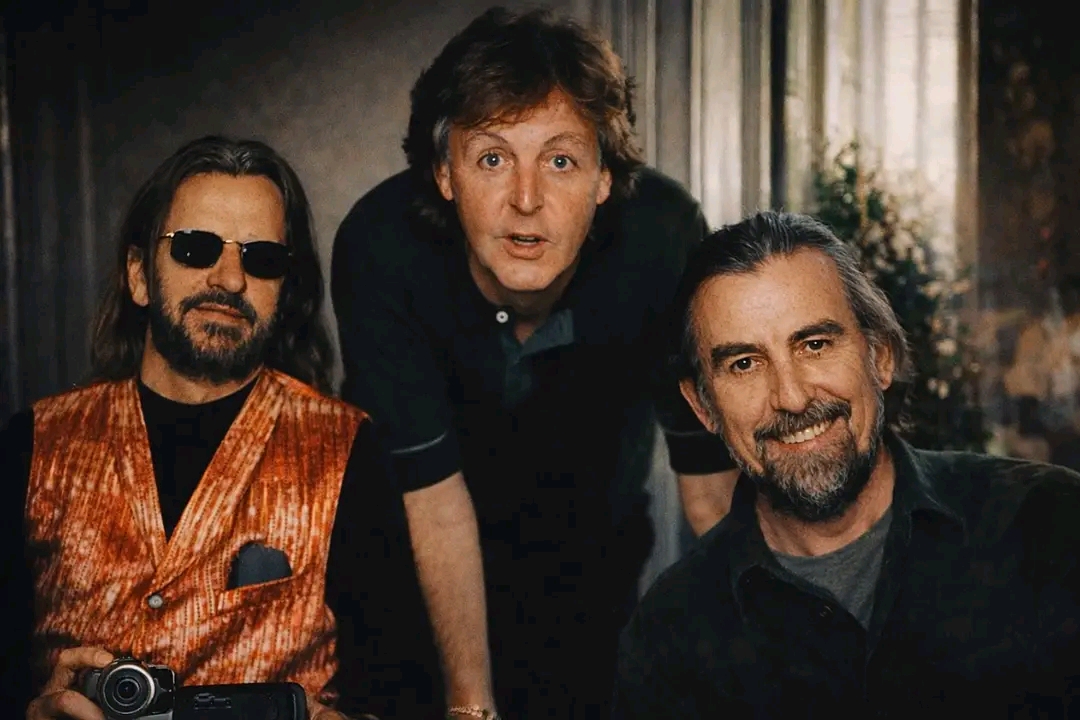
When John Lennon was killed on December 8, 1980, the world reacted in a single, thunderous voice. Radios played Beatles songs on repeat. Crowds gathered outside the Dakota. Headlines struggled to carry the weight of a loss that felt too large for language. Yet behind the public grief were three men for whom the loss was not symbolic or historical, but devastatingly personal. Paul McCartney, George Harrison, and Ringo Starr had known John longer than almost anyone else. Each loved him differently. Each mourned him differently. And in those differences lies a deeper understanding of both their bond and the man they lost.
Paul McCartney: The Weight of the Unfinished
Paul McCartney’s response was marked by silence—an absence that spoke louder than any statement. In the days after John’s death, Paul struggled to speak publicly at all. When he did, his words were awkward, guarded, even misunderstood. To many observers, it looked like emotional distance. In truth, it was shock.
John was not just Paul’s former bandmate; he was his creative mirror, his rival, his collaborator, and, for years, the other half of a private language only they fully understood. Their partnership had been intense, competitive, and deeply intimate. When John died, it was not only a friend who was gone, but a shared future that would never be resolved.
Paul later admitted that he couldn’t listen to John’s music for years. It hurt too much. Mourning, for him, meant protecting something fragile and unfinished—memories that were still raw, conversations that had ended mid-sentence. When Paul eventually addressed the loss more openly, he did so through reflection rather than spectacle, choosing restraint over ritual. His grief was quiet, but enduring.
George Harrison: Meaning Through Belief
George Harrison responded by turning inward. Always the most spiritually inclined of the Beatles, George framed John’s death not as an ending, but as a transition. Where others saw senseless violence, George sought meaning—not to diminish the tragedy, but to survive it.
George wrote and spoke of John as a soul that had moved on, emphasizing continuity over rupture. This was not detachment; it was a coping mechanism shaped by years of spiritual exploration. George had long believed that life extended beyond the physical, that death was a passage rather than a full stop. In the face of sudden loss, belief became his anchor.
His grief was contemplative, philosophical, and deeply personal. By placing John within a larger spiritual narrative, George found a way to honor him without being consumed by anger or despair. It was an act of faith, but also of self-preservation.
Ringo Starr: The Power of Presence
Ringo Starr’s response was immediate and physical. Upon hearing the news, he flew to New York to be with Yoko Ono and John’s young son, Sean. There were no statements to craft, no philosophy to articulate. Ringo simply showed up.
Throughout his life, Ringo had often been described as the emotional glue of the Beatles—the one who checked in, who noticed when someone was hurting. His way of mourning reflected that role. Grief, for Ringo, meant presence. It meant sitting with the people John loved most and sharing the unbearable weight of absence together.
In moments of crisis, Ringo acted. His tribute was loyalty made visible, compassion translated into action. It was perhaps the most instinctive response of all—and the most human.
A Complete Portrait of Love
Taken together, the reactions of Paul, George, and Ringo form a complete portrait—not just of grief, but of love. Silence, reflection, and loyalty. Each response reflected the role John had played in their lives and the role each of them had played in the group they once were.
There was no single correct way to mourn John Lennon. There were only honest ones. In their differences, the surviving Beatles revealed the depth of their connection to him—and to one another. After the noise stopped, after the crowds dispersed, what remained were three men carrying the same loss in three distinct ways.