“The Beatles’ Most Dangerous Song Was Played Once — Then Locked Away Forever”
In January 1967, at the height of their cultural power, The Beatles created a piece of music so strange, so uncommercial, and so divisive that it has never been officially released. Hundreds of people heard it once. Insiders dismissed it. At least one band member reportedly hated it. And nearly sixty years later, it remains locked away. Its name is Carnival of Light—and it may be the most controversial recording in Beatles history.
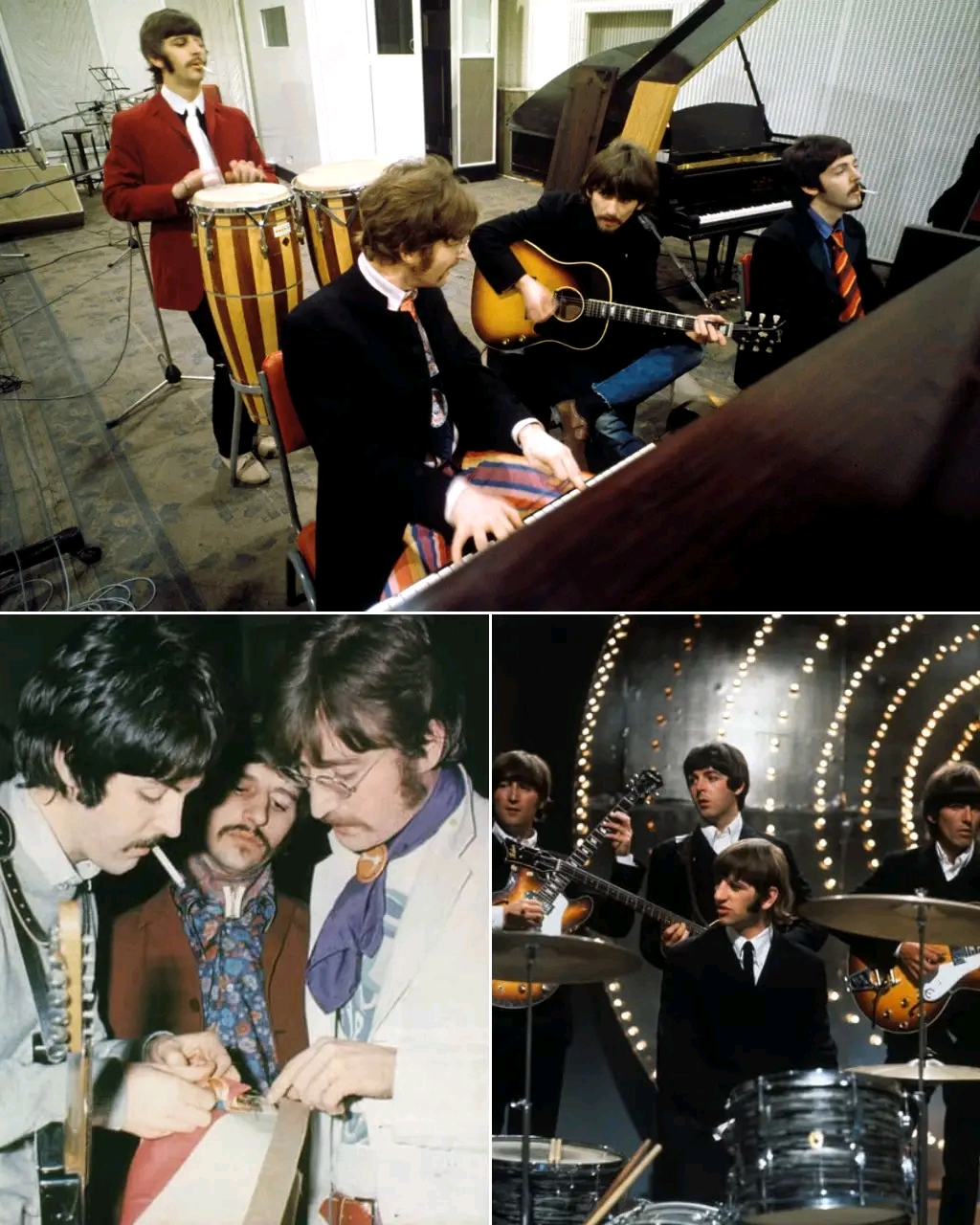
The song was commissioned for a London avant-garde event called The Million Volt Light and Sound Rave, a psychedelic happening that blended experimental music with flashing lights and sensory overload. Paul McCartney, increasingly drawn to the underground art scene, volunteered The Beatles to contribute something radical. What they delivered was a 14-minute sound collage: distorted organ drones, tape loops, shouted phrases, random percussion, and disorienting effects that had more in common with experimental composers than pop music. There was no melody in the traditional sense, no chorus, and no attempt to please an audience expecting “Penny Lane” or “Strawberry Fields Forever.”
The track was played only once, on January 28, 1967, to an audience of several hundred people inside the Roundhouse in London. Those who heard it described confusion more than applause. Some didn’t even realize it was The Beatles. Within the band itself, reaction was mixed at best. McCartney reportedly saw it as a bold artistic statement. George Harrison later dismissed it outright, calling it unworthy of release. John Lennon, who would later embrace extreme sonic experimentation on his own, showed little interest in revisiting it. Ringo Starr has rarely commented, which in Beatles history often speaks volumes.
What makes Carnival of Light especially dangerous—by Beatles standards—is not just its sound, but what it represents. It strips away the mythology of the band as flawless innovators and exposes real fractures: disagreements about art versus accessibility, ego versus unity, and how far experimentation should go under the Beatles name. Releasing it would force listeners to confront a version of The Beatles that doesn’t fit neatly into the legend.
Over the decades, Carnival of Light has surfaced repeatedly in discussions of unreleased Beatles material. It was considered—and rejected—for the Anthology series in the 1990s. McCartney has publicly said he would like it released. Harrison vetoed it during his lifetime. Today, its fate likely rests with the estates and Apple Corps, where commercial value, legacy protection, and historical honesty collide.
Ironically, in an era where experimental music is widely accepted and archival releases are celebrated, Carnival of Light might no longer shock listeners the way it once did. Yet that may be exactly why it remains locked away. The danger is no longer in how it sounds—but in what it reveals: that even the greatest band in history could make something raw, messy, and deeply uncomfortable, and decide it was better left unheard.
For Beatles fans, Carnival of Light is the final forbidden door. Not because it’s guaranteed to be brilliant—but because it’s real, complete, and human. And sometimes, the most unsettling part of history isn’t what was lost, but what was deliberately hidden.