“IT WAS LIKE AN INSULT” — The Quiet Studio Moment That Exposed the Cracks Beneath Hey Jude
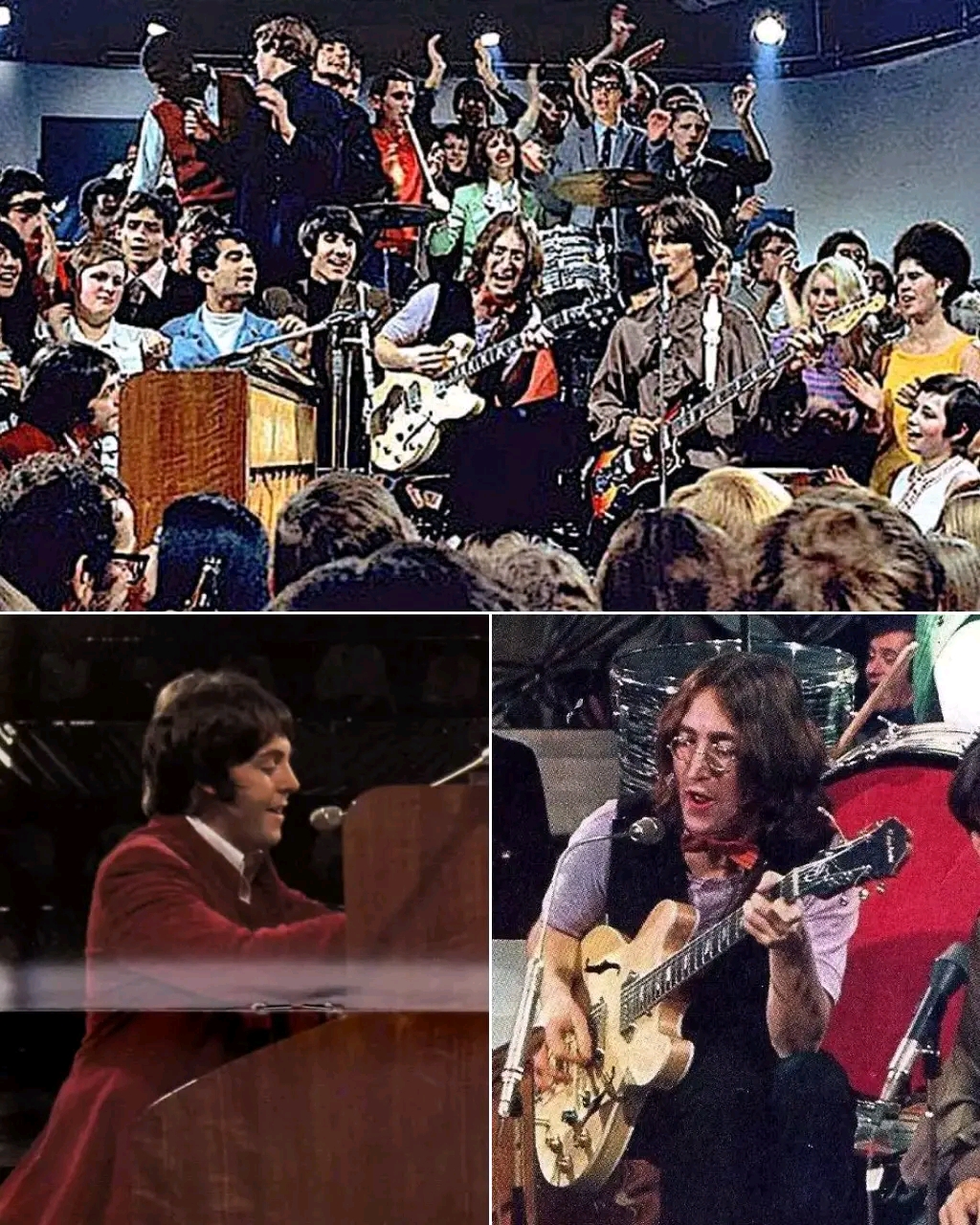
By the summer of 1968, The Beatles were no longer a single, unified organism. They were four strong musical personalities orbiting the same name, increasingly protective of their own ideas. Nowhere is that tension more quietly revealed than in a brief, almost polite exchange during the recording of Hey Jude—a moment that left George Harrison feeling dismissed, and hinted at a hierarchy that was becoming impossible to ignore.
Hey Jude is remembered as one of the band’s most generous, life-affirming songs. Written by Paul McCartney to comfort John Lennon’s son Julian during his parents’ breakup, it carries a message of reassurance, patience, and emotional openness. But inside the studio, the atmosphere surrounding its creation was far less gentle.
During early sessions at Abbey Road, George Harrison suggested a simple guitar phrase to answer Paul’s vocal lines—an idea consistent with George’s growing confidence as a songwriter and arranger. Paul listened, then calmly shut it down. He didn’t raise his voice. He didn’t argue. He simply told George not to play guitar during the verses.
To Paul, it was a matter of arrangement. He heard Hey Jude as a vocal-led song, spacious and uncluttered, with every instrument serving the emotional arc of the melody. To George, it felt like something else entirely.
Later, Harrison would describe moments like this as deeply frustrating—less about a single guitar part and more about what it represented. By 1968, George was writing songs like While My Guitar Gently Weeps and Something, yet he was still being treated as a junior partner in a band he had helped build. Being told not to play on one of the group’s major singles felt, in his words, “like an insult.”
The exchange exposed an unspoken hierarchy that had solidified over the years. Paul, increasingly assuming the role of musical director, made decisions quickly and confidently. John, often disengaged during this period, rarely challenged him. George, meanwhile, found himself pushing against invisible walls—respected as a guitarist, but not always as a creative equal.
What makes the moment so telling is its quietness. There was no shouting, no dramatic walkout. Just a suggestion, a refusal, and a silence that lingered. But those small silences accumulated. They would surface again during the White Album sessions, erupt during Let It Be, and ultimately contribute to George briefly quitting the band in early 1969.
Ironically, Paul was right about the song—Hey Jude didn’t need the guitar line. Its power lies in its restraint: the patient build, the open space, the communal release of the final refrain. Yet being right musically didn’t erase the emotional cost. For George, each dismissed idea reinforced the sense that his place in The Beatles was shrinking just as his artistry was expanding.
Today, Hey Jude stands as one of the most unifying songs ever recorded. Millions have sung along to its closing “na-na-na” chorus, unaware that beneath its warmth lies a moment of quiet hurt—a reminder that even the most uplifting anthems can be born from fragile human dynamics.
In hindsight, that small studio decision foreshadowed what was coming. The Beatles didn’t break apart because of one argument or one song. They fractured through dozens of moments like this—softly spoken, carefully phrased, and emotionally unresolved. Hey Jude didn’t cause the split, but it captured the band at a crossroads: still capable of greatness, already drifting toward goodbye.