John Lennon’s Five Years of Silence: Choosing Fatherhood Over Fame
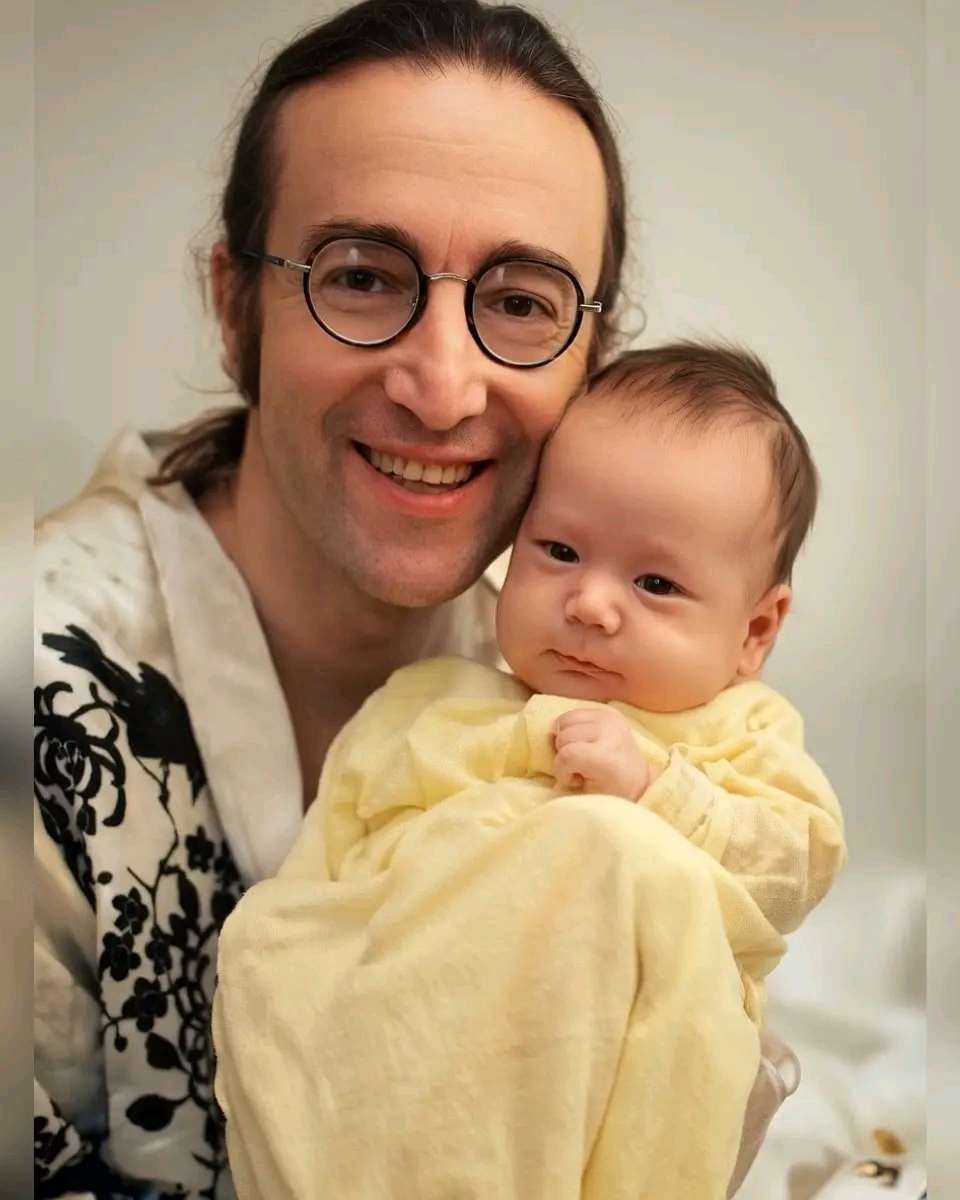
On October 9, 1975, John Lennon turned 35 years old. That same day, at Roosevelt Hospital in Manhattan, his son Sean was born. For Lennon—an artist whose life had been defined by noise, attention, and relentless motion—the coincidence felt almost fated. But what followed was not symbolic or impulsive. It was a conscious decision that would become one of the most radical acts of his life: John Lennon walked away from music.
No tours.
No albums.
No interviews.
At the height of his legend, Lennon chose disappearance. He called himself a “househusband,” a term that sounded provocative coming from one of the most famous men on earth, but he meant it literally. For the next five years, John Lennon devoted himself almost entirely to raising his son.
Living in New York City made this possible in a way England never had. Unlike London, Manhattan allowed Lennon a degree of anonymity. He could walk the streets without being surrounded by hysterical crowds. He went grocery shopping. He baked bread. He stayed home. The routines were simple, repetitive, and intentionally ordinary—everything Beatlemania had never been.
This domestic quiet was not a retreat born of fear or burnout alone. It was restorative. Lennon had spent his early life marked by absence: raised largely without his parents, passed between relatives, emotionally uprooted. Fame came early and violently, amplifying unresolved wounds. By the mid-1970s, after the breakup of The Beatles, political activism, public feuds, and artistic overexposure, Lennon was exhausted—not just creatively, but spiritually.
Sean’s birth offered him something rare: a second chance.
For the first time, Lennon was determined to be present. He wanted to witness childhood as it unfolded, not from hotel rooms or recording studios. He took pride in the daily rituals—feeding, playing, teaching. He stepped away from the role the world demanded of him and embraced one he had never truly known: father.
This period of silence was often misunderstood. Some saw it as a creative drought or withdrawal. In truth, Lennon never stopped being an artist. He simply stopped performing it publicly. He wrote privately. He listened. He observed. Most importantly, he learned to live without the constant need to prove himself.
When John Lennon returned to music in 1980 with Double Fantasy, the change was unmistakable. His voice sounded calmer, steadier. The rage, irony, and defensive sharpness that once defined his work had softened. Songs like “(Just Like) Starting Over” and “Watching the Wheels” reflected a man at peace with slowing down. The urgency was gone, replaced by clarity.
This was not the voice of someone trying to outrun his past.
It was the voice of someone who had finally caught up with himself.
Lennon no longer needed to shout to be heard. He had learned that meaning could exist in stillness, that fulfillment didn’t require constant movement. His five-year absence from music was not an abandonment of art—it was an investment in life.
Tragically, this renewed chapter was cut short. Just weeks after Double Fantasy was released, John Lennon was murdered outside his home in December 1980. Yet his final years left behind a powerful counter-narrative to the mythology of fame. They showed that stepping away can be as courageous as stepping forward.
John Lennon’s silence between 1975 and 1980 remains one of the most human chapters in rock history. It reminds us that even icons need rest, repair, and presence. And sometimes, the most meaningful work an artist can do isn’t recorded—it’s lived.