On a bitter January afternoon in 1969, The Beatles climbed to the roof of Apple Corps at 3 Savile Row and made a decision that would seal their legend. There were no tickets, no stage lights, no announcement, and no official permission. London went about its business unaware that history was about to unfold above its streets. Then the amplifiers crackled to life, and the sound of The Beatles — raw, unfiltered, and alive — spilled into the freezing air.
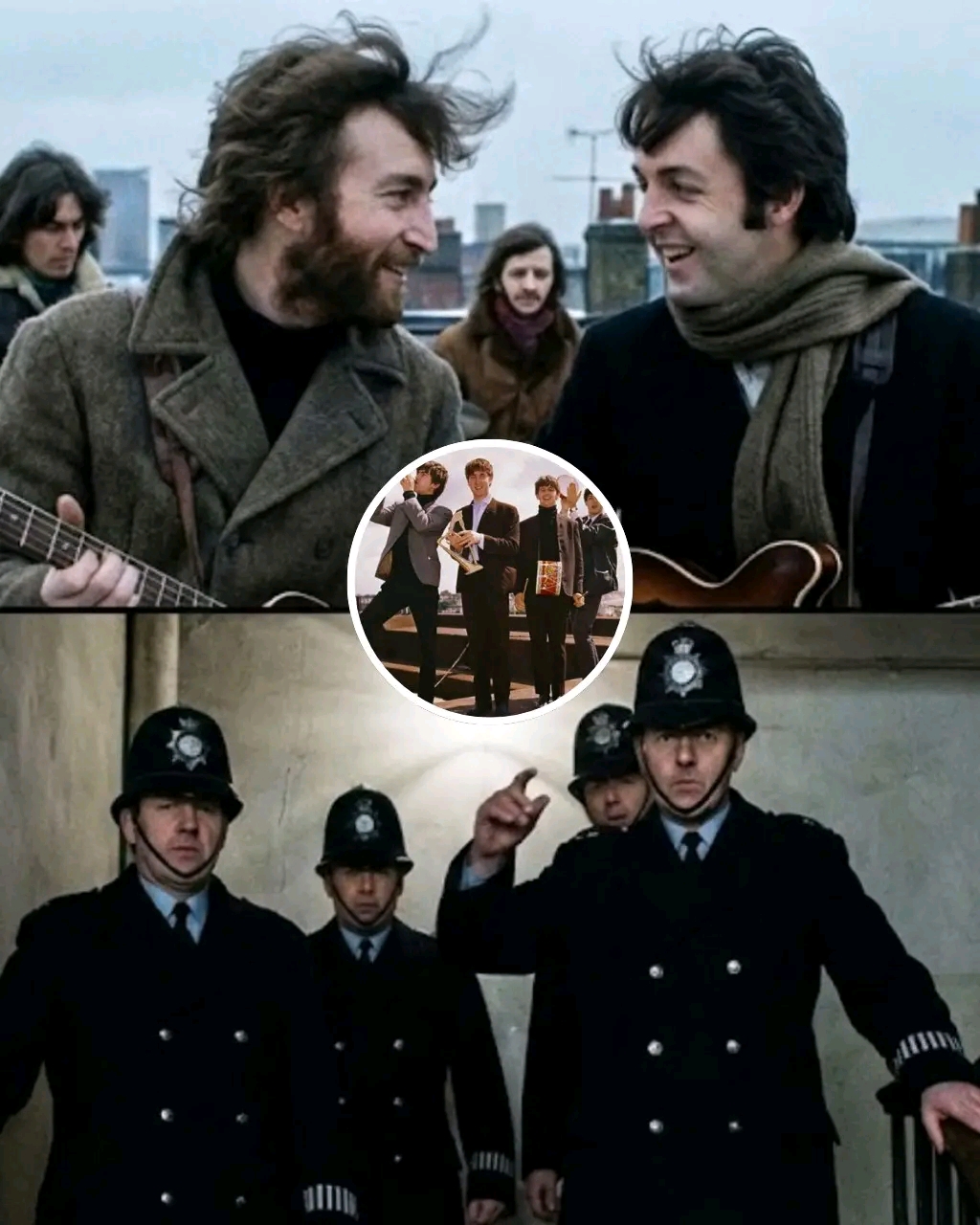
This was not a planned farewell, but it became one. Inside the band, tensions had been simmering for months: creative rifts, personal differences, and the quiet knowledge that the end was approaching. Yet on that rooftop, none of it mattered. John Lennon and Paul McCartney stood shoulder to shoulder, trading glances and half-smiles that carried years of shared memory. George Harrison locked into the groove, Ringo Starr steady as ever, anchoring the moment. For 42 minutes, the fractures disappeared, replaced by the simple joy of playing together.
Down below, confusion turned into complaints. Office workers leaned out of windows, passersby stopped in the street, and eventually the police were called. As officers climbed the stairs, the band could hear them coming. “The police are coming up the stairs,” someone warned. Lennon’s response — “Turn it up” — was more than a joke. It was defiance, humor, and instinct rolled into one. If this really was the end, they would meet it on their own terms: louder, freer, and uncontained.
Songs like Get Back, Don’t Let Me Down, and I’ve Got a Feeling blasted across central London, unpolished and powerful. The wind tugged at coats and hair, fingers numbed by the cold, voices strained — and that was precisely the point. This was rock and roll stripped of spectacle, reduced to its core: musicians playing because they had to. Every note carried urgency, as if they knew time was closing in.
When the police finally intervened and the sound was cut, the sudden silence felt almost shocking. It weighed heavier than the music that had filled the sky moments earlier. There was no dramatic goodbye, no final speech. Just instruments lowered, smiles exchanged, and a quiet understanding that something irreplaceable had just ended.
The rooftop concert would become The Beatles’ last public performance. Not a grand farewell tour, not a choreographed finale — but an act of spontaneous rebellion. Not rebellion against the police, but against the idea of endings themselves. For one last afternoon, The Beatles chose music over conflict, joy over division, and freedom over formality. And in doing so, they didn’t just close a chapter — they left it echoing forever.