The Sentence That Froze the Room: George Harrison, Paul McCartney, and the Moment Let It Be Almost Missed
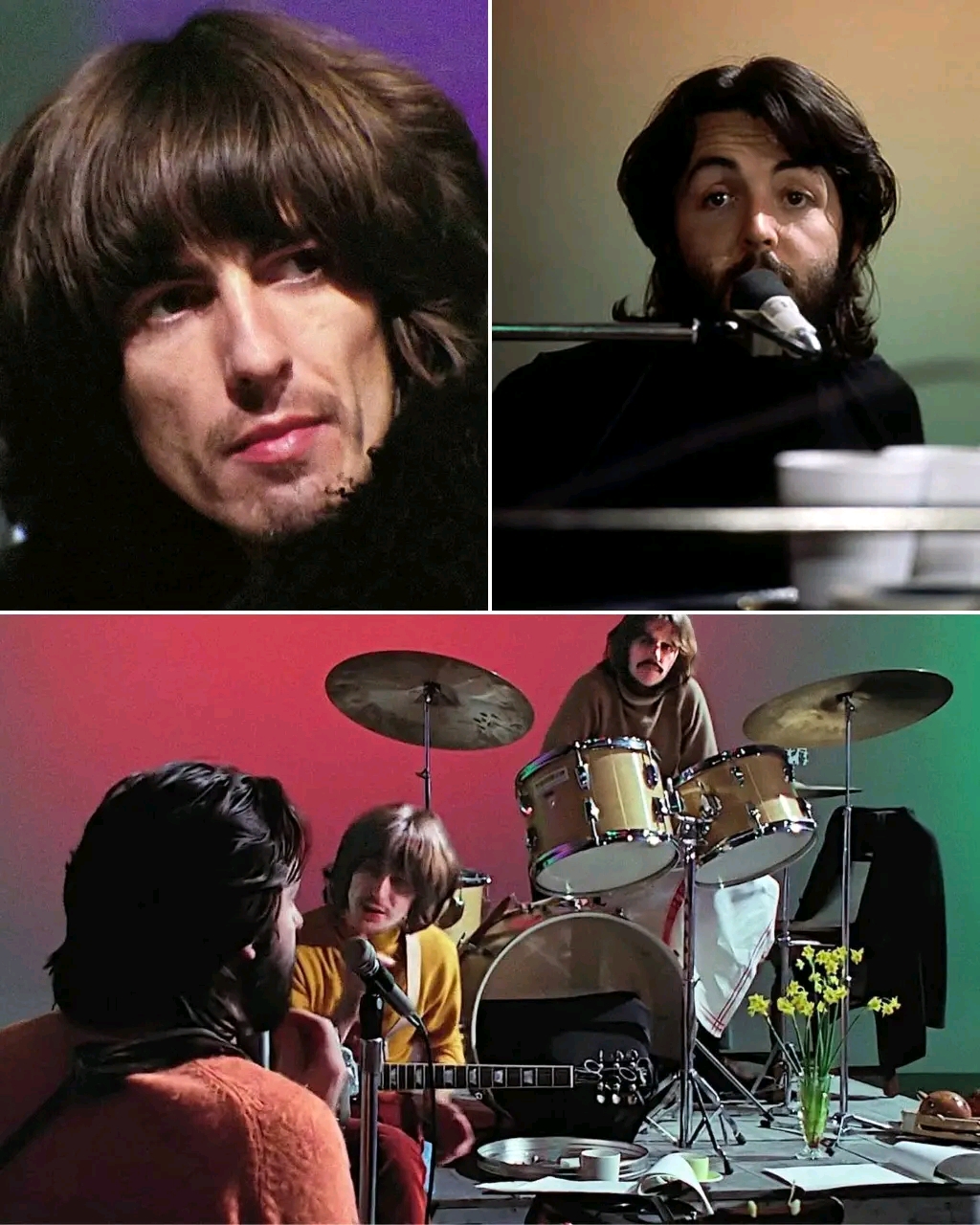
January 1969. Twickenham Film Studios.
Cold soundstage, early mornings, rolling cameras—and a band quietly coming apart in real time.
The Let It Be rehearsals were meant to capture rebirth: The Beatles returning to live performance, writing songs from scratch, rediscovering chemistry. Instead, the footage preserved something far more fragile—four men trying to work while everything unspoken pressed in on them.
And in the middle of one ordinary rehearsal, a sentence slipped out that still stops viewers decades later.
> “I’ll play whatever you want me to play… or I won’t play at all.”
George Harrison says it to Paul McCartney, not in anger, not loudly—almost calmly. It happens mid-song, mid-day, mid-breakdown. The band keeps playing. The cameras keep rolling. And history nearly lets it pass unnoticed.
—
The Pressure Behind the Politeness
By January 1969, the dynamics inside The Beatles had shifted dramatically. Paul McCartney, driven and anxious to keep the group moving, had taken on a leadership role—often directing arrangements, correcting parts, pushing rehearsals forward.
George Harrison, meanwhile, was no longer the quiet junior partner. He was writing prolifically—All Things Must Pass, Something, Isn’t It a Pity—songs that would soon prove he was every bit the composer his bandmates were. But inside the group, he still felt boxed in.
At Twickenham, that tension simmered daily.
Paul isn’t cruel in the exchange. He’s precise, insistent, focused on getting the song right. George listens, nods—and then offers his choice in the simplest terms possible.
Not a fight.
Not a walkout.
Just a boundary.
—
Why the Moment Feels So Quiet—and So Loud
What makes the exchange unforgettable isn’t what’s said, but how little else happens.
No shouting.
No dramatic pause.
No cutaway.
John Lennon barely reacts. Ringo Starr stays neutral. Paul looks momentarily caught between apology and persistence. And then the rehearsal continues, as if something fundamental hasn’t just been laid bare.
That’s why viewers keep rewinding it.
Because in that brief sentence, George articulates years of frustration without raising his voice. He doesn’t demand control. He doesn’t storm off. He simply states the cost of staying.
—
The Aftershock We Don’t See—But Feel
Not long after, George does leave the band—temporarily. The famous rooftop concert still lies ahead, but at Twickenham, the cracks are fully visible.
The exchange matters because it marks a turning point:
The moment George stops quietly absorbing pressure
The moment Paul realizes leadership can feel like dominance
The moment the cameras accidentally capture honesty instead of performance
When Peter Jackson restored and expanded the footage for Get Back, viewers finally had the space to notice it—to understand it—not as background noise, but as emotional truth.
—
Why It Still Pulls Us Back
This isn’t just a Beatles argument. It’s a human one.
A collaborator saying, I’ll give you everything—or nothing—because I can’t keep giving pieces of myself away.
A leader learning that control, even when well-intentioned, can erode trust.
A band continuing to play while something vital shifts beneath the music.
That’s why the clip doesn’t age. It doesn’t shout. It doesn’t explain itself. It simply exists—waiting for attentive eyes to catch what nearly slipped through the cracks.
And once you hear that sentence, you can’t unhear it.