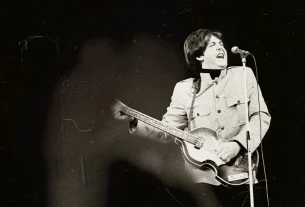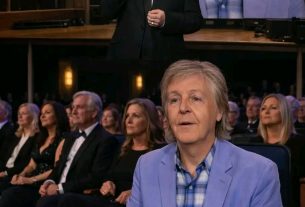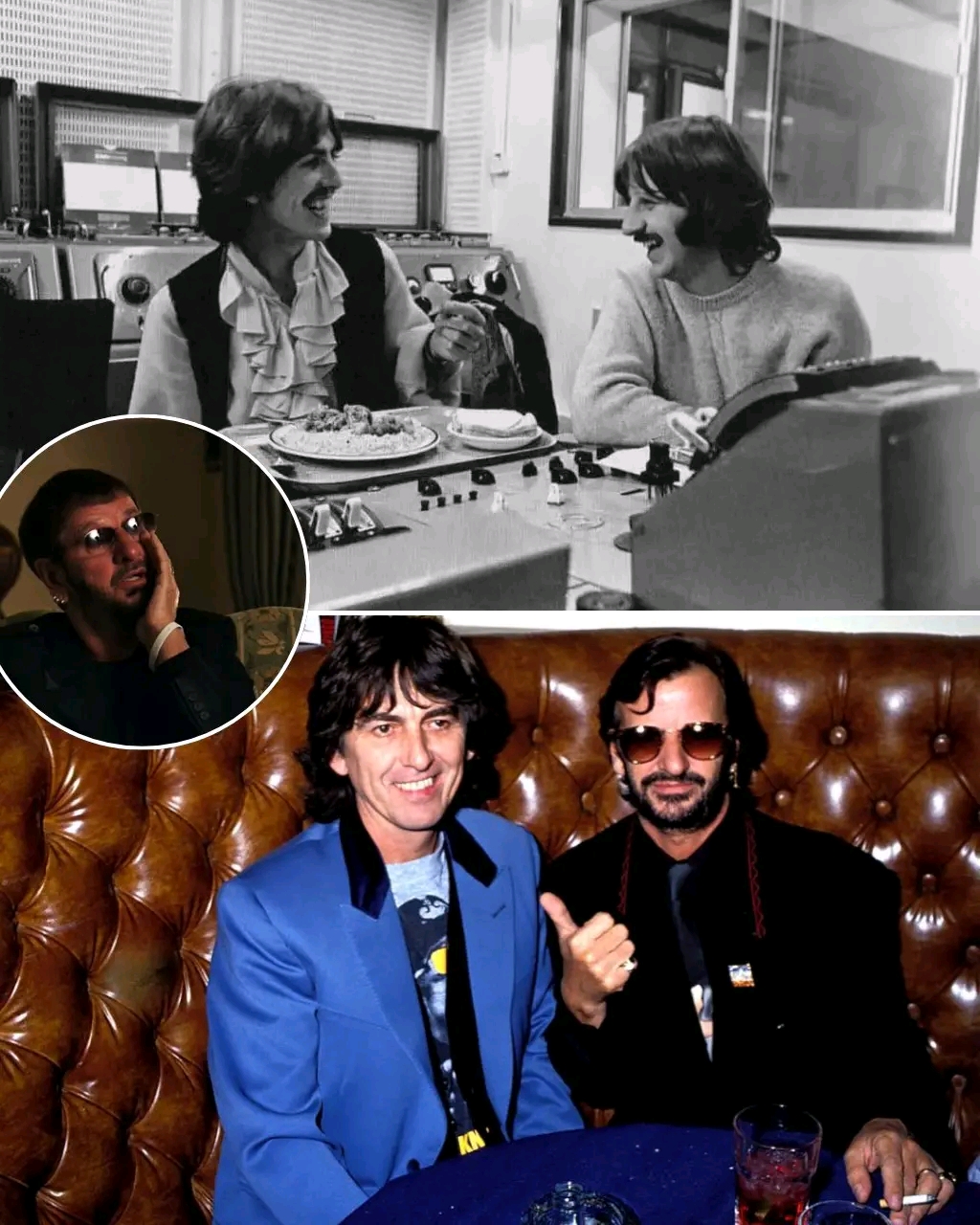
Ringo Starr and the Seven Words That Stopped Time
In George Harrison: Living in the Material World, there is a moment so quiet, so unguarded, that it feels almost intrusive to witness. No archival footage of screaming crowds. No guitar solos. No mythology being built. Just Ringo Starr, older now, voice trembling, recalling the final words George Harrison ever spoke to him. Seven simple words. Spoken softly. Far from any stage. And heavy enough to carry an entire lifetime of brotherhood.
The scene arrives without warning. Ringo isn’t performing; he’s remembering. And that difference matters. For decades, the world saw The Beatles as icons—symbols larger than life. But here, the mask slips. What remains is not a drummer or a Beatle, but a friend who knows he is about to lose someone he has loved since his early twenties.
George Harrison was dying of cancer in 2001. In his final weeks, he chose privacy over spectacle, serenity over noise. Ringo, who had shared hotel rooms, recording studios, and the chaos of Beatlemania with George, came to see him one last time. The visit was brief. George was weak. Time was running out.
At one point, Ringo told George he had to leave—his daughter was unwell, and he needed to be with her. It was an ordinary sentence, the kind people say every day without thinking. But George’s response was not ordinary.
With effort, and with love, George looked at him and said:
“Do you want me to come with you?”
Seven words.
When Ringo recounts this in the film, his composure breaks. He cannot finish the sentence without pausing. His eyes fill. His voice cracks. Because in those seven words was everything: humor, loyalty, compassion, and acceptance. George, facing the end of his own life, was still thinking about his friend. Still offering comfort. Still choosing love over fear.
The power of the moment lies in what is not said. George doesn’t talk about death. He doesn’t talk about regret, legacy, or The Beatles. He simply offers to be there. It’s a joke, yes—but a gentle one, and deeply human. A final reminder of the bond that had survived fame, fractures, and time itself.
Inside Living in the Material World, the camera doesn’t rush past this confession. It lingers. Viewers are given space to feel the weight of it, and many sit in silence long after the scene ends. Because suddenly, the idea of George Harrison changes. He is no longer just the “quiet Beatle” or the spiritual seeker. He is a friend, facing death with grace, still reaching outward.
For Beatles fans, this moment has become haunting. Not because it is dramatic, but because it is real. There is no script. No performance. Just memory. And grief.
Ringo later admitted that those words never left him. They reframe everything we think we know about the end of The Beatles’ story. Amid all the public tension, legal battles, and artistic rivalries, this single exchange proves something undeniable: whatever else happened, the love never disappeared.
In a band defined by noise—by screams, amplifiers, and cultural shockwaves—the most devastating moment comes in a whisper. Seven words, shared privately, that somehow echo louder than any song.
And that is why this scene endures. Because it reminds us that behind the legend were four people who grew up together, broke apart, and still found their way back to each other in the end. George Harrison didn’t leave the world with a grand farewell. He left it the way he lived much of his life: quietly, kindly, and thinking of others.
For Ringo Starr, those seven words stopped time.
For viewers, they do something else entirely.
They make silence speak.