The Timeless Power of “Imagine”
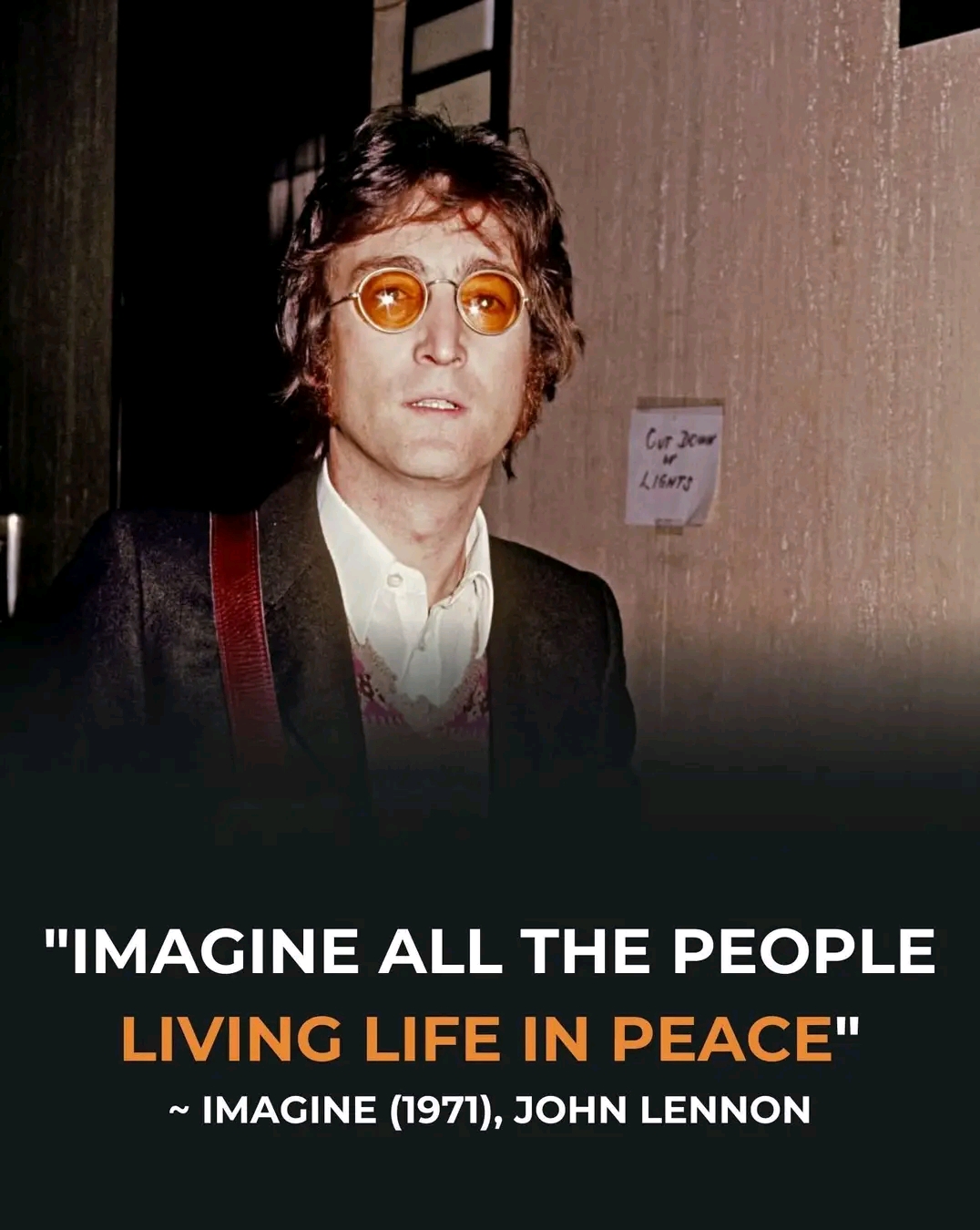
When John Lennon released the song Imagine in 1971, few could have predicted how deeply it would resonate with people around the world. Built around a gentle piano melody and simple, heartfelt lyrics, the song quickly became a global anthem for peace, unity, and hope. At a time marked by political tension, war, and social change, Lennon offered something powerful yet disarmingly simple: an invitation for humanity to imagine a better world.
Unlike many protest songs of the era that carried anger or confrontation, “Imagine” spoke softly but boldly. Lennon didn’t demand change through slogans or arguments. Instead, he asked listeners to picture a world without the divisions that often lead to conflict—no borders separating nations, no religious differences creating hostility, and no material greed driving inequality. The beauty of the song lies in its simplicity; its message feels universal, understandable to anyone regardless of culture, language, or generation.
The song’s most famous line—“Imagine all the people living life in peace”—continues to echo across decades. It represents a vision of humanity united by compassion rather than divided by ideology. Lennon believed that many conflicts are created by systems and boundaries that people accept without question. By encouraging listeners to imagine a different reality, he challenged them to reconsider the world they live in.
More than fifty years after its release, “Imagine” remains one of the most recognized and meaningful songs in modern music history. It is frequently performed at global events, peace rallies, memorials, and moments when the world searches for unity. Artists across generations have covered the song, ensuring that its message continues to reach new audiences.
The lasting impact of “Imagine” also reflects Lennon’s legacy as an artist who believed music could inspire change. As a former member of The Beatles, Lennon had already helped transform popular music. But with “Imagine,” he created something even more enduring—a song that transcends entertainment and enters the realm of philosophy and human aspiration.
In a world that still faces division, conflict, and uncertainty, the song’s message feels just as relevant today as it did in 1971. Each time someone listens to “Imagine,” they are reminded that peace begins not only in governments or institutions, but in the collective imagination of people willing to believe that a better world is possible.