The Beatles’ Final Concert Was Illegal… And the Police Came to Stop It
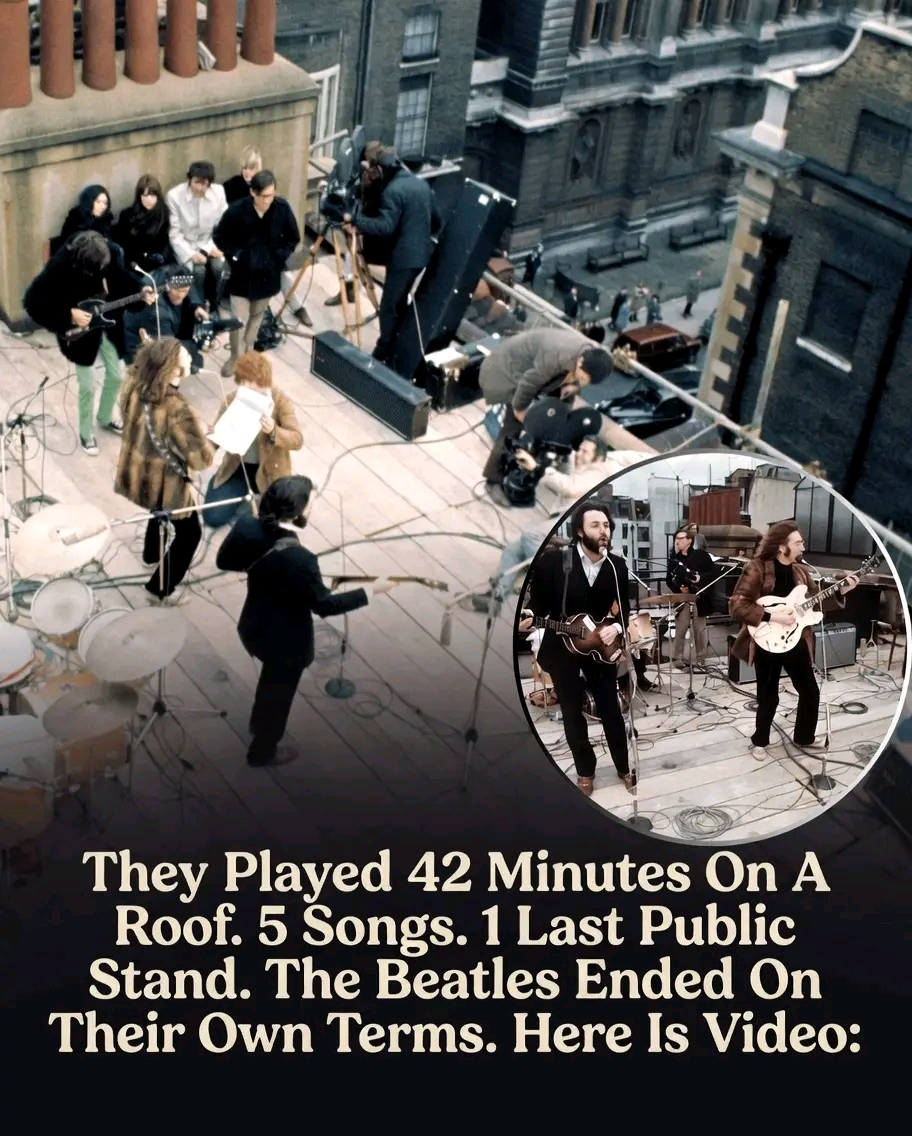
On a cold afternoon in London, January 30, 1969, something extraordinary unfolded above the ordinary rhythm of city life. Without announcement, without tickets, and without permission, The Beatles climbed to the rooftop of Apple Corps headquarters and began to play. What followed would become one of the most iconic—and unconventional—performances in music history.
There were no grand stage designs, no roaring stadium crowds, no formal farewell speech. Just four musicians—John Lennon, Paul McCartney, George Harrison, and Ringo Starr—standing against the winter sky, instruments in hand, rediscovering something they had almost lost: the simple joy of playing together.
A Spontaneous Moment That Changed Everything
The opening chords of “Get Back” rang out across the rooftops, cutting through the hum of traffic below. At first, it was confusion. People in the streets of London paused, unsure of what they were hearing. Then came recognition. Office workers leaned out of windows. Pedestrians gathered, looking up, searching for the source of the music drifting through the cold air.
As the band moved into “Don’t Let Me Down” and “I’ve Got a Feeling,” the atmosphere shifted from curiosity to something deeper—something electric. This was not just a performance; it was a moment of connection. No barriers. No distance. Just music shared in real time between artists and the world around them.
And yet, this magic came with tension.
The Sound of Rebellion
The concert had no permit. It wasn’t planned in any official sense. And as the music echoed through nearby offices, complaints began to surface. To some, it was thrilling. To others, it was disruption—unexpected noise breaking the routine of a working day.
Authorities were alerted. The police were called.
Inside the building, officers made their way upward, navigating through the confusion. But on the rooftop, something remarkable happened: the band didn’t stop.
There was no panic, no urgency to escape. The Beatles simply kept playing.
It was as if, in that moment, nothing else mattered.
A Goodbye Without Saying Goodbye
By the time the police reached the rooftop, the performance was nearing its end. The band closed with another take of “Get Back,” and with it, unknowingly, closed a chapter in music history. There were no dramatic final words—only John Lennon’s now-famous closing line, delivered with quiet wit: a hope that they had “passed the audition.”
It would be the last time all four Beatles performed live together.
But what made this moment so powerful wasn’t just its historical significance. It was its honesty. There was no polished farewell, no carefully scripted ending. Instead, there was spontaneity, imperfection, and authenticity—qualities that had defined the band from the very beginning.
More Than a Concert
The rooftop concert wasn’t just a performance. It was a statement.
At a time when internal tensions were quietly pulling the band apart, this final act brought them back to their core. Before the fame, before the pressure, before everything became complicated—there was simply music.
In many ways, this unsanctioned, interrupted, and fleeting performance captured the essence of The Beatles better than any grand farewell ever could.
The Most Honest Goodbye?
So was it just a concert?
Or was it something more?
Perhaps it was the most honest goodbye they could have given—not spoken, not announced, but played. A farewell carried not in words, but in chords drifting across the London skyline.
A moment that wasn’t supposed to happen…
and because of that, became unforgettable.