The Beatles’ Last Concert: Why They Stopped Touring in 1966
By the mid-1960s, The Beatles had become the most famous band in the world. Everywhere they traveled, crowds of thousands gathered just to catch a glimpse of them. What began as exciting international success quickly turned into something far more overwhelming. The screaming fans, constant travel, and growing controversies eventually pushed the band toward a historic decision: they would stop touring.
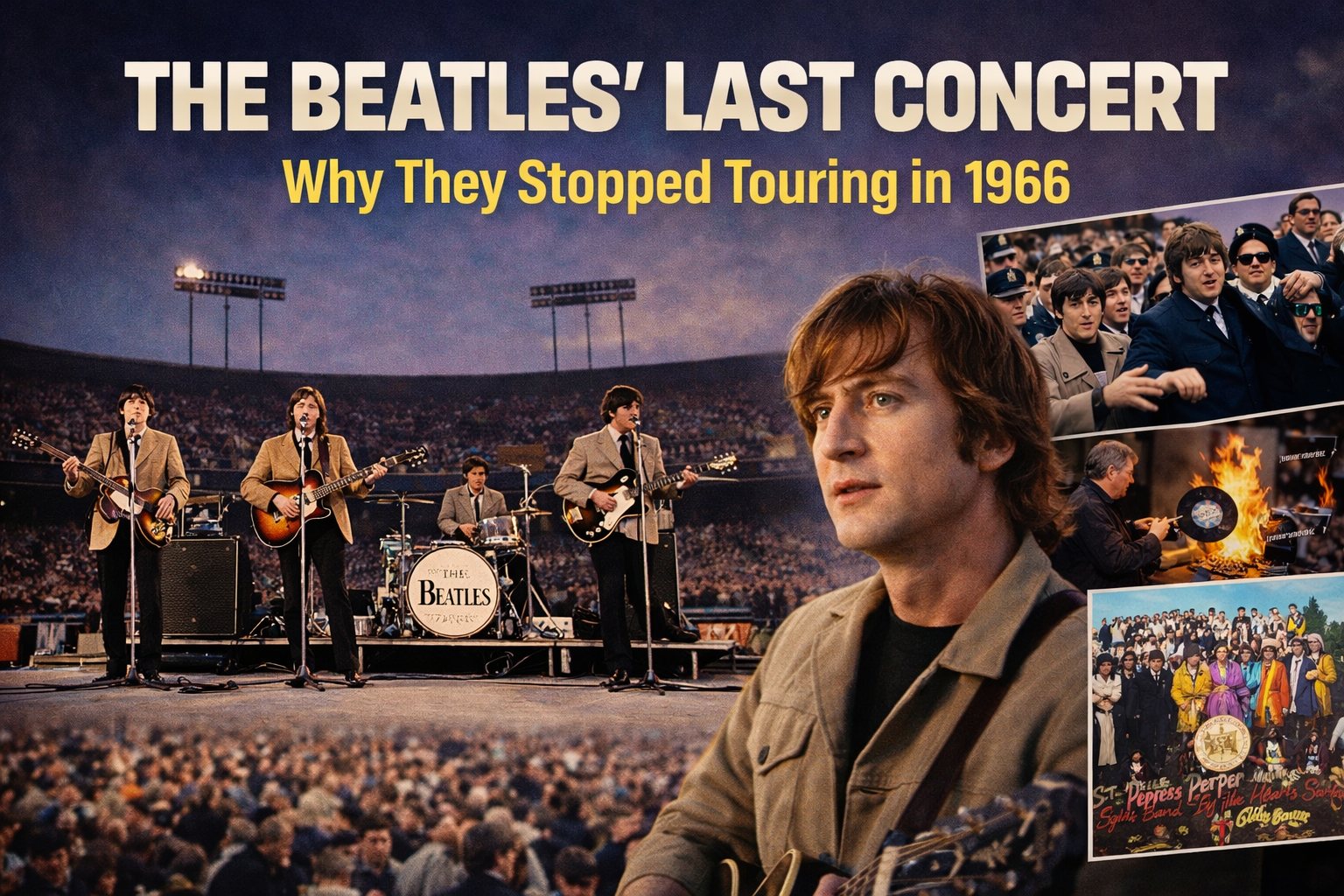
The band’s final official concert took place on August 29, 1966, at Candlestick Park in San Francisco. The stadium was packed with around 25,000 fans eager to see the legendary group perform. Their set was short—lasting only about 30 minutes—and included popular songs like “Twist and Shout,” “Paperback Writer,” and “Long Tall Sally.” At the time, most fans in the audience had no idea they were witnessing the last full concert the band would ever play together.
One of the biggest problems the band faced during tours was the intense noise from the crowds. The phenomenon known as Beatlemania had reached such a level that fans screamed constantly throughout performances. The noise was so loud that John Lennon, Paul McCartney, George Harrison, and Ringo Starr often couldn’t hear their own instruments on stage. Concert technology at the time simply wasn’t advanced enough to compete with the sound of thousands of screaming fans.
Security also became a growing concern. The band frequently faced chaotic situations at airports, hotels, and concert venues as fans tried to get close to them. At times, crowds broke through barriers or rushed the stage, creating dangerous conditions for both the band and their audience.
Controversy added even more tension in 1966. Earlier that year, John Lennon had made a remark during an interview suggesting that the band was “more popular than Jesus.” The statement sparked major backlash, especially in parts of the United States. Radio stations banned their music, protests were organized, and some people even publicly burned Beatles records. The situation made touring even more stressful and dangerous.
Another important reason behind their decision was artistic growth. By 1966, the band had begun experimenting with more complex sounds and recording techniques in the studio. Their album Revolver featured musical elements that were nearly impossible to recreate live with the equipment available at the time. Rather than continue performing simplified versions of their songs, the band chose to focus entirely on studio creativity.
Stopping live performances ultimately opened the door to one of the most innovative periods in music history. Without the pressure of constant touring, The Beatles went on to create groundbreaking albums such as Sgt. Pepper’s Lonely Hearts Club Band, The Beatles (White Album), and Abbey Road.
Although they stopped touring in 1966, the band did perform together one final time in January 1969 during the famous rooftop performance at Apple Corps Headquarters Rooftop in London. The surprise concert, recorded for the project that became Let It Be, served as a symbolic farewell to live performances.
The decision to stop touring marked the end of Beatlemania concerts, but it also allowed The Beatles to push the boundaries of music in ways that would influence generations. Their last concert in 1966 wasn’t just the end of a tour—it was the beginning of a new chapter that changed modern music forever. 🎸